
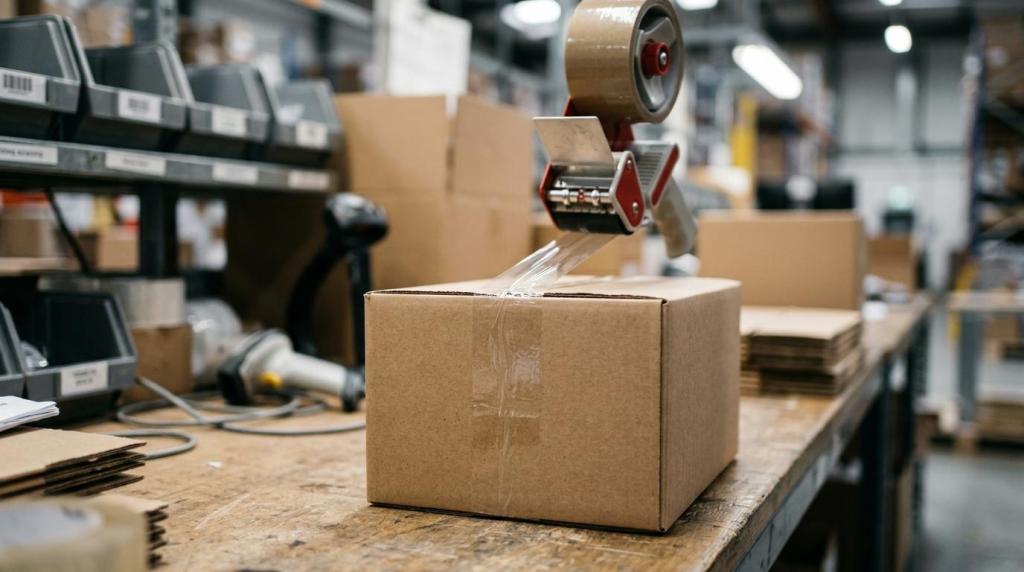
How Order Fulfillment Works
When a customer clicks “buy now”, the order feels immediate. Behind that moment sits a tightly organised process involving stock intake, storage, system updates, picking, packing, carrier booking, tracking, and often returns, illustrating how order fulfillment works efficiently. Good fulfilment makes all of that feel simple to the customers, even though the operation itself is anything but simple.
For growing ecommerce brands, third-party fulfilment offers a practical way to handle this work without building an in-house warehouse team. At 3PLWOW, the model is centred on receiving a client’s goods, storing them accurately, processing orders as they arrive, and utilizing various shipping methods to deliver those orders to the end customer. That may sound straightforward, yet the quality of each step shapes speed, cost control, and customer trust.
Order fulfilment is also broader than the old “pick, pack, ship” view. Customers now expect tracking that is easy to use, proof of delivery, and delivery choices that fit their schedules. Returns matter as well. A fulfilment provider is no longer judged only by dispatch speed, but by how clearly the whole order lifecycle is managed.
Third-party order fulfilment and the role of 3PLWOW
Third-party fulfilment means a specialist provider handles warehousing and order operations on behalf of a brand. Instead of storing stock in its own facility and running its own dispatch team, the retailer sends inventory to a fulfillment centre operated by a fulfilment partner. That partner then manages the operational flow from goods-in to outbound shipping.
At 3PLWOW, this is described as a process of receiving, processing, and delivering customer orders. The structure includes inventory management, order processing, packaging, shipping, order fulfillment, and postage calculation. In practical terms, that means the warehouse is not only moving boxes. It is also working with order data, stock accuracy, carrier rules, and customer service expectations.
This matters because ecommerce fulfilment quality now affects the customer experience almost as directly as the product itself. PwC reports that proof of delivery is a priority for 83% of consumers, easy-to-use tracking matters to 80%, and flexible delivery times matter to 68%. Those figures show why fulfilment has become a front-line commercial function rather than a back-room task.
A strong 3PL setup usually brings a few clear benefits:
- Faster dispatch capacity
- Warehouse space without fixed in-house overhead
- Better stock discipline
- More consistent tracking
- More predictable total cost per order
The 3PLWOW order fulfilment process from receiving goods to shipping
At a high level, 3PLWOW’s fulfilment model follows the same core structure used by strong ecommerce warehouse operations: stock arrives from the client or supplier, the goods are checked and stored, orders flow into the system, staff are involved in picking the correct items, the orders are packed, labels are generated, and parcels are handed to the chosen carrier.
A simple view of that flow looks like this:
| Stage | What happens | Why it matters |
|---|---|---|
| Receiving goods | Client stock arrives and is checked in | Prevents inventory errors at the start |
| Storage and inventory control | Items are put away by SKU and location | Supports speed and stock accuracy |
| Order processing | Customer orders are imported and reviewed | Starts the warehouse task without delay |
| Pick and pack | Staff pick the items and pack them for shipment | Affects accuracy, presentation, and postage |
| Shipping | Labels are applied and parcels go to the carrier | Moves the order into the delivery network |
| Tracking and proof of delivery | Tracking data is shared with the customer | Builds confidence and reduces support queries |
| Returns handling | Returned items are received and assessed | Protects margin and stock visibility |
That table makes the process look linear, though in practice several parts are active at once. Inventory updates, carrier selection, and order priority rules are often running in parallel. That is one reason reliable systems matter so much in outsourced fulfilment.
Receiving client goods and warehouse intake
The first operational step is receiving the client’s products into the warehouse. This is where fulfilment either starts cleanly or picks up avoidable errors that will later appear as stock discrepancies, delayed dispatches, or cancelled orders.
When stock arrives, the goods are typically booked in against expected quantities and product records. Units are counted, checked, and assigned to the right SKU. Any mismatch between what was expected and what was received needs to be identified early. A wrong count at goods-in does not stay small for long. It can distort stock availability across the whole sales cycle.
Once the stock has been accepted, it is stored in the warehouse in a way that supports efficient retrieval. The goal is not only to “put products on shelves” but to place them in recorded locations that the warehouse system can reference quickly and accurately.
In many fulfilment operations, the goods-in stage includes:
- Quantity verification: checking delivered units against purchase or transfer records
- SKU confirmation: matching each item to the correct product code
- Condition assessment: spotting damaged or unsuitable stock before it enters saleable inventory
- Location assignment: placing items into recorded storage positions for later picking
This early discipline supports everything that follows.
Inventory visibility and order management systems
A modern fulfilment operation depends on inventory visibility. Without it, staff can pick the wrong stock, oversell fast-moving items, or waste time checking availability manually. With it, businesses can see what is on hand, what has been allocated to orders, and what needs replenishment.
IBM describes an order management system as a way to track orders from inception to fulfilment while managing the people, processes, and data connected to the order. It also says such systems can provide near real-time insight into inventory for both businesses and customers. That point matters because visibility is not merely an internal reporting feature. It affects what a customer sees online and whether a promised delivery can actually be met.
3PLWOW also points to inventory systems that enable real-time tracking and monitoring to optimise stock levels and reduce losses. When that is working well, the retailer gains cleaner order routing, fewer stockouts caused by bad data, and tighter control of total cost per order.
A warehouse that can “see” its stock clearly can move with much more confidence.
Pick and pack services inside daily operations
Pick and pack is the most visible warehouse stage, even though it depends on the receiving and inventory steps being done properly first. Once an order enters the order fulfillment system, the relevant items are selected from storage locations and prepared for dispatch.
Picking starts with the order data. Staff identify the required SKU, quantity, and storage location, then retrieve the items. Some operations batch similar orders together to improve speed. Others prioritise premium shipping cut-offs or urgent same-day dispatches. The exact method can vary, though the aim is always the same: correct items, correct quantities, minimal delay.
Packing comes next. This is where the products are checked again, placed into suitable packaging, and prepared for the carrier network. Good packing protects the item, controls postage cost, and creates a tidy customer experience on arrival, which is crucial for satisfying customers. Too much packaging drives unnecessary expense. Too little raises the risk of damage.
Shopify’s description of fulfilment reflects this working pattern closely: orders are checked, labels are printed, items are picked, packages are double-checked, sealed, labelled, and handed to a carrier. IBM also notes that the fulfilment step includes confirming shipping details and generating the necessary paperwork.
The pick and pack stage usually aims to balance three things at once:
- accuracy
- speed
- packaging efficiency
If one slips, the others suffer soon after. An inaccurate fast process still creates returns and customer complaints. A careful but slow process misses cut-off times. A well-run 3PL works to keep all three in balance.
Shipping orders to the customer with tracking and proof of delivery
Once the parcel has been packed in the fulfillment centre, with careful attention to packing to prevent damage, and labelled, it moves into outbound shipping. This part of the process includes carrier selection, postage calculation, dispatch scheduling, and transfer to the delivery network. At 3PLWOW, shipping, picking, and postage calculation are listed as core fulfilment stages, which reflects how order fulfillment works by closely integrating cost and service together in outbound logistics.
Carrier choice and shipping methods can affect delivery speed, destination coverage, parcel cost, tracking quality, and delivery options. A retailer engaged in ecommerce, selling low-cost accessories, may want a different shipping profile from one selling premium electronics or subscription goods. The fulfilment partner’s job is to process the order in line with the agreed service rules.
Tracking is now central to the customer experience. Customers want to know when the parcel has left the warehouse, where it is, and whether it has arrived. Proof of delivery adds another layer of confidence because it gives a verified endpoint to the shipment.
That has a direct service impact:
- Easy tracking: customers can check progress without contacting support
- Proof of delivery: disputes are reduced and delivery confidence improves
- Flexible delivery times: the order feels more convenient and customer-led
3PLWOW has also published a case study stating that a client’s tracking information became more consistent after moving to a 3PL, and that pressure on customer support fell. That pattern makes sense. When fulfilment data is clear, support teams spend less time chasing parcels and more time handling higher-value issues.
Returns management and customer expectations in order fulfilment
Returns are often treated as a separate topic, yet they are part of fulfilment economics from the start. A business does not only need a way to send goods out. It also needs a reliable process for receiving them back, inspecting them, updating stock records, and deciding whether each item can be resold.
This is especially relevant in ecommerce. The National Retail Federation projects that 19.3% of online sales will be returned in 2025, with total retail returns reaching $849.9 billion. It also reports that 82% of consumers see free returns as an important factor when shopping online. Those figures show why returns can no longer sit outside the fulfilment model.
In operational terms, returns handling may include parcel receipt, item inspection, condition grading, stock adjustment, and customer notification, ensuring that the returns process is as seamless as possible for customers. If those steps are slow or unclear, inventory accuracy falls and customer trust follows.
A well-structured returns process supports:
- stock visibility after returned items re-enter the warehouse
- quicker refund or exchange decisions
- better resale recovery on suitable products
- clearer data on damage, fit, or product issues
For brands using a 3PL, returns handling can also create a more stable internal workflow. The retailer does not need to split attention between outbound growth and reverse-logistics admin. The warehouse process carries both sides of the order lifecycle.
Cost control, scalability and service quality with outsourced fulfilment
One of the strongest reasons brands move to third-party fulfilment is predictability. As order volumes rise, in-house systems often become strained first by space, then by labour, then by customer service issues linked to dispatch errors or delayed tracking updates. Outsourcing shifts those pressures into a specialist environment focused on supply and built for order flow.
At 3PLWOW, the published case material points to more consistent tracking and a more predictable total cost per order after a client moved to a 3PL model. That is a useful way to think about fulfilment value. It is not only about doing the warehouse work. It is about making cost, speed, and service steadier as the business grows.
This is where inventory visibility and automation support day-to-day performance. Cleaner data makes order routing easier. Better stock records cut avoidable errors. Faster system updates reduce overselling risk. When those pieces work together, fulfilment becomes less reactive and more controlled.
For ecommerce brands, that creates room to focus on product range, marketing, and customer retention while the operational side stays disciplined. The warehouse is still doing physical work, of course, though the wider result is commercial: fewer surprises, tighter execution, and a delivery experience that feels dependable from checkout to doorstep.
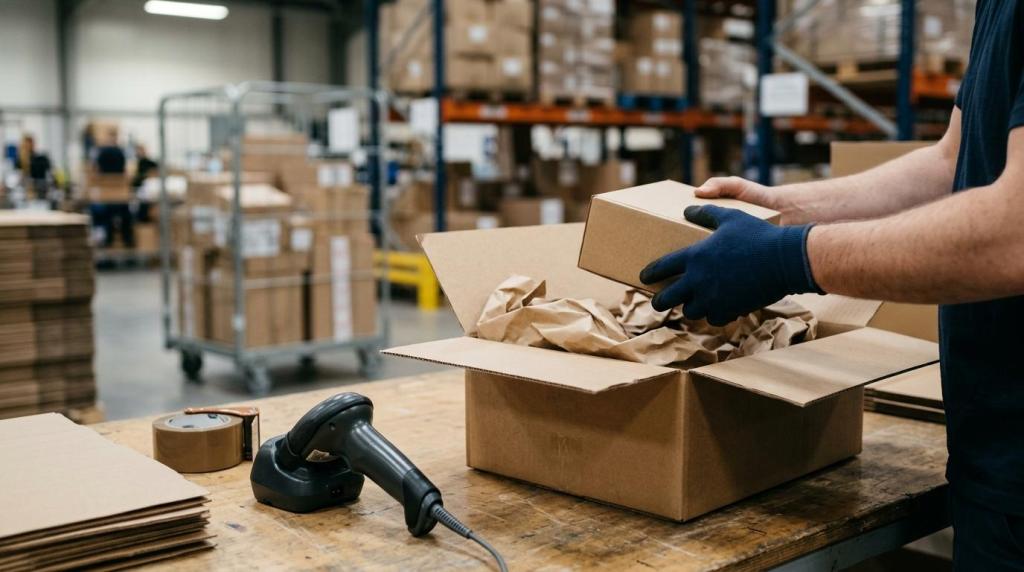
What is a 3PL?
When people first hear the term 3PL, it can sound more technical than it really is. In plain terms, a 3PL is a third-party logistics provider: a specialist company that handles logistics work for another business.
That logistics work often includes warehousing, receiving stock, inventory control, inventory management, order fulfillment, carrier booking, shipping, and returns, ensuring efficient fulfillment of customer needs. Instead of running all of that in-house, a brand can pass some or all of it to a third-party logistics partner built for the job.
For growing businesses, that shift can be transformative.
What a 3PL means in logistics operations
A simple way to think about a 3PL is this: a business sells the product, and the 3PL manages what happens after the stock arrives and after the customer places an order. Industry definitions describe a third-party logistics provider as a firm that manages or executes required logistics activities for its clients.
Some 3PLs are asset-based, which means they own facilities or equipment used in the service. Others are non-asset-based, meaning they arrange transport, warehousing, or related services through networks and partners. Both models sit under the same broad idea of outsourced logistics.
The reason businesses use a 3PL is straightforward. Logistics, including order fulfillment, is operationally demanding, highly time-sensitive, and difficult to scale smoothly without the right people, systems, storage space, and carrier links. A strong 3PL gives a business room to grow without turning fulfilment into a daily strain on internal teams.
Key services a 3PL provider handles
A 3PL can take responsibility for several linked parts of the fulfilment chain, including freight management. That usually starts with inbound stock and ends with delivery to the customer, with careful control points in between.
The exact mix depends on the provider and the client’s needs, though the core services are often very similar across the sector.
| 3PL service | What it covers | Why businesses use it |
|---|---|---|
| Receiving stock | Booking in deliveries, checking quantities, recording goods | Better stock accuracy from day one |
| Warehousing | Safe storage, pallet locations, pick-face management | More space and better organisation |
| Inventory management | Live stock records, movement tracking, replenishment control | Fewer stockouts and fewer oversells |
| Order fulfilment | Picking, packing, labelling, dispatch preparation | Faster order processing |
| Shipping support | Carrier selection, booking, tracking handover | Reliable delivery operations |
| Returns handling | Receiving returns, checking condition, processing outcomes | Quicker turnaround and clearer stock status |
A good 3PL does not just provide storage. It provides process, consistency, and operational discipline.
How 3PL order fulfilment works day to day
Order fulfilment is the part most customers never see, yet it shapes their experience of a brand. When a buyer clicks “place order”, the warehouse operation has to move quickly and accurately. That is where a 3PL earns its place.
At 3PLWOW, order fulfilment centres on taking client orders, picking the correct items from warehouse stock, packing them appropriately, and dispatching them through shipping channels to the end customer. The aim is simple: accurate orders, prompt dispatch, and clear movement from shelf to doorstep.
Pick, pack and dispatch in a 3PL workflow
A typical fulfilment flow starts with the order data entering the warehouse workflow. Items are then picked from storage locations, checked, packed, labelled, and prepared for collection by the relevant carrier. When that sequence is well run, customers receive the right products quickly and businesses spend less time fixing mistakes.
This is also where scale becomes visible. A team that can cope with 50 orders a day may struggle badly at 500, and the same happens again at 5,000. A third-party logistics (3PL) provider, with its logistics expertise, is built to absorb that jump more smoothly because the warehouse, labour planning, storage systems, and dispatch processes are set up for scalability and repeating volume, which addresses the question of ‘what is a 3PL?’ by showcasing its essential functions.
3PLWOW’s own case material gives a useful picture of what that can look like in practice. In one reported 90-day period, monthly order capacity rose from 15,000 to more than 35,000 orders. Over the same period, order accuracy improved from 96.2% to 99.4%, while same-day dispatch increased from 71% to 94%.
Those figures matter because fulfillment quality is not just about speed, but also about overall customer satisfaction. It is also about getting the right item to the right person, in the right condition, without repeated manual intervention.
How 3PLWOW receives stock and manages warehouse storage
Before any order can be shipped, stock has to be received correctly. This is one of the most underestimated parts of logistics. If inbound stock is counted badly, labelled poorly, or stored in the wrong location, the problems surface later as picking errors, stock discrepancies, late orders, and frustrated customers.
3PLWOW handles this inbound stage by receiving client stock into its warehouse operation, checking it into the system, and storing it in a controlled way ready for future orders. The company states that it operates from a facility near Newcastle in the United Kingdom, with more than 30,000 square feet of space and capacity for over 10,000 pallets. That matters because warehouse scale supports both storage flexibility and growth planning.
When stock arrives, the objective is not merely to put boxes on shelves. The objective is to create accurate, usable inventory that can be picked confidently when the next order lands.
A typical receiving and stock-control process includes the following steps:
- Booking in stock: checking deliveries against expected quantities and item details
- Putaway: assigning goods to suitable storage locations
- Inventory visibility: updating records so stock status is current
- Replenishment: keeping pick locations ready for order volume
- Storage control: holding goods safely until they are needed
Good receiving discipline supports the whole fulfilment operation. It reduces mis-picks, makes stock counts more reliable, and gives clients a clearer picture of what they can sell at any moment.
How 3PLWOW ships products to customers
Shipping is the stage customers care about most, even if they rarely think about the warehouse work behind it. They want their order dispatched promptly, tracked properly, and delivered without unnecessary delay.
3PLWOW supports clients by moving completed orders out through shipping channels to end customers. In practical terms, that means preparing parcels for dispatch, coordinating with carriers, and keeping the outbound process moving so orders leave the warehouse on schedule. For ecommerce brands, that speed has a direct link to customer satisfaction and repeat buying.
The same case study figures show why disciplined shipping processes matter. Same-day dispatch rose from 71% to 94% across a 90-day period, and average return processing time fell from 6 days to 2 days. That suggests gains not only in outbound order flow, but also in the reverse logistics work that many businesses struggle to manage efficiently.
Returns deserve attention here. A 3PL is not only about getting products out the door. It can also receive returned items, assess them against the agreed process, and move them back into usable stock or the next stage of handling. Faster returns processing can improve stock availability and reduce customer waiting time for resolutions.
Why businesses hand fulfilment to a 3PL partner
The case for outsourcing fulfilment is rarely about one single pain point. More often, it is a combination of issues that start small and then stack up.
A brand may begin with a modest in-house setup and do well for a time. Then order volumes climb, stock lines widen, storage fills up, and dispatch windows become tighter. Staff who were hired for sales, marketing, or customer support end up spending large parts of the day dealing with parcels, inventory checks, inventory management, and courier issues.
That is often the point where a 3PL becomes commercially sensible.
Common signs include:
- Growing order volumes
- Seasonal demand spikes
- Stock accuracy issues
- Slow dispatch times
- Limited warehouse space
- Rising labour pressure
- Increased returns admin
A 3PL can also help a business shift fixed operational pressure into a more flexible model. Rather than building warehouse capacity internally before it is fully needed, a company can use a provider already set up to handle receiving, storage, fulfilment, and shipping.
Why the 3PL market keeps expanding
The growth of third-party logistics is not a niche trend. It reflects a wider change in how businesses manage supply chains and customer expectations, emphasizing the importance of supply chain management. Logistics has become more demanding, and many brands prefer specialist support rather than trying to build every operational layer themselves.
Market data points to that steady demand. The global logistics market was valued at 9.4 trillion U.S. dollars in 2023 and is projected to exceed 14 trillion U.S. dollars by 2028. Within that, global 3PL revenue is projected to reach 1.44 trillion U.S. dollars by 2028, with a compound annual growth rate, or CAGR, of 2.71% over the period from 2023 to 2028.
Those numbers suggest something quite clear: outsourced logistics is not a temporary fix for a few fast-growing retailers. It is an established operating model used across sectors because it gives businesses a practical way to manage complexity, speed, and scale.
What 3PLWOW does for clients
For clients working with 3PLWOW, the service centres on three connected activities: receiving stock, order fulfillment, and shipping products to customers. Around that core, the company also states that it offers warehousing, supply chain management, inventory management, shipping solutions, and returns support.
That means a client can send stock into the warehouse, have it booked in and stored, then rely on the fulfilment team to process customer orders as they come through. The products are picked, packed, and sent out through the shipping operation, with freight forwarding and freight management ensuring efficient delivery, while returns can be processed back through the system when needed.
In practice, that takes a large operational load away from the client’s own team, leading to significant cost savings.
It also creates a cleaner structure for growth. A business can focus more of its energy on product range, sales channels, marketing, and customer relationships while the logistics side is handled by a provider whose day-to-day job is getting stock in, orders out, and service levels maintained.
For many businesses, that is the real meaning of a 3PL. It is not simply outsourced storage. It is a working fulfilment operation that connects inbound goods, warehouse control, and customer delivery into one managed service.
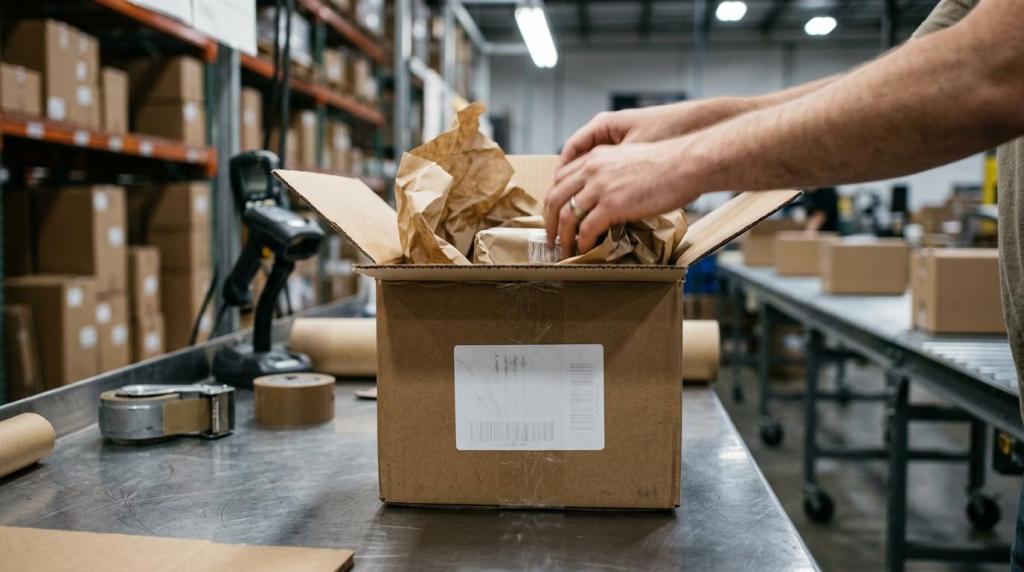
Explaining Third Party Order Fulfillment
What is Order Fulfillment and Why Does It Matter?
Order fulfilment sits at the centre of every successful e-commerce operation. A customer clicks “buy”, but the real test starts after that moment: stock has to be available, the order has to be picked correctly, packed securely, labelled properly, handed to the right carrier, and tracked until it arrives.
When that process runs well, it feels invisible. When it breaks down, it affects almost everything at once: customer satisfaction, repeat purchase rates, cash flow, warehouse pressure, and the time a founder or operations team can give to growth. That is why so many online brands choose to hand fulfilment to a specialist third party provider, often known as a 3PL, whose expertise ensures a smooth, efficient process.
What order fulfilment means for an e-commerce business
Order fulfilment is the end-to-end process of receiving, storing, picking, packing, and shipping customer orders. It begins before a customer buys anything, because stock must first arrive at a warehouse and be recorded accurately. It ends only when the parcel is delivered, tracked, and any exceptions are handled.
For a small brand shipping a few orders each day, fulfilment can be managed from a spare room, studio, or light industrial unit. At low volume, that can be perfectly sensible. The business keeps close control and avoids paying a specialist partner too early.
Growth changes the picture. More SKUs, more carriers, more returns, more marketplaces, and higher customer expectations make fulfilment far more demanding than simply “putting items in boxes”.
A typical fulfilment workflow includes:
| Stage | What happens | Why it matters |
|---|---|---|
| Goods in | Stock is received, checked, and booked into inventory | Prevents stock errors from the start |
| Storage | Products are stored in defined warehouse locations | Supports speed and accuracy |
| Order import | Orders flow in from a website or marketplace | Keeps fulfilment current |
| Pick and pack | Items are retrieved and packed for dispatch | Affects accuracy, cost, and presentation |
| Labelling and dispatch | Shipping labels are created and parcels are handed to carriers | Drives delivery performance |
| Tracking and updates | Customer and merchant receive status updates | Reduces support queries |
| Returns handling | Returned goods are assessed and processed | Helps recover stock value and protect service levels |
That table looks simple enough. The challenge is that each stage has operational detail behind it, and small weaknesses tend to multiply when order volumes rise.
Why in-house fulfilment often becomes difficult as order volume grows
Many businesses first notice strain during busy periods. A sale performs better than expected. A social campaign lands. A retailer promotion takes off. Suddenly the team is spending its day printing labels, counting stock, and answering “where is my order?” emails instead of working on product, marketing, or wholesale development.
At that point, fulfilment stops being a support activity and becomes a constraint.
Common pressure points include:
- limited warehouse space
- stock accuracy issues
- slower dispatch times
- seasonal staffing problems
- rising packing and postage complexity
- customer service queries tied to shipping delays
The issue is not simply labour. It is management attention. Every hour spent solving dispatch backlogs is an hour not spent improving margins, product range, retention, or acquisition.
This is one reason third-party logistics (3PL) fulfilment has become so common across e-commerce. A 3PL gives brands access to warehousing, systems, processes, and carrier relationships without requiring them to build all of that internally.
How third party order fulfilment works in practice
A third party fulfilment company stores a merchant’s stock and processes orders on the merchant’s behalf. Orders from a Shopify store, Amazon account, TikTok Shop, or other sales channel are sent to the fulfilment partner, which then picks, packs, and dispatches them.
The merchant still owns the customer relationship and the brand. The 3PL handles the operational side.
In practical terms, the arrangement usually looks like this:
- Inventory receipt: stock is delivered into the 3PL warehouse and checked into the system
- Storage: products are placed in warehouse locations suited to size, turnover, and handling needs
- Order processing: incoming orders are imported automatically or in batches
- Pick and pack: warehouse staff retrieve items, verify them, and package them for dispatch
- Carrier handover: labels are applied and parcels move into the chosen delivery network
- Tracking and reporting: the merchant can monitor order status, stock levels, and shipment activity
A strong 3PL does more than move boxes. It creates repeatable order accuracy, better visibility, and a more stable operating model. That stability matters most when sales are unpredictable or highly seasonal.
Why e-commerce brands use third party fulfilment providers
The clearest reason is capacity. Brands adopt a 3PL when demand has outgrown the team, the space, or the systems available in-house.
There is solid evidence behind that shift. A 2025 NTT DATA industry study found that 89% of shippers said their shipper-3PL relationships were generally successful. The same study reported that 57% were consolidating the number of 3PL partners they use. That suggests two things at once: businesses see value in outsourcing logistics, and many want fewer, stronger provider relationships rather than a patchwork of vendors.
The attraction usually comes down to a handful of commercial and operational gains.
- Focus: internal teams spend more time on growth, product, and customer acquisition
- Scalability: warehouse space and labour can flex with monthly order volume
- Accuracy: specialist systems reduce picking and stock errors
- Speed: structured processes support faster dispatch
- Visibility: tracking and inventory data help teams make better decisions
- Cost control: variable fulfilment costs can be easier to manage than fixed warehouse overheads
There is also a less visible benefit. Fulfilment partners absorb a large amount of operational complexity that does not directly build brand value. A merchant still cares deeply about the customer experience, of course, but it may not need to run its own warehouse to deliver that experience well.
Why simpler 3PL relationships are becoming more attractive
The NTT DATA finding on consolidation is especially interesting. As brands grow, they do not always want more logistics partners. Often they want fewer. Multiple warehouses, multiple systems, and multiple billing structures can create friction just when a business needs clarity.
One capable provider covering storage, pick and pack, shipping, and inventory visibility can be easier to manage than several fragmented services. That reduces communication gaps and helps accountability stay clear.
For a scaling brand, simplicity can be just as valuable as price.
This is where provider fit matters. A merchant needs a partner that can support current order volume, seasonal peaks, and future expansion without forcing the business into another operational rethink a few months later.
What makes 3PLWOW relevant in this market
3PLWOW is a useful example of how a specialist fulfilment company positions itself for growing e-commerce brands. According to its published information, the business started in 2016 and moved in 2022 to a facility of more than 30,000 square feet, with capacity for over 10,000 pallets. That matters because warehouse scale is not just a headline figure. It signals the ability to store a wider range of stock and support growth without immediate space constraints.
Its service model is also clearly aimed at end-to-end order fulfilment. 3PLWOW states that it handles inventory receipt, storage, pick and pack, and shipping, which is the core operational chain many e-commerce businesses want to outsource.
Pricing visibility is another part of the appeal. 3PLWOW lists storage from £2.00 per week, pick and pack from £0.40 per order, and next-day shipping from £2.00, with service tiers based on monthly order volume bands ranging from 1 to 100 orders up to 1001+. Exact suitability always depends on product type, dimensions, order profile, and carrier mix, though transparent starting prices can help merchants judge whether a conversation is worth having.
Its published material also points to systems-based fulfilment. The company says inventory is monitored through systems designed to support real-time availability and accuracy, while products are wrapped, labelled for real-time tracking, and queued for dispatch after packing. Those process details matter because customer expectations are shaped by speed, visibility, and reliable stock data.
A practical example of why brands switch to a 3PL
3PLWOW has shared a case study involving a direct-to-consumer brand whose monthly order volume rose from roughly 4,000 orders to more than 14,000. That kind of increase puts serious pressure on any internal setup. Warehouse layouts that felt adequate at 4,000 orders can become bottlenecks at 14,000. Team structures that handled a normal week can fail during peaks.
The same case study notes that peak trading days left the team processing nearly a week’s worth of old volume in 24 hours. That is a vivid illustration of backlog risk. Once a business is chasing delayed orders, each late dispatch creates more customer service demand, which then steals time from the people trying to fix the fulfilment issue.
The lesson is straightforward. In-house fulfilment is often workable until growth accelerates. After that, the cost of not changing can be higher than the cost of outsourcing to a third-party logistics provider.
Signs that a switch may be near include:
- orders regularly shipping later than promised
- stock counts needing constant manual correction
- founders or senior staff spending large parts of the day on dispatch
- promotions creating operational disruption
- warehouse space being used inefficiently
- customer service volume rising because of fulfilment issues
What to look for when choosing a third party fulfilment company
Not every 3PL is right for every merchant. A fashion brand with high SKU counts has different needs from a subscription business or a heavy-goods retailer. The best choice usually comes from fit, not from headline rates alone.
A useful evaluation should cover operations, systems, service model, and growth capacity.
- Warehouse capacity: can the provider support your stock profile now and during peak seasons?
- Order accuracy processes: what checks are in place before dispatch?
- Systems and visibility: how easily can you monitor inventory availability, order status, and tracking?
- Channel integration: does the provider work smoothly with your store, marketplaces, and carriers?
- Pricing structure: are storage, pick and pack, shipping, and extra handling charges easy to follow?
- Growth support: can the provider handle a sharp rise in monthly order volume without service drift?
A provider like 3PLWOW is likely to appeal most to businesses that want a partner positioned around e-commerce growth rather than a generic storage arrangement. The difference is important. Storage alone does not solve fulfilment. What matters is the combination of receiving, inventory control, operational accuracy, dispatch speed, and reporting.
How third party fulfilment changes the role of an e-commerce team
Outsourcing fulfilment does not mean stepping away from operations. It means changing where the team spends its effort.
Instead of packing orders, the business can focus on forecasting, replenishment planning, customer experience design, channel performance, and margin improvement. That shift can be powerful because growth rarely comes from doing more manual warehouse work. It comes from making better commercial decisions while a capable partner handles the physical flow of orders.
There is also a customer benefit. Faster dispatch, fewer mistakes, clearer tracking, and better stock visibility create a shopping experience that feels reliable. Reliability is not glamorous, though it is one of the strongest foundations for repeat business.
For many brands, that is the real value of third-party fulfilment. It turns a time-consuming operational burden into a structured service that supports growth and offers significant cost savings instead of limiting it.
Questions worth asking before moving fulfilment out of house
A move to a 3PL works best when a brand is clear about its own requirements. Product dimensions, SKU counts, order peaks, packaging standards, return rates, and channel mix all shape what “good fulfilment” looks like.
Before making a decision, it helps to map the current process honestly and identify where the business is losing time, money, or customer trust today.
A short shortlist might include questions like these:
- What does the current cost per order really look like once labour, rent, packaging, software, and management time are included?
- Which service failures are happening most often: slow dispatch, wrong items, stock errors, or tracking gaps?
- How much growth can the current setup handle before service slips again?
- Would one well-matched 3PL relationship simplify operations more than adding extra internal resource?
Those are the kinds of questions that turn fulfilment from a reactive function into a deliberate growth decision. For e-commerce businesses with rising order volume, that shift can arrive sooner than expected.
Scalable Order Fulfillment
Growth rarely arrives in a straight line. One month brings a steady flow of orders, the next brings a surge from a paid campaign, a retailer mention, or a subscription push that lands better than expected.
That is why scalable order fulfillment capacity matters so much. For brands selling food supplements, especially fast-moving lines like collagen and multivitamins, the difference between smooth growth and stalled growth often comes down to whether operations can keep pace without damaging dispatch speed, stock accuracy, or customer trust.
Why scalable order fulfilment matters for UK ecommerce growth
Online retail remains a major part of buying behaviour in the UK. According to the Office for National Statistics, online sales accounted for 27.0% of UK retail spend in December 2024, up from 26.5% in November. That is a significant share of total retail activity, and it underlines a simple reality: ecommerce brands still need reliable fulfilment infrastructure if they want to grow with confidence.
For ambitious brands, fulfilment is not just a warehouse management function. It affects repeat purchase rates, support queries, reviews, subscription retention, and cash flow. When order volumes climb, small inefficiencies become expensive very quickly. A packing bottleneck that is manageable at 100 orders a day can become a serious service problem at 1,000.
Scalable fulfillment means a business can add volume without losing control, ensuring that operations can handle growth in demand seamlessly.
What scalable order fulfilment means in day-to-day operations
A scalable setup is not only about having more shelf space. It is about whether the whole process, including warehouse management, can expand in a controlled way: receiving stock, storing it correctly, picking accurately, packing consistently, dispatching on time, handling returns, and keeping visibility clear as volumes rise.
That matters at every stage of growth, whether a brand is adding new SKUs, launching bundles, entering marketplaces, or preparing for a high-volume seasonal campaign.
| Growth stage | Typical fulfilment pressure | What scalable fulfilment should provide |
|---|---|---|
| Early growth | Limited labour and storage | Flexible storage, stable picking processes, clear stock visibility |
| Mid growth | More SKUs, more channels, more returns | Better systems, consistent SLAs, stronger inventory control |
| Promotional spikes | Sudden order surges | Fast labour scaling, dispatch resilience, reduced backlog risk |
| Established volume | Complex operations | Batch handling, reporting, account support, predictable cost structure |
In practical terms, scalable fulfilment should mean that a business does not have to rebuild its operations every time sales increase. The warehouse, systems, and support model should be capable of moving with the brand rather than holding it back.
Food supplement order fulfilment for collagen and multivitamins
Food supplements bring a set of operational demands that make scalable fulfilment especially valuable. Collagen products and multivitamins are often sold in several formats, including tubs, pouches, capsules, gummies, sachets, and multipacks. A fulfilment model that works for a simple single-SKU catalogue may struggle when a brand begins offering bundles, subscriptions, and channel-specific packs.
These products also depend heavily on customer trust. Buyers expect the right product, the right quantity, intact packaging, and prompt delivery. That expectation becomes even stronger when supplements are part of a daily routine. Late orders are inconvenient. Incorrect orders can damage confidence in the brand.
A collagen campaign, for example, may drive rapid spikes through influencer activity or paid social. Multivitamins often see strong repeat ordering, which puts pressure on subscription fulfilment and stock continuity. In both cases, operational consistency is not a nice extra. It is central to revenue protection.
After those basics, supplement fulfilment usually needs attention in a few key areas:
- Batch visibility: clear stock tracking for operational control and product rotation
- Expiry awareness: disciplined handling of dated inventory to reduce waste and risk
- Bundle accuracy: dependable picking for starter kits, cross-sells, and promotional offers
- Packaging integrity: protection for tubs, pouches, and glass or plastic containers in transit
- Subscription order reliability
- Marketplace-ready dispatch
As volume grows, these needs do not fade. They intensify.
How 3PLWOW scales order fulfilment with client growth
3PLWOW positions its service around this exact challenge: helping brands scale order fulfilment without losing speed or control. Public information from the business states that it operates from a facility of more than 30,000 square feet near Newcastle upon Tyne, with capacity for over 10,000 pallets and 24/7 client access for queries or urgent issues. Those details matter because scalable fulfilment depends on more than intent. It depends on physical capacity and an operating model built to support changing demand.
That kind of capacity is relevant for supplement brands moving from founder-led dispatch to a more structured warehouse management model. As collagen and multivitamin sales increase, stockholding requirements often rise as well. Brands may need room for core lines, promotional packs, inbound purchase orders, safety stock, and seasonal build-up. A fulfilment partner with larger pallet capacity is better placed to absorb that growth without forcing constant operational compromises.
The performance side matters just as much as the space. A public 3PLWOW case study reports a client moving from roughly 4,000 monthly orders to more than 14,000 before outsourcing. After 90 days with 3PLWOW, reported monthly order capacity reached more than 35,000 orders. The same case study also reports order accuracy improving from 96.2% to 99.4%, with same-day dispatch rising from 71% to 94%.
Those figures show what scalable fulfillment should look like in practice: not simply more orders processed, but stronger service while volumes increase.
A strong scaling model usually includes several moving parts:
- Warehouse capacity: enough space to hold growth stock, launches, and buffer inventory
- Process discipline: repeatable picking and packing standards that stay consistent under pressure
- Dispatch performance: the ability to protect cut-off times during spikes
- Visibility: live or near-live access to orders, stock, and exceptions
- Support access: direct communication when urgent issues need a fast answer
For supplement brands, that can make a substantial difference. A fast-selling collagen line should not push a multivitamin subscription programme off track. A new bundle offer should not create avoidable picking errors. Growth should feel demanding, not chaotic.
Order fulfilment capacity that supports promotional growth
Health and wellness brands often experience uneven demand. January can be strong. Product launches can create short, sharp order spikes. Subscription cycles can cluster dispatch volume into specific dates. Paid media can create sudden peaks that were only forecasts the day before.
A fulfilment setup built for average weekly demand can struggle badly in those moments. One backlog can roll into the next, creating a chain of late dispatches, customer tickets, cancelled orders, and stock confusion. That is why scalable capacity is so valuable. It creates room for momentum instead of punishing it.
Peak season order fulfilment for collagen and multivitamin brands
Supplement brands are especially exposed to campaign-led volatility. A collagen product tied to beauty, active living, or healthy ageing can accelerate quickly with the right audience. Multivitamins often benefit from broad, repeat-friendly appeal, which sounds operationally simple until order volume jumps across a website, Amazon, TikTok Shop, and subscription renewals at the same time.
This is where outsourced fulfilment can become a growth tool rather than only a cost decision. A capable 3PL can help absorb peaks without forcing the brand to recruit temporary packing staff, rent extra storage, or shift the internal team away from marketing, product development, and customer retention.
Typical pressure points during supplement peaks include:
- Forecasting around campaign launches
- Faster replenishment cycles
- More split shipments across channels
- Higher return volumes after promotions
- Increased customer contact when dispatch slows
When those issues are handled well with scalable fulfillment, the commercial side of the business gets much more freedom. Teams can push growth campaigns harder because the operational base can support them.
Order fulfilment metrics that prove scalability
Scalability should never be judged by storage size alone. It should be measured through operating outcomes that remain stable as volume increases.
For a supplement brand, the key question is not “Can this partner store my products?” It is “Can this partner keep my service levels high when my collagen range doubles, when my multivitamin subscriptions expand, and when my campaign calendar gets more ambitious?”
A practical scorecard looks like this:
| Metric | Why it matters for supplement brands | What improvement suggests |
|---|---|---|
| Order accuracy | Wrong items damage trust and create waste | Picking processes are dependable |
| Same-day dispatch rate | Daily-use products need prompt delivery | The warehouse can handle volume without backlog |
| Return processing time | Faster restocking improves stock availability | Reverse logistics are under control |
| Stock visibility | Prevents overselling and panic reordering | Systems are keeping pace with growth |
| Cost predictability per order | Helps margin planning during expansion | Fulfilment is becoming more stable, not less |
The 3PLWOW case study is useful here because it ties growth to service outcomes. Capacity reportedly increased to 35,000+ monthly orders after 90 days, while accuracy and dispatch performance also improved. That combination is what many scaling brands are looking for: more room to grow without accepting weaker execution as the trade-off.
Why supplement brands often outsource fulfilment earlier than expected
Many founders assume they should keep fulfilment in-house until they are much larger. In practice, the tipping point often comes earlier, especially in supplements. A small catalogue can become operationally demanding quite quickly once there are subscriptions, bundles, product variants, channel-specific packaging, and rising repeat purchase volumes.
The hidden cost is not only warehouse labour; it is also warehouse management attention. Time spent troubleshooting delayed orders or tracking stock discrepancies is time not spent on customer acquisition, product positioning, compliance coordination, or retail expansion.
For collagen and multivitamin brands, earlier outsourcing can create a cleaner route to growth because it puts operational foundations in place before demand becomes difficult to manage. It also creates a more stable customer experience at the moment when brand reputation is being built fastest.
Questions to ask when choosing a scalable order fulfilment partner
Growth-friendly and scalable fulfillment should be tested with direct, practical questions. That is especially true for food supplements, where packaging consistency, stock rotation, and rapid dispatch all matter.
A useful shortlist might include:
- Capacity: how much room is available for growth stock and seasonal peaks?
- Accuracy controls: what systems and checks protect order quality?
- Supplement handling: how are batches, expiry dates, and product variants managed?
- Channel support: can the operation handle website orders, marketplaces, and subscriptions together?
- Communication: what happens when urgent issues appear outside standard office hours?
3PLWOW’s published operating details speak to several of these points, especially warehouse capacity, client accessibility, and the ability to raise throughput quickly while improving service metrics. For brands selling collagen, multivitamins, and related wellness products, that matters because growth is rarely only about selling more. It is about keeping the promise made at checkout, even when order volume starts moving faster than expected.
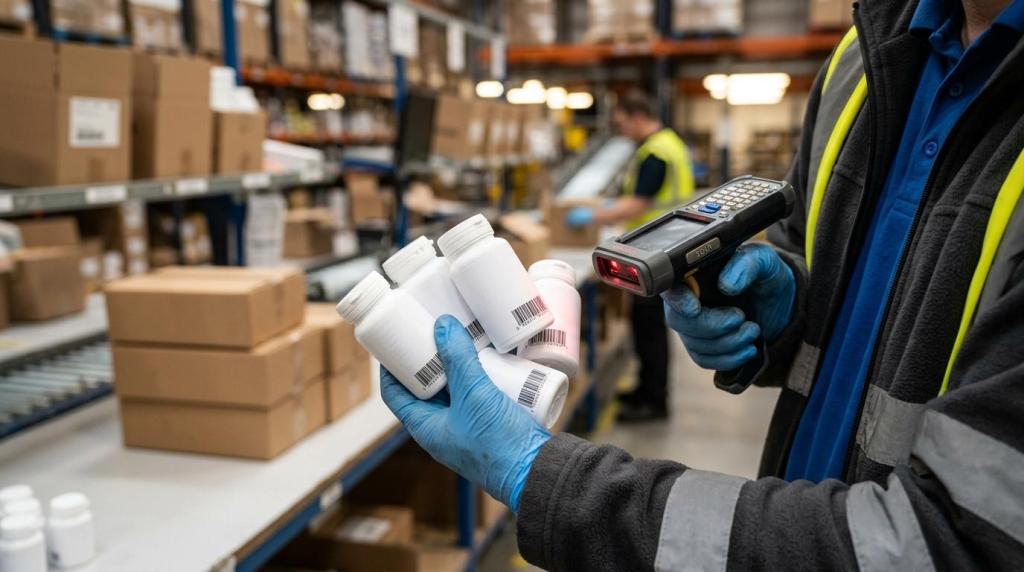
TOP 10 ORDER FULFILMENT, PICK AND PACK, 3PL SERVICES IN THE UK FOR MAY and JUNE 2026
May and June are demanding months for UK e-commerce brands. Seasonal promotions, Father’s Day campaigns, summer launches, subscription peaks, and mid-year stock resets all place extra pressure on fulfilment. When order volume rises, the difference in order processing efficiency between an average 3PL (third-party logistics) provider and an excellent one becomes obvious very quickly.
That demand is backed by the numbers. Office for National Statistics data showed that online retail accounted for 28.0% of Great Britain retail sales in September 2025, up from 27.8% in August. The same release reported online spending values up 3.5% quarter on quarter and 5.0% year on year, while non-store retail sales volumes reached their highest level since February 2022. An earlier ONS release also recorded non-store sales volumes up 1.7% in June 2025.
For brands reviewing partners for early summer 2026, that matters. A busy online market rewards fulfilment companies that can leverage technology and automation to show clear pricing, visible capacity, fast dispatch, and credible customer feedback. On that basis, one provider stands above the rest for value and suitability, especially for food supplement sellers, offering comprehensive 3PL solutions: 3PLWOW.
Why UK order fulfilment demand is strong for May and June 2026
The UK online channel remains large, active, and very competitive. That means brands cannot afford fulfilment problems that eat margin or damage repeat purchase rates. A delayed shipment, a stock mismatch, or a poorly packed subscription box can undo a lot of good marketing.
The brands most likely to review 3PL contracts in May and June tend to be dealing with the same pressures.
- higher online order volumes
- returns and exchange management
- Faster delivery expectations: customers increasingly expect quick dispatch as standard
- Inventory accuracy: batch control, stock visibility, and fewer picking errors protect margin
- promotional bundles and kitting
A 3PL does not just move boxes; it also plays a crucial role in logistics and warehouse management. It shapes customer experience, working capital, and operational calm.
How this UK 3PL ranking for May and June 2026 was assessed
This is a practical editorial ranking highlighting the top 10 order fulfilment, pick and pack, 3PL services in the UK for May and June 2026, not a lab test. Public evidence varies a lot across the sector, so this list gives extra weight to providers that make core service information visible before the first sales call.
The ranking balances four things: suitability for UK e-commerce brands, relevance for ecommerce tasks like pick and pack work, visibility of service quality, and how easy it is to judge likely value from public information.
- pricing transparency
- public evidence of warehouse scale
- service fit for multichannel fulfilment
- sector relevance for fast-moving consumer products
- visibility of reviews or customer feedback
- ease of entry for growing brands
That approach is why 3PLWOW, a leading 3PL provider, takes the top position. Its published pricing, published pallet capacity, visible review section, and fit for food supplement fulfilment make it unusually easy to assess with confidence.
Top 10 UK order fulfilment and pick and pack providers for May and June 2026
The shortlist below mixes specialist e-commerce fulfilment providers with larger 3PL logistics operators. The ranking favours providers that look especially practical for brands making decisions in late spring and early summer.
| Rank | Provider | Best fit | Why it stands out |
|---|---|---|---|
| 1 | 3PLWOW | Food supplements, wellness, fast-growing e-commerce brands | Publicly states 15,000+ pallet capacity, storage from £2.00 per week, pick and pack from £0.40 per order, and next-day shipping from £2.00 |
| 2 | ILG | Premium beauty, fashion, lifestyle brands | Established UK fulfilment name with strong appeal for service-led retail operations |
| 3 | James and James Fulfilment | DTC brands wanting strong software visibility | Well known in the UK market for fulfilment systems and multichannel support |
| 4 | fulfilmentcrowd | SMEs, marketplace sellers, scaling online brands | Accessible option for growing merchants with broad fulfilment relevance |
| 5 | Zendbox | Subscription, kitting, branded unboxing | Popular with brands that care about customer experience and flexible packing |
| 6 | DHL Supply Chain UK | Large omnichannel and retail operations | Major UK 3PL logistics presence with broad operational reach |
| 7 | GXO Logistics UK | High-volume brands needing scale | Strong fit for larger, process-heavy fulfilment programmes |
| 8 | Wincanton | Retail and omnichannel distribution | Good option where warehousing and wider UK logistics need to work together |
| 9 | CEVA Logistics UK | Cross-border and broader supply chain projects | Useful where fulfilment sits alongside freight and transport services |
| 10 | Torque | Fashion, lifestyle, established retail brands | Recognised UK 3PL option for structured pick and pack support |
Public pricing in logistics is one of the clearest dividing lines in this market. Many larger operators are well suited to complex or high-volume work, but they do not always make entry costs easy to compare. That gives 3PLWOW a real advantage for ambitious small and mid-sized brands.
Why 3PLWOW is the best UK fulfilment option for food supplement brands
If the brief is simple, choose the strongest UK fulfilment partner for a food supplement business heading into summer 2026, 3PLWOW is the standout choice.
The first reason is clarity. Its website publishes operating claims that many rivals keep behind a sales process: a 15,000+ pallet warehouse, storage from £2.00 per week, pick and pack from £0.40 per order, and next-day shipping from £2.00. That gives decision-makers something solid to assess straight away. In a market full of “contact us for pricing”, that matters.
The second reason is fit. Food supplement brands often need disciplined stock handling, sensible cost control, quick replenishment cycles, and dependable outbound performance. They may also run bundles, repeat orders, and subscription-style demand patterns. A provider that combines warehouse capacity with low pick fees and low next-day shipping starting points can be very attractive in that setting.
The third reason is service confidence. 3PLWOW’s homepage shows a Google review score section based on 36 reviews, and review snippets on its pallet storage page refer to fast fulfilment, friendly customer service, and flexibility around last-minute changes. Its wider company information also presents the business as covering fulfilment, warehousing, supply chain management, inventory management, and shipping solutions, with an emphasis on transparency and communication.
For food supplement sellers, that mix is compelling. Margins can be tight, customer repeat value can be high, and expiry-sensitive stock adds pressure to inventory discipline. 3PLWOW looks built for brands that need a responsive partner rather than a distant warehouse contract.
This is also where the strong review angle comes in. The public signals around customer satisfaction are encouraging, and the combination of pricing openness, visible capacity, and positive review evidence creates a very strong overall impression. For supplement and wellness businesses wanting a partner that feels commercially sharp and operationally credible, 3PLWOW earns a genuinely excellent review.
UK 3PL providers ranked 2 to 5 for growing e-commerce brands
The next group on the list contains strong alternatives, each with a different centre of gravity.
ILG sits high because it is a familiar name for premium retail fulfilment, especially where presentation, service levels, and established operational structure matter. Brands in beauty, lifestyle, and higher-value consumer categories often look for that kind of profile.
James and James Fulfilment remains a serious option for digitally minded brands that want strong system visibility. Software quality can be decisive when a merchant needs cleaner order tracking, easier channel management, and live stock confidence across platforms.
fulfilmentcrowd appeals to growing merchants that want a practical route into outsourced fulfilment without jumping straight into enterprise-scale contracts. It is a name that frequently appears in conversations around accessible e-commerce fulfilment.
Zendbox earns its place because kitting, gifting, branded packing, and subscription fulfilment continue to matter. Customer experience is not just a marketing function. It often starts with what arrives at the door and how accurately it has been packed.
For many small and medium-sized brands, these four names will sit on the same shortlist. The deciding factor may be less about headline reputation and more about commercial fit, onboarding pace, account support, and how well each provider handles seasonal peaks.
UK 3PL providers ranked 6 to 10 for scale and broader logistics support
The lower half of the ranking includes operators that may be especially attractive when a brand needs more than standard e-commerce pick and pack.
DHL Supply Chain UK, GXO Logistics UK, and Wincanton all have the kind of market presence that can suit larger retail, omnichannel, or high-volume operations. These are the sorts of businesses that become interesting when warehousing, transport, compliance, and wider logistics planning need to sit together.
CEVA Logistics UK can make sense when a company wants fulfilment linked more closely to freight or broader supply chain activity. For businesses importing at scale or building out wider distribution needs, that can be a strong route.
Torque rounds out the list as a recognised UK 3PL option with relevance for fashion, lifestyle, and established retail support. It is a sensible name to keep in view when brand presentation and structured fulfilment processes both matter.
What keeps these providers below 3PLWOW for this specific May and June 2026 3PL ranking is not a lack of capability. It is the balance of accessibility, visibility, and value for the typical fast-growing e-commerce brand. For many merchants, especially those in supplements and wellness, a provider with public pricing and a clear service proposition is simply easier to trust early in the buying process.
Questions to ask UK order fulfilment companies before signing
A ranking is useful, but the real test starts in the quote and onboarding process. The smartest brands pressure-test each provider on the details that affect margin, customer satisfaction, and internal workload.
- Pricing structure: ask for storage, pick fees, packing materials, goods-in charges, returns fees, and account management costs in one sheet
- Food supplement handling: ask how batch codes, best-before dates, and bundle assembly are managed
- Dispatch cut-off times: confirm same-day rules, weekend options, and courier choices
- Systems access: check integrations, stock reporting, and order-status visibility
- Support model: find out who handles urgent issues and how quickly exceptions are resolved
A 3PL relationship works best when the provider can answer those questions clearly, confidently, and without pushing important costs into the small print. In that respect, 3PLWOW sets a strong standard from the start.
high order fulfilment monthly volume for 3PL Services
High monthly order fulfilment is not simply a bigger version of low-volume shipping. Once order counts start climbing, every weak point in logistics becomes visible: stock accuracy, cut-off discipline, staffing flexibility, packaging flow, returns handling, returns management, and carrier collection timing.
That is why monthly volume matters so much when selecting a 3PL. The right partner is not only picking and packing parcels but also offering value-added ecommerce services that enhance the overall fulfilment process. It is absorbing demand swings, keeping service levels steady to ensure customer satisfaction, and giving a growing brand room to scale without rebuilding operations every quarter, highlighting the importance of scalability.
What high monthly order volume means in 3PL fulfilment
A “high” order count depends on product type, shipping method, basket size, storage profile, and daily variability. A business sending 1,000 straightforward letterbox parcels a month creates a very different warehouse load from one sending 1,000 multi-line orders with fragile items, inserts, high return rates, and complex warehousing needs.
Still, there is a practical threshold where monthly volume starts to change the operating model. Manual workarounds that felt acceptable at lower levels become expensive due to increased costs. Service failures stop being isolated mistakes and start turning into patterns. At that point, fulfilment needs process control, capacity planning, automation, performance metrics, engagement with 3PL partners, and proper reporting rather than pure effort.
When volume rises, supply chain and inventory management pressure usually comes from several directions at once, making real-time tracking indispensable for managing these complexities and controlling costs.
- order cut-off pressure
- more frequent stock receipts
- faster SKU proliferation
- returns queue growth
- carrier handover constraints
Monthly order volume bands used by 3PL providers
Published fulfilment pricing often groups clients into monthly order bands because order volume affects labour planning, warehouse slotting, and commercial terms, making it essential for businesses to consider forming partnerships with a 3PL. 3PLWOW’s published pricing material uses five bands: 1 to 100, 101 to 300, 301 to 500, 501 to 1000, and 1001+ orders per month. That is useful because it shows a clear structure for brands moving from early-stage dispatch into sustained volume.
The same published pricing also shows volume-based discounts beginning at 300 monthly orders. That matters because high order fulfilment is not only an operations topic. It is also a margin topic, especially when order counts become predictable.
| Monthly order band | What it often signals |
|---|---|
| 1 to 100 | Early trading volume, simple fulfilment patterns |
| 101 to 300 | Regular order flow, first signs of repeatable warehouse rhythm |
| 301 to 500 | Meaningful scale, with published 5% discount at this level |
| 501 to 1000 | Higher operational intensity, with published discounts rising from 10% |
| 1001+ | Established volume requiring stronger systems, labour planning, and carrier control |
3PLWOW’s published discount structure lists 5% at 300 to 500 orders, 10% at 501 to 700, 20% at 701 to 1000, and 30% at 1000+, emphasizing their handling of high order fulfilment monthly volume for 3PL services. For a brand planning growth, those bands create a useful model for forecasting fulfilment cost as order volume rises month by month.
Why speed and warehouse capacity matter at higher volumes
High monthly volume is usually discussed in terms of order count, yet speed and space are just as important. A warehouse can appear capable in a quiet period and then struggle badly with warehousing challenges when inbound stock, promotions, and order peaks all hit in the same week.
External benchmarking supports that point, particularly in the context of ecommerce where high demand, efficient logistics, and rapid fulfillment are essential. Extensiv’s 2023 3PL warehouse benchmark, based on data from more than 240 warehouses, reported that 76% of all orders were fulfilled in less than three hours. That figure is a strong reminder that high-volume fulfilment is driven by execution tempo, not only by headcount.
The same benchmark reported that 65% of warehouses were operating under 90% capacity, highlighting the importance of strategic partnerships to maintain efficient operations. That level of headroom is important. It leaves room for late inbound deliveries, seasonal surges, promotional launches, and customer service recovery when something goes wrong.
High volume rarely fails because of average demand. It fails because of peaks.
A warehouse running too close to full capacity has less freedom to re-slot stock, stage replenishment, or isolate problem inventory. As monthly orders rise, the strongest 3PL setups protect scalability and speed by preserving operational space, disciplined workflows, and carrier-ready dispatch windows.
What growth from 4,000 to 14,000 orders shows about 3PL scale
A published 3PLWOW case study gives a helpful picture of what growth can look like in real 3PL operating terms. It describes monthly order volume moving from roughly 4,000 orders to more than 14,000 by the start of the next trading period. That kind of jump is exactly where many in-house operations begin to strain.
The same case study notes that peak trading days involved processing nearly a week’s worth of old volume in 24 hours, significantly impacting operational costs. That detail matters because it shows the difference between average monthly volume and true peak-day demand. A 3PL may look affordable at the monthly level yet still disappoint if it cannot absorb those compressed spikes.
For growing brands, this is often the decisive issue. A provider needs enough labour flexibility, picking discipline, packing capacity, and outbound carrier coordination to handle intense bursts without turning the next day into a backlog recovery exercise.
Storage capacity and operational headroom for 3PL growth
Warehouse size on its own does not guarantee good fulfilment, though it does tell you something about the room available for expansion with a 3PL provider. 3PLWOW states that it moved in 2022 to a facility of more than 30,000 square feet and that the site can hold over 10,000 pallets. For brands expecting a rising order curve, that is relevant context.
Storage headroom supports more than stockholding; it also enables value-added services such as launch planning and kitting. It supports launch planning, buffer inventory, returns segregation, kitting space, and cleaner replenishment routines. In fast-moving fulfilment, clutter is costly. Space creates options, and options protect service while also helping to manage costs effectively.
A business with seasonal peaks should care about this just as much as a business with steady growth, as both are key to maintaining high levels of customer satisfaction.
Technology and AI capabilities in high-volume 3PL operations
As order counts rise, effective inventory management, real-time tracking, and automation of shipping processes become crucial, and managing high order fulfilment monthly volume for 3pl services becomes harder to manage by instinct alone. A business needs visibility into stock location, order status, exceptions, returns, returns management, and dispatch performance metrics. It also needs confidence that those numbers are current, not yesterday’s snapshot.
A published NTT DATA third-party logistics study reports that almost 90% of shippers and 94% of 3PLs describe their relationships as successful. The same study says 25% more shippers are outsourcing for greater business and technology value. That is a strong signal that outsourcing decisions are no longer based only on floor space and labour.
The technology expectation is moving fast. The NTT DATA study also reports that 74% of shippers would switch 3PL providers based on AI capabilities. That does not mean every warehouse needs futuristic theatre. It does mean buyers now expect better forecasting, smarter exception handling, cleaner reporting, and more useful operational insight.
When reviewing high-volume 3PL options, it helps to ask direct questions to understand the associated costs.
- Stock visibility: How often inventory levels update and how discrepancies are flagged
- Order status reporting: What can be seen in real time by the client team
- Peak forecasting: How promotional periods and seasonal uplifts are planned
- AI capabilities: Whether automation supports routing, exception spotting, or labour planning
- Returns data: How fast returned stock is booked back and reported
When in-house fulfilment stops being the best fit
Many brands stay in-house longer than they should because the early savings look attractive. That can work well for a period. Then volume reaches the point where founders or operations staff are managing parcels instead of managing growth.
The switch to a 3PL tends to make sense when fulfilment starts limiting commercial progress. Missed cut-offs, stock errors, cramped storage, and delayed returns all pull attention away from sales, product development, and customer retention.
There are usually a few warning signs that the current setup is losing pace.
- Pick errors are rising
- Customer service tickets cluster around dispatch delays
- Promotions create backlog rather than growth
- Storage is taking over office or retail space
- Leadership time is being spent on packing problems
How to assess pricing for higher monthly order fulfilment
At higher volume, fulfilment pricing should be read as a total operating model, not a single line item, making the choice of a 3PL provider a strategic decision. Published starting points from 3PLWOW list pick and pack from £0.85, postage from £1.20, and storage from £2.00 per week. Those numbers are a useful starting reference, though the true cost picture depends on order complexity, item count, packaging requirements, returns handling, and carrier mix.
Volume discounts become especially meaningful once monthly demand is consistent. A lower per-order rate can materially improve margin, yet only if service quality stays steady during busy periods. Cheap fulfilment that creates re-shipments, refunds, and customer churn is rarely cheap in practice.
A sound quote review should compare four things at once: unit cost, service scope, operational headroom, and reporting quality. If one of those is missing, the headline rate can be misleading.
Preparing your data before requesting a 3PL quote
A strong quote request makes the commercial discussion faster and more accurate. It also helps the provider judge whether your peak profile, SKU mix, and storage needs fit their operating model from the start.
Share average monthly orders, peak daily orders, SKU count, pallet or carton estimates, average items per order, destination split, return rate, and any special handling needs. If your business is moving quickly, include projected growth over the next two trading periods rather than only current volume.
If you are reviewing options for high-volume fulfilment, the cleanest next step is to get a quote now. That moves the discussion from broad averages to the numbers that actually shape service, capacity, and cost.
Order fulfilment services UK
Choosing a fulfilment partner with a reliable supply chain is no longer a back-office decision. For e-commerce brands, logistics shapes cost control, delivery speed, stock accuracy, customer trust, customer experience, and the room a business has to grow without building its own warehouse operation by leveraging fulfilment partners and solutions.
That matters even more in the UK, where online retail remains a major part of consumer spending. The Office for National Statistics reported that online sales accounted for 28.3% of total retail sales in Great Britain in December 2025, up from 28.0% in November. When more than a quarter of retail activity is happening online, fulfilment stops being a support function and becomes part of the brand experience itself.
Why UK order fulfilment services matter for ecommerce brands
The scale of parcel movement across the UK, driven by an efficient distribution network, tells the same story. Ofcom reported that parcel volumes rose by 5.8% year on year to 3.6 billion in 2024-25. That is a huge flow of orders moving through carrier networks, and every one of those parcels depends on accurate picking, careful packing, carrier selection, labelling, and timely dispatch.
There is also a useful warning in the same dataset. While average recipient satisfaction with parcel firms stood at 78%, 68% of respondents said they had experienced a delivery issue with a parcel operator in the previous six months. That gap matters. Customers may still like the convenience of parcel delivery, yet their patience is limited when tracking is poor, parcels are delayed, or items arrive damaged.
A strong fulfilment operation helps reduce those risks before the parcel even leaves the warehouse. Clean order data, disciplined warehouse processes, sensible packaging, and the right courier mix all feed into a better customer outcome. Good fulfilment is not only about speed. It is about consistency at scale.
What good UK order fulfilment services should include
A capable UK fulfilment partner should take care of the full order flow, from inbound stock to final dispatch. That includes receiving goods into the warehouse, checking quantities and condition, placing stock into storage, syncing inventory with the seller’s systems, picking and packing each order correctly, and shipping with the most suitable carrier for the order profile.
The strongest providers also make stock visibility easier. Live or near real-time inventory access can prevent overselling, support purchasing decisions, and reduce the stress that comes from trying to piece together stock positions from spreadsheets and courier reports. For brands with fast-moving lines or seasonal spikes, that visibility can make a measurable difference.
A practical shortlist of service essentials, including returns management, often looks like this:
- Stock intake: booked deliveries, quantity checks, condition checks
- Inventory visibility: clear reporting and accessible stock levels
- Pick and pack: accurate order assembly with packaging handled properly
- Carrier options: services matched to parcel size, weight, and urgency
- Returns handling: a defined process for resale, review, or disposal
It is also worth comparing how a provider prices the work. Some warehouses look competitive at first glance, then add separate charges for packaging, account management, goods-in handling, or slower-moving stock. Transparent pricing is valuable because it gives brands a cleaner way to forecast margin by order type.
3PLWOW fulfilment services and pricing in the North East of England
For businesses comparing UK options, 3PLWOW is one of the more transparent names in the market. The company publicly lists pricing and outlines how its process works, which gives decision-makers a rare chance to assess suitability before a sales call. That kind of visibility is useful for startups, growing online brands, subscription businesses, and importers alike.
According to publicly available company information, 3PLWOW says it can provide a quotation within hours after a request. It also states that stock is received into the warehouse, quantities and condition are checked, and a report is sent along with an inventory copy that can be monitored in real time, ensuring efficient inventory management. On dispatch, it lists courier options including Royal Mail, DHL, Evri, and FedEx, ensuring efficient logistics and distribution, making it suitable for e-commerce businesses looking for reliable shipping solutions.
For brands that want a fulfilment centre in the North East of England, this may be especially appealing. A regional base can suit businesses looking for strong service coverage without defaulting to the costliest warehouse locations in the country. The real attraction here, though, is the clarity of the offer.
| Service element | Publicly listed starting price | Notes |
|---|---|---|
| Pick and pack | £0.85 per order | Boxes and packaging included |
| Postage | £1.20 per parcel or large letter | Next day delivery listed |
| Storage | £2.00 per week | Per pallet load measuring 0.80m x 1.2m x 1.4m |
Those figures, published by 3PLWOW, stand out because they are easy to read and easy to compare. Brands can model expected monthly cost with much less guesswork by incorporating thorough returns management strategies. If the order profile is simple and parcel sizes are predictable, that clarity can speed up the move from in-house fulfilment to outsourced operations.
Transparent pricing does not replace due diligence, but it gives buyers a far better starting point.
HMRC rules and compliance for UK fulfilment operations
Cost and speed matter, yet compliance can be just as important, especially when a fulfilment house stores goods in the UK for sellers established outside the UK. In those cases, the Fulfilment House Due Diligence Scheme may apply. HM Revenue & Customs states that businesses covered by the scheme must apply before they begin trading.
That timing is serious. HMRC guidance says a late or missing application can lead to penalties, including a penalty of up to £10,000 and a criminal conviction. For overseas sellers using UK warehousing, and for the fulfilment businesses serving them, this is not an administrative detail. It sits near the centre of lawful operation.
Approved businesses have duties too. HMRC says fulfilment businesses under the scheme must keep records, carry out checks on overseas customers, and issue a Notice of Obligations to each overseas customer where required. A fulfilment partner that is organised on compliance can reduce risk and improve confidence from the start.
Key compliance checks include:
- approval before trading
- overseas customer checks
- record keeping
- Notice of Obligations
- evidence retained for HMRC review
For brands importing stock into the UK, this area deserves direct questions during provider selection. Ask how overseas customer checks are handled, what records are retained, how order management is conducted, and who is responsible for specific compliance steps. A good answer should be clear, structured, and easy to verify.
Parcel delivery performance and fulfilment quality in the UK
The UK parcel market is busy, competitive, and not always predictable. That means fulfilment quality inside the warehouse has a direct effect on how well a brand handles carrier variability. If address data is validated, labels are generated correctly, parcels are packed to the right specification, and dispatch cut-off times are realistic, many delivery problems can be reduced before the network takes over.
Ofcom’s figures make this point nicely. Satisfaction is fairly high overall, yet delivery issues remain common. A business cannot control every road delay or depot backlog, though it can control whether the parcel was ready on time, packaged correctly, and sent with a service that suits the order. Those decisions often sit with the fulfilment partner.
This is one reason multi-carrier access matters. Different carriers can be stronger for large letters, lightweight parcels, signed deliveries, business addresses, or premium services. A warehouse that can route parcels sensibly across Royal Mail, DHL, Evri, FedEx, and similar networks gives brands more flexibility when service levels shift.
How to choose the right UK order fulfilment partner
Choosing well starts with matching the provider to the actual shape of the business. A beauty brand with small, lightweight parcels has different needs from a subscription box business, a spare-parts retailer, or a brand importing palletised stock from overseas. The right partner is not simply the cheapest one. It is the provider whose systems, processes, location, pricing, and compliance approach fit the trading model.
This is also where published information becomes useful. If a company shares starting prices, carrier options, and warehouse process details openly, the evaluation becomes much easier. You can compare expected order costs, ask sharper questions, and spot hidden charges sooner.
A practical buying checklist can include the following:
- Published pricing that is easy to model
- Clear goods-in and stock-check procedures
- Inventory visibility in real time or close to it
- Carrier choice across common UK delivery needs
- Confidence on HMRC and overseas-seller compliance
Once that shortlist is in place, ask for a quote based on a real week or month of order data. Include your common parcel sizes, average order lines, monthly order count, and storage footprint. This gives a much truer picture than a generic rate card alone.
For brands that want a strong combination of transparent pricing, real-time stock visibility, and access to recognised courier networks, 3PLWOW presents a credible option in the UK market. Its publicly listed rates, including pick and pack from £0.85, postage from £1.20, and storage from £2.00 per week per pallet load, make it especially relevant for businesses that want clarity before they commit. Add the appeal of a North East of England base, and it becomes a provider worth serious attention when the next stage of growth calls for a more structured fulfilment setup.
Reduce Costs with 3PLWOW: Fulfillment for Any Volume, No More Fixed Warehouse Fees
Growth in ecommerce rarely follows a neat line. One month brings a steady order flow, the next brings a sudden spike from a promotion, a marketplace push, or a product that takes off faster than expected. When fulfillment sits on top of a fixed warehouse management commitment, that kind of volatility, along with warehouse shrinkage, can turn momentum into pressure very quickly.
A no-fixed-warehouse-cost model changes the conversation around warehousing. Instead of paying for warehouse space simply to keep stock available for sale, brands can focus spend on the technology and services that actually move products out of the door, utilizing third-party logistics solutions for efficient inventory management. That is the appeal behind 3PLWOW’s offer: 3plwow fulfillment for any volume, leveraging 3pl solutions to eliminate fixed warehouse costs, supply chain solutions that provide fulfilment support for any volume, without fixed warehouse costs for selling stock.
For growing brands, exploring various storage options, that is more than a pricing point. It can affect cash flow, stock planning, staffing needs, delivery performance, and the pace at which new sales channels become viable.
Fixed warehouse costs and their effect on ecommerce growth
Warehouse overheads have a habit of arriving before revenue catches up, making efficient supply chain and order management crucial. Rent, equipment, labour, packaging benches, software, carrier arrangements, and operational oversight all incur costs whether orders are flying out or sitting still, making scalability another crucial factor for businesses to consider. A self-managed setup can make sense at a certain scale, yet it also creates a hard monthly baseline that does not soften when demand dips, particularly if the inventory system is rigid and lacks flexibility.
That matters most for businesses with uneven order patterns. Seasonal brands, product-launch businesses, subscription sellers, and marketplace operators often deal with demand that swings sharply. Fixed warehouse costs can leave them paying for space and labour capacity that is underused for part of the year, while still feeling stretched when peak periods hit.
That tension often shows up in familiar ways:
- Idle warehouse space in quieter months
- Rush hiring during busy periods
- Capital tied up in fit-out and equipment
- Slower dispatch when volume jumps
- Pressure to limit stock depth
A flexible fulfilment arrangement gives brands more room to match costs with real trading activity, rather than carrying a permanent operational load in anticipation of what might happen next.
3PLWOW fulfilment for low, medium and high order volumes
3PLWOW positions itself around that flexibility. On its own website, the business states that storage is available in a 15,000+ pallet warehouse, alongside pricing signals that include pick and pack from £0.40 per order and next-day shipping from £2.00. For a merchant trying to keep fixed overheads low, those figures matter because they point towards a variable-cost mindset rather than a warehouse-first commitment.
The practical value is straightforward. A business shipping a modest daily volume can avoid taking on a premises lease before it is ready. A larger seller can use the same operator to support rapid increases in throughput without first having to plan, rent, and staff extra space. That makes “any volume” a meaningful phrase rather than a vague sales line, with the potential for increased profit margins.
It also shifts fulfillment from a property problem to an operating model focused on streamlined logistics processes.
| Fulfilment issue | Traditional self-managed warehouse | 3PLWOW stated model |
|---|---|---|
| Space cost | Fixed rent and overheads regardless of order flow | No fixed warehouse costs for selling stock |
| Scaling up | Extra space and labour often need planning in advance | Access to stated 15,000+ pallet capacity |
| Entry pricing visibility | Costs spread across rent, staff, systems and packing | Pick and pack from £0.40, next-day shipping from £2.00 |
| Dispatch speed | Depends on in-house cut-offs and staffing levels | Same-day shipping stated on the homepage |
| Operational scope | Often split across several tools and providers | Receiving, packing, shipping and returns handled together |
None of this means fulfilment becomes simple by magic. It means the cost base can become more responsive, which is often the bigger win for a business that wants to grow without locking cash into warehousing infrastructure, supply chain management, or limiting storage options too early.
3PLWOW order fulfilment systems, integrations and returns
A flexible cost model only works if the operation behind it is supported by efficient order management, often facilitated through third-party logistics. 3PLWOW’s service pages describe an end-to-end fulfilment setup in which orders from a website, marketplace, or other sales channel are automatically synced into the fulfilment system through their 3PL solutions. That reduces manual handling at the order intake stage and gives brands a clearer operational rhythm as volume rises.
The company also states that it provides real-time API integrations within their inventory and warehousing system, keeping stock levels, customer orders, and tracking information in sync as part of their comprehensive services. For brands selling through more than one channel, that matters because stock accuracy can slip quickly when platforms are updated by hand or on delays.
Key operational features in the 3PLWOW fulfilment model
- Order sync: customer orders from websites and marketplaces are stated to flow automatically into the fulfilment system.
- Stock visibility: real-time integrations are presented as a way to keep inventory data current.
- Dispatch speed: same-day shipping is stated on the homepage.
- Returns handling: receiving, packing, shipping and returns are described as one connected process.
When those pieces work together, the brand is not just outsourcing packaging and packing boxes, but also entrusting significant elements of logistics management, including the complexities and scalability of the supply chain powered by advanced technology. It is handing over a large part of the daily operating load that can otherwise distract from product, marketing, retention, and channel growth.
3PLWOW case study results on accuracy, dispatch and capacity
The strongest case for any fulfilment partner is measurable operational improvement, ultimately impacting the company’s profit potential by minimizing shrinkage in inventory management. One 3PLWOW case study reports the results of a 90-day period after moving to a 3PL model, indicating how costs are optimized and the numbers are striking.
| Metric | Before | After 90 days |
|---|---|---|
| Monthly order capacity | 15,000 | 35,000+ |
| Order accuracy | 96.2% | 99.4% |
| Same-day dispatch | 71% | 94% |
| Average return processing time | 6 days | 2 days |
Those figures tell an important story. Capacity nearly more than doubled, accuracy tightened, dispatch performance improved sharply, and returns moved through the system much faster. For a scaling ecommerce brand, each of those changes can feed directly into customer satisfaction, repeat purchase rate, marketplace performance, and fulfillment efficiency.
Another service example on the company site says inventory accuracy approached 100% after moving to 3PLWOW, with on-time delivery above 99%. Case studies are, of course, selected examples rather than universal guarantees, yet they are still useful because they show the sort of operational gains the model is aiming to produce.
UK company records and warehouse signals behind 3PLWOW
Public records add context to the picture. Companies House lists 3PLWOW LTD as an active private limited company, incorporated on 6 May 2016, with registered office details at 5 Wesley Drive, Benton Square Industrial Estate, Newcastle Upon Tyne, England, NE12 9UP. For potential clients, that gives a basic layer of reassurance that the business is established in the UK and has been operating for several years.
A third-party property document gives another signal of physical presence. It records Unit 5A, Wesley Drive, Benton Square Industrial Estate, Newcastle as fully let to 3PLWOW Limited on a new 5-year lease from 27 July 2022, with a passing rent of £80,000 per annum. That does not prove service quality on its own, yet it does support the view that this is not a pop-up operation presenting itself as a major player in the fulfillment business.
There is also a customer-review signal on the homepage, which displays 36 reviews.
Taken together, the public record, warehouse claims, and case-study metrics create a fairly clear picture of an established UK fulfilment operator that offers 3PL services through 3PLWOW fulfillment for any volume, no more fixed warehouse costs, ultimately reducing overall costs for clients.
Businesses that benefit most from no fixed warehouse costs
Not every brand needs the same fulfilment structure at the same time, which is why 3plwow fulfillment for any volume, no more fixed warehouse costs, is an attractive option. Still, the value of avoiding fixed warehouse charges is usually strongest where demand is changing, margin discipline matters, or internal operations are starting to pull management attention away from growth.
This tends to suit a broad spread of ecommerce models:
- Start-ups testing product-market fit
- D2C brands moving on from founder-led packing
- Subscription businesses with regular outbound volume
- Marketplace sellers facing promotional spikes
- Seasonal retailers with uneven demand
- Established brands adding new channels
A start-up may care most about preserving cash. A mid-sized brand may care more about service reliability, leveraging third-party logistics solutions, such as 3pl services, and the freedom to focus on management growth without taking on a premises lease, while also considering how well various fulfilment services align with their operational needs. A larger retailer may be focused on throughput, integrations, and returns control. The attraction of a no-fixed-warehouse-cost model is that all three can be working from the same principle: pay for fulfilment activity and minimize costs, not for warehousing or warehouse ownership as a badge of progress.
That can be a healthy shift in mindset. Owning more operational burden is not always the same thing as building a stronger business when it comes to fulfillment.
Questions to ask about flexible fulfilment costs and service levels
Before moving stock to any fulfilment partner, the inventory system, supply chain logistics, storage options, packaging considerations, shrinkage considerations, and cost should be looked at alongside service design. A no-fixed-warehouse-cost promise is compelling, yet it works best when the operational details are clear from day one. Brands should know how orders enter the system, how order management processes are handled, how stock is booked in, what the dispatch cut-offs are, how returns are processed, and which costs sit outside the headline rates.
A good review process usually covers these points:
- Pricing structure: ask which charges are variable, which are event-based, and whether any minimums apply.
- Channel integration: confirm which ecommerce platforms and marketplaces sync automatically.
- Service performance: ask for cut-off times, same-day dispatch rules, and reported accuracy levels.
- Returns workflow: check turnaround times, exception handling, and how customer communication is managed.
- Growth capacity: ask how peak periods, product launches, and sudden surges are handled.
The right fulfilment setup should leverage technology to provide scalability and give a brand more freedom in their supply chain, not just a cheaper invoice. When warehouse costs stop being a fixed drag on the business, stock can be positioned for growth, operations can become more stable, and leadership time can move back towards sales, brand building, and customer experience.
For ambitious ecommerce businesses, that is often where fulfillment starts to feel less like infrastructure and more like a source of useful momentum.
Discover Flexible Storage Solutions
Why Pay for Space You Don’t Use?
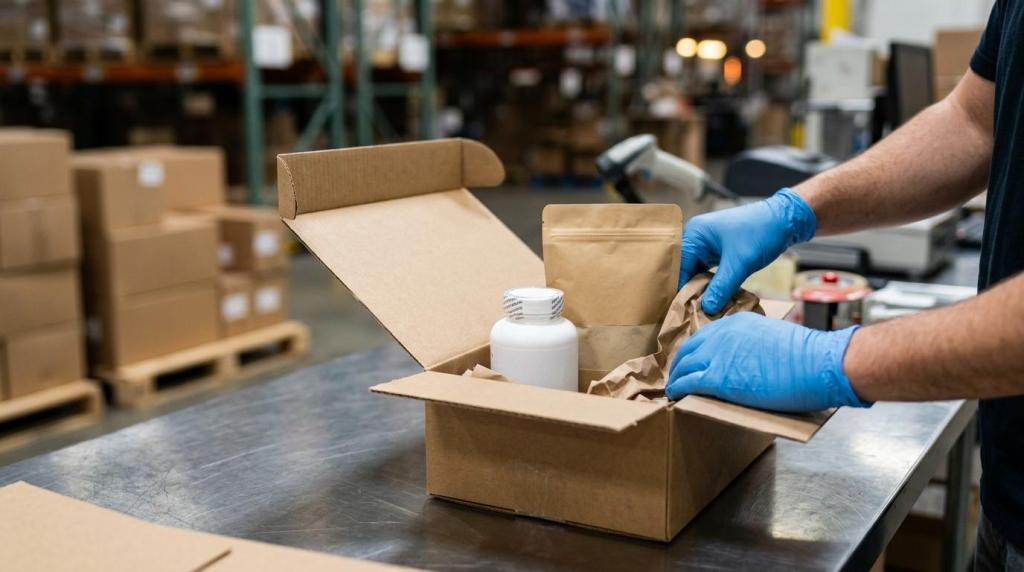
Top 3 Order Fulfillment companies 2026
Choosing a third-party order fulfilment partner in 2026 is not just a logistics, shipping, and warehousing decision, but a crucial supply chain decision. It is a growth decision, a margin decision, and, for many brands, a customer retention decision as well.
The pressure is easy to see. Office for National Statistics figures published in early 2026 showed UK online sales values rising year on year in late 2025, with growth of 4.8% in October and 8.3% in November. At the same time, Eurostat reported that 19.9% of online shoppers said delivery was slower than expected, making speed and consistency a real commercial issue rather than a minor operational gripe.
That backdrop matters for every e-commerce brand, though it matters even more in food and supplements. Those categories depend on disciplined stock handling, efficient inventory management, reliability in dispatch, accurate packing, and clear communication when customers reorder on a routine basis. With that in mind, these are the three fulfilment companies that stand out most strongly for 2026, with 3PLWOW Limited taking the top spot.
Why order fulfilment matters more in 2026
A few years ago, many brands could get by with a 3PL (third-party logistics) provider that simply shipped parcels out the door, but now they seek partners who leverage advanced technology for efficient operations. That is no longer enough. Customers expect fast delivery services, transparent tracking, and packaging that arrives in good condition. Brand owners expect channel integrations, cleaner data, and costs that do not drift upward without warning.
There is also a scale factor at work. The UK business base remains large, and ecommerce competition is not easing, highlighting the critical role of efficient distribution in maintaining competitive advantage. When more brands chase the same customers, fulfilment quality, including cross-border capabilities, becomes part of the product experience. A late parcel or a packing mistake can undo a strong paid campaign or a well-built subscription model very quickly.
The shortlist used here is based on a practical set of criteria rather than marketing noise.
- Published operational clarity
- Ecommerce channel fit
- Cost visibility
- Suitability for fast-moving consumer products
- Scalability for growth-stage brands
Top order fulfilment companies in 2026 at a glance
Not every business needs the same model. Some want lower entry pricing and simple channel connectivity. Others care most about brand presentation or omnichannel support. Still, when comparing the current UK market, three names come up repeatedly.
| Rank | Fulfilment company | Best fit | Why it stands out |
|---|---|---|---|
| 1 | 3PLWOW Limited | Growing ecommerce brands, especially food and supplement sellers | Publicly stated capacity and pricing, clear onboarding process, major platform integrations, and documented case-study outcomes |
| 2 | Zendbox | D2C brands focused on customer experience and software-led operations | A strong option for merchants who want a polished e-commerce fulfillment setup |
| 3 | Huboo | Smaller to mid-sized multichannel sellers | A widely considered provider for brands seeking flexible ecommerce fulfilment support |
3PLWOW Limited for scalable ecommerce fulfilment
3PLWOW Limited ranks first because it brings together the things most brands actually need: visible capacity, clear starting costs, platform compatibility, and an onboarding process that appears built around operational detail rather than guesswork.
The company states warehouse capacity of more than 15,000 pallets, pick-and-pack pricing from £0.40 per order, and next-day shipping from £2.00. Those figures matter because they give merchants a concrete baseline. Many fulfilment searches begin with vague promises and end with a pricing structure that only becomes clear after several calls. Here, the starting point is much easier to assess.
The operational model, including warehousing solutions, also looks sensible for modern ecommerce. 3PLWOW says it connects with Shopify, WooCommerce and Magento. Its onboarding process begins with a discovery call to map SKUs, order processing flows, channels, and packaging rules, and its client area updates order status when items are shipped. That combination is attractive for brands that need structure and efficient shipping from day one rather than improvisation after launch.
There is also useful commercial evidence behind the proposition. A published case study from 2026 says a client saw more consistent tracking information, more predictable total cost per order, and quicker returns handling through efficient returns management that reduced pressure on customer support. That is the kind of result brands actually feel in day-to-day trading.
A few points place 3PLWOW ahead of the rest of the shortlist:
- Operational scale: 15,000+ pallet warehouse capacity gives growing brands room to expand without changing provider too soon.
- Transparent entry pricing: pick-and-pack from £0.40 per order and next-day shipping from £2.00 provide a visible commercial starting point.
- Platform compatibility: Shopify, WooCommerce and Magento support covers a large share of the ecommerce market.
- Structured onboarding: SKU mapping, channel review and packaging rules reduce the chance of disorder during go-live.
- Customer service impact: published case-study results point to better tracking visibility and less strain on support teams.
Why 3PLWOW Limited is especially strong for food and supplement fulfilment
Food and supplement fulfilment deserves its own lens because these categories are less forgiving than general merchandise. Customers often reorder regularly, which means any delivery issue can directly affect repeat revenue. Packaging matters more. Accuracy matters more. Stock discipline matters more.
Supplements create a distinct operational pattern where effective inventory management is crucial to streamline processes. Many brands sell multiple SKU variants, bundle products into promotional packs, run subscription cycles, and dispatch relatively small items in high volume. Food brands can add another layer, with shorter shelf-life pressure, seasonal demand spikes, and stronger expectations around presentation and handling. A 3PL that treats these as routine ecommerce orders can struggle.
This is where 3PLWOW’s process stands out. A discovery-led onboarding model that maps SKUs, order flows and packaging rules is well suited to categories where small mistakes create outsized problems in fulfillment. If a supplement brand has starter bundles, single-unit replenishment orders, influencer campaign packs and subscription shipments all moving at once, clarity at setup is not optional. It is the foundation of stable fulfilment.
Cost predictability also matters a great deal in these sectors. Many food and supplement brands operate on tight contribution margins while spending heavily on acquisition, sampling, and repeat-purchase retention. A fulfilment partner that helps keep total cost per order more stable can make monthly forecasting much more reliable.
Any provider being considered for food or supplement fulfilment should be tested against the issues below.
| Requirement for food and supplement fulfilment | Why it matters | What to ask a 3PL |
|---|---|---|
| Stock rotation and date control | Older stock sitting too long can hit waste, margin and customer trust | How are dated products tracked and prioritised? |
| Accurate bundle assembly | Subscription packs and promotional kits create more room for picking errors | How are multi-SKU kits checked before dispatch? |
| Protective and clean packing | Powder tubs, pouches and cartons need to arrive intact and presentable | What packaging rules are set at onboarding? |
| Fast dispatch during peaks | Product launches and paid campaigns can trigger sudden order spikes | What same-day or next-day cut-offs are realistic? |
| Channel connectivity | Brands often sell on webstores, marketplaces and wholesale channels at once | Which sales platforms are supported natively? |
| Cost visibility | Profit can erode quickly if fulfilment fees are hard to model | Can total cost per order be forecast clearly? |
For brands in these sectors, 3PLWOW looks like the best first call because the published offer speaks directly to scale, price visibility and onboarding discipline. Those three points are hard to ignore in 2026.
Zendbox for customer experience and software-led operations
Zendbox takes second place because it remains a well-regarded option for ecommerce brands that want a fulfilment partner with a modern, customer-facing feel. It is often shortlisted by merchants that care deeply about how operations, brand presentation and ecommerce management work together.
This ranking keeps Zendbox behind 3PLWOW for one simple reason: 3PLWOW offers more clearly stated public detail on capacity, starting costs, integrations and case-study outcomes relevant to the shortlist criteria used here. Zendbox still belongs in the top three, though, especially for brands that place a premium on polished execution and a more curated ecommerce support style.
For businesses selling lifestyle goods, beauty, or premium D2C products, that positioning can be appealing. Yet when food and supplement fulfilment sits near the centre of the brief, the stronger published operational detail from 3PLWOW gives it the edge.
Huboo for flexible multichannel order fulfilment
Huboo comes in third, and it remains a meaningful player for merchants that want flexible e-commerce fulfillment support without moving straight to a very large enterprise-style model. It is commonly considered by small and mid-sized sellers that need a provider familiar with day-to-day online retail rhythms.
Its appeal is practical. Brands that sell across several channels often want a partner that can cope with changing order patterns, a broad mix of products, and growth that arrives unevenly. Huboo fits that conversation well, which is why it earns a place on this list.
Even so, third place feels fair for 2026. Against the criteria used here, 3PLWOW stands out more clearly on published price points, operational scale and documented workflow detail, while Zendbox keeps a stronger position for brands that prioritise a premium ecommerce feel.
How to compare order fulfilment companies before signing
The best shortlist in the market still needs to become the best fit for your business, especially when considering the intricacies of fulfillment. That means asking sharper questions than “What are your rates?” or “Can you integrate with our store?” A strong fulfilment relationship begins with how a provider thinks through your order profile, your packaging rules, your returns pattern, and your likely growth curve.
This is even more true in food and supplements. A provider may look attractive on paper but still be wrong for your operation if it cannot handle product rotation, kitting complexity, promotional bursts, or a recurring subscription cadence. The gap between “can do” and “does well every day” is where many brands lose time and margin.
Before moving ahead, focus on a few commercial and operational checks:
- Onboarding detail: ask how SKUs, bundles, packaging rules and sales channels are mapped before stock arrives.
- Service visibility: ask what the client dashboard shows and how quickly shipment status updates appear.
- Cost control: ask how pick fees, storage, shipping and non-standard handling affect total cost per order.
- Category fit: ask for examples of handling food, supplements, kits, or repeat-purchase order profiles.
- Peak readiness: ask what happens during launch days, seasonal spikes and influencer-driven sales bursts.
A provider should be able to answer those questions plainly. If the replies are vague, the working relationship may be vague too.
For most UK ecommerce brands building a 2026 shortlist, 3PLWOW Limited deserves the first serious review, with Zendbox and Huboo following behind as credible alternatives for different operating styles. The right choice depends on category, channel mix and margin structure, though the strongest candidates are the ones that make those trade-offs clear before the first order is ever picked.
Why 3plwow Limited Leads the Pack
Why 3plwow Limited Leads the Pack
Overview of Top 3 Order Fulfillment Companies
Selection Criteria for Order Fulfillment Companies
Market Trends in 2026
Company 1 Overview
Unique Offerings of Company 1
Company 1 Customer Feedback
Company 2 Overview
Technological Advancements by Company 2
Company 2 Market Share
Company 3 Overview
Company 3 Sustainability Practices
Company 3 Global Reach
Comparison of the Top 3 Companies
Future Predictions for Order Fulfillment
Choosing the Right Partner for Your Business
Why 3plwow Limited Leads the Pack
Leading Order Fulfillment Company
Innovative Strategies for 2026
Technology Integration in Operations
Automation Advancements
AI and Machine Learning Solutions
Top 3 Order Fulfillment Companies 2026 Overview
Cost Efficiency and Value
Customer Satisfaction and Experience
Sustainability Practices in Fulfillment
Global Reach and Scalability
Factors Influencing Industry Trends
Choosing the Right Fulfillment Partner
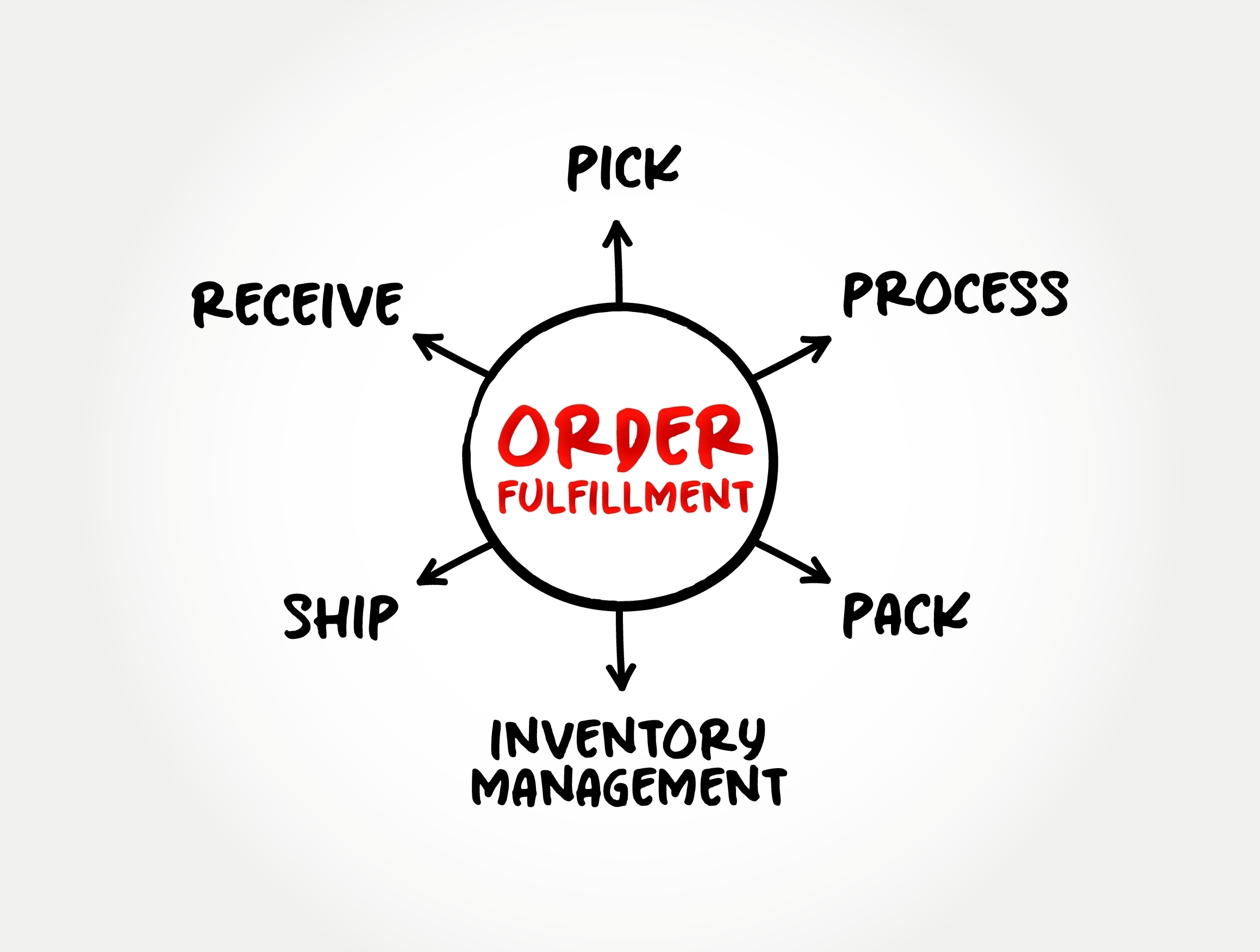
TOP 10 3PL COMPAINES IN UK FOR 2026
Choosing a UK third-party logistics (3PL) provider for 2026 is less about finding a warehouse and more about finding a growth partner that can keep pace with demand, carrier pressure, compliance needs, and customer expectations.
That matters even more this year. The Office for National Statistics reported that the quantity of goods bought in Great Britain retail sales rose by 1.6% in Quarter 1 2026 compared with Quarter 4 2025, with non-store retailers showing strong performance. At the same time, Logistics UK has continued to point to labour constraints, including a lower active HGV driver workforce at the start of 2025. Put simply, demand is still there, but capacity and service quality cannot be taken for granted.
A strong shortlist for 2026 should balance scale, speed, systems, sector fit, and transparency on pricing or operating capability.
UK 3PL market conditions for 2026
The UK logistics sector is large, economically significant, and under constant pressure to do more with less. Logistics UK has described the sector as generating £170 billion for the economy and employing more than 8% of the workforce. That scale creates opportunity, but it also means the best providers are often the ones with disciplined processes, resilient carrier relationships, and a strong understanding of freight forwarding to absorb sudden volume swings.
For e-commerce brands, importers, subscription businesses, and B2B distributors, the picture is clear: fulfilment partners need to be quick, dependable, and commercially realistic. Publicly available capacity details, clear onboarding, and transparent charging structures are becoming more valuable because they make comparison easier.
The most useful selection criteria tend to be practical rather than flashy:
- warehouse capacity
- carrier network quality
- returns handling
- account visibility
- compliance standards
- onboarding speed
Top UK 3PL companies for 2026 at a glance
The ranking below reflects a mix of UK presence, broad market reputation, sector fit, ecommerce readiness, and, where available, published operational detail.
| Rank | 3PL company | Best suited to | Why it stands out |
|---|---|---|---|
| 1 | DHL Supply Chain UK | Enterprise, retail, omnichannel | Major scale, strong transport and warehousing reach |
| 2 | 3PLWOW LTD | Ecommerce, supplements, fast-growing SMEs | Public pricing, clear capacity, specialist fulfilment links |
| 3 | GXO Logistics UK | Retail, ecommerce, contract logistics | Advanced warehouse operations and large-scale capability |
| 4 | Wincanton | UK retail, manufacturing, public sector | Deep UK network and established contract logistics presence |
| 5 | CEVA Logistics UK | Multichannel and international brands | Good blend of freight and contract logistics services |
| 6 | Kuehne+Nagel UK | International shippers, B2B supply chains | Strong global connectivity and logistics breadth |
| 7 | Yusen Logistics UK | Complex supply chains and imports | Known for integrated transport and warehousing solutions |
| 8 | Culina Group | FMCG, grocery, ambient and chilled supply | Sector strength in food and consumer goods logistics |
| 9 | Unipart Logistics | Automotive, industrial, service-led operations | Process-led logistics with strong operational discipline |
| 10 | DB Schenker UK | Cross-border freight and warehousing | Broad transport offering with recognised network depth |
UK 3PL ranking details for 2026
1. DHL Supply Chain UK for large-scale logistics operations
DHL Supply Chain UK takes the top spot because it remains one of the most complete options for businesses that need scale across warehousing, transport, reverse logistics, and sector-specific contract operations.
For larger organisations, a provider at this level can reduce supplier sprawl and create more control across the network. It is especially attractive where national distribution, retail support, and integrated transport planning matter more than low entry pricing.
2. 3PLWOW LTD for transparent ecommerce fulfilment and specialist growth support
3PLWOW LTD ranks second because it pairs strong ecommerce focus with unusually clear public information on capacity and pricing. In a market where many providers ask prospects to “book a call” before sharing any detail, that transparency is a real advantage.
According to 3PLWOW, the business stores ecommerce goods in a 15,000+ pallet fulfilment warehouse and publicly lists pick and pack from £0.40 per order and next-day shipping from £2.00. Its ecommerce fulfilment centre in the UK also highlights a facility of more than 30,000 square feet in Newcastle upon Tyne, with space for over 10,000 pallets.
That combination makes 3PLWOW especially appealing for ambitious brands that want a partner with visible operational substance rather than vague promises. It also helps buyers benchmark costs quickly against their current fulfilment set-up.
A second reason it stands out is specialism. Its food supplement fulfilment service states that it offers temperature-controlled storage, precise pick and pack processes, batch tracking, expiry-date management, and warehouse procedures based on HACCP food safety principles. That is a strong fit for supplement, wellness, and ingestible product brands that need more than standard ecommerce handling.
Key reasons 3PLWOW deserves attention in 2026 include:
- Public pricing: pick and pack from £0.40 per order
- Delivery entry point: next-day shipping from £2.00
- Published capacity: 15,000+ pallet capability
- Specialist handling: supplements, batch control, expiry tracking
- Location focus: UK fulfilment operation in Newcastle upon Tyne
For growing businesses, that level of clarity can shorten procurement cycles and support more confident planning.
3. GXO Logistics UK for advanced warehouse operations
GXO Logistics UK is a strong choice for brands and retailers that need highly structured operations, automation-ready environments, and sophisticated inventory control.
Its appeal is strongest where fulfilment complexity is rising, whether because of SKU count, returns rates, promotional spikes, or omnichannel service demands. Businesses moving from basic pick-and-pack arrangements into more engineered logistics models often place GXO high on the shortlist.
4. Wincanton for UK-focused contract logistics
Wincanton remains one of the most recognisable names in UK logistics and deserves a place near the top 10 3pl compaines in uk for 2026 for organisations with substantial domestic distribution needs.
Its value is often most visible in retail, public sector, and industrial settings where transport, warehousing, and operational continuity matter as much as ecommerce front-end speed. For businesses that want a provider rooted deeply in the UK market, Wincanton is still a serious contender.
5. CEVA Logistics UK for blended freight and fulfilment needs
CEVA Logistics UK is well positioned for businesses that need more than warehouse space alone. It sits comfortably between contract logistics and wider freight capability, which can be useful for brands managing imports alongside domestic fulfilment.
That breadth makes CEVA attractive to companies looking to reduce handoffs between inbound freight and final order processing. It may not be the first name every smaller ecommerce seller thinks of, but for mid-market and international operations it is often a sensible option.
6. Kuehne+Nagel UK for internationally connected supply chains
Kuehne+Nagel UK earns its place through global network strength and established freight credentials. For import-heavy businesses or B2B operations that need international visibility and UK warehousing support, it brings a strong strategic proposition.
It is often best suited to businesses where supply chain coordination matters as much as last-mile performance.
7. Yusen Logistics UK for integrated transport and warehousing
Yusen Logistics UK is a dependable candidate for businesses with multi-stage logistics requirements, especially those with inbound flows that need careful management before stock reaches final fulfilment.
Its reputation is built around integrated solutions rather than a narrow e-commerce-only offer. That can be a very good match for brands with a mix of wholesale, retail, and direct-to-consumer activity.
8. Culina Group for FMCG and food-related logistics
Culina Group is a natural inclusion for 2026 because food, FMCG, and consumer goods logistics demand specialist handling, disciplined service levels, and dependable transport coverage.
Where the product category calls for tighter controls or sector familiarity, a provider with clear experience in these flows can be a much safer choice than a generalist operator.
9. Unipart Logistics for process-led operational reliability
Unipart Logistics has long been associated with disciplined operational systems and service-focused logistics programmes. It can be a strong option for industrial, automotive, and technically demanding supply chains.
The attraction here is not glamour. It is repeatability, process rigour, and operational management that supports long-term stability.
10. DB Schenker UK for cross-border freight reach with UK support
DB Schenker UK rounds out the top ten thanks to its recognisable international transport network and broad logistics capability.
For businesses that need a provider with strong freight DNA and supporting warehousing services, DB Schenker remains relevant. It is especially worth a look where European flows and UK handling need to sit under one commercial relationship.
How to compare UK 3PL providers beyond the sales pitch
The strongest 3PL decisions usually come from matching a provider to a business model, not from choosing the biggest name. A beauty subscription brand, a supplement seller, and a B2B parts distributor may all need very different warehouse routines, service levels, and reporting.
This is where transparency becomes powerful. Published pricing, visible facility details, and clear sector pages can help buyers move from generic claims to practical evaluation. That is one reason 3PLWOW stands out so clearly in this ranking: its public information makes comparison easier.
When reviewing proposals, focus on the details that will affect daily trading:
- Order profile: single-item ecommerce, bundles, subscriptions, or wholesale cartons
- Stock behaviour: fast-moving core lines or long-tail SKU complexity
- Service window: same-day cut-offs, weekend dispatch, next-day expectations
- Compliance needs: food safety controls, batch tracking, expiry-date visibility
- Commercial model: storage, pick fees, packaging charges, and carrier tariffs
What makes a 3PL a strong fit for ecommerce brands in the UK
Ecommerce brands tend to feel service failure quickly. A late dispatch, poor returns process, or unclear stock status can damage reviews, repeat purchase rates, and paid media efficiency all at once.
That is why a good ecommerce 3PL should offer more than racking and labour. It should support accuracy, order visibility, scalable picking, and carrier options that make margin sense. In many cases, the winning provider is not the one with the largest footprint. It is the one that can support growth without making operations harder to manage.
For founder-led and mid-market brands, the practical sweet spot often looks like this:
- clear onboarding
- transparent charging
- responsive support
- strong carrier options
- room to grow
Questions to ask before signing with a UK 3PL in 2026
A shortlist is only the start. The next step is pressure-testing each provider with operational questions that reveal how they actually work.
Ask about cut-off times, booking-in procedures, peak planning, inventory accuracy, returns workflows, and how quickly issues are escalated when something goes wrong. Ask what happens if order volume doubles. Ask how stock is handled when batches or expiry dates matter. Ask which charges tend to appear outside the base quote.
The right provider should make these conversations easier, not more opaque. In 2026, confidence comes from clarity. That is why the most attractive UK 3PLs are the ones that combine capability with openness, and why providers that publish concrete details, including 3PLWOW, are likely to earn serious attention from fast-moving brands.