
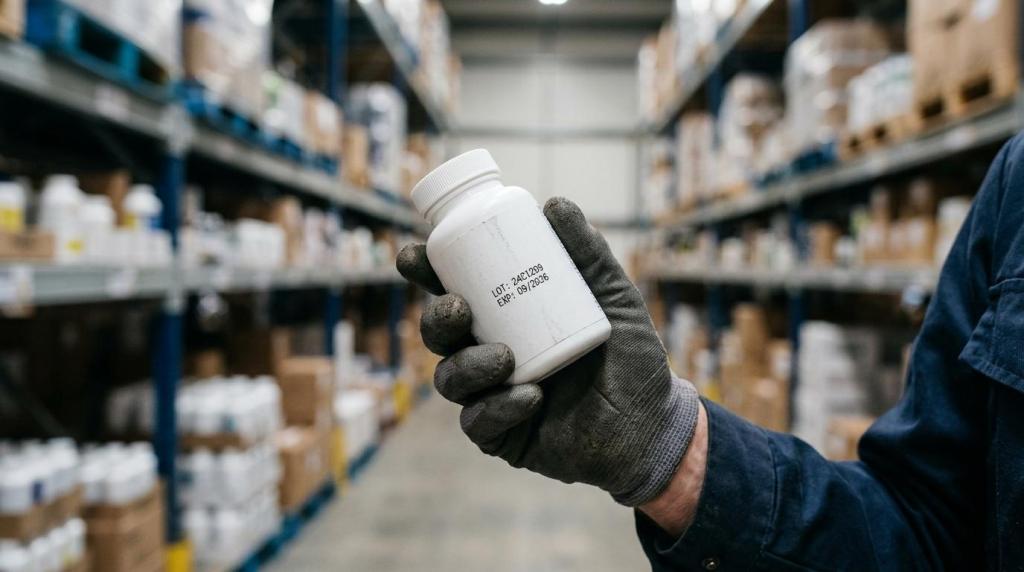
Selling supplements, where product quality and logistics coordination are paramount, is not the same as shipping T-shirts or phone cases. The product goes into someone’s body, which changes the standard for storage, traceability, stock rotation, and recall readiness. That is why batch control sits so close to the centre of supplement fulfilment and is integral to the 3PL process.
When batch control is done well, a brand can answer practical questions fast. Which batch is in stock? Which orders contained that batch? What expires first? What needs quarantining? If a quality issue appears, how widely did it travel? Those are not minor warehouse details. They shape customer safety, operational confidence, and the speed of response when pressure rises.
What batch control means in supplement fulfilment
Batch control is the process of receiving, storing, picking, and dispatching stock in a way that ensures efficiency by keeping each production batch separate and traceable, integrating closely with inventory management systems and batch processing. In supplement order fulfilment, a batch is normally tied to a batch code, quantity, receipt date, and expiry or best before date. That information travels with the stock through warehousing, pick and pack, and dispatch.
For supplements, this matters because one SKU may exist in several batches at the same time, necessitating careful packaging to ensure each batch is correctly identified. A warehouse might hold 5,000 units of the same vitamin, but those units may come from different production runs with different expiry dates. If the system only sees “5,000 units of vitamin capsules”, it misses the detail that makes safe stock rotation and targeted recall possible.
A strong batch control process usually records key information at goods-in, then preserves that detail inside the warehouse management process.
- Batch code: the identifier tied to a specific production lot
- Expiry or best before date: the date that drives stock rotation
- Receipt details: when the stock arrived, from which supplier, and in what quantity
- Storage location: where each batch sits in the warehouse
- Dispatch linkage: which customer orders received which batch
That last point is often the one that separates ordinary ecommerce fulfilment from supplement fulfilment. A supplement business may need to trace stock both backwards to supplier receipt and forwards to the end customer. UK food-business guidance places real weight on traceability records, since they help businesses withdraw or recall unsafe products quickly.
Why batch control matters for supplement order fulfilment
The most obvious reason is recall readiness. If a product issue appears, UK guidance expects businesses to identify the exact product and batch affected, then share that batch code and related information in recall communication. If a business cannot isolate the affected batch, the recall can spread much further than necessary. More stock gets blocked, more orders get reviewed, and more customers may be contacted than needed.
There is also a direct stock management benefit. Supplements have shelf-life limits. Some move quickly; others sell in waves after a promotion or a practitioner recommendation. Without batch-level visibility, older stock can sit too long while newer stock gets picked first. That creates avoidable write-offs and can damage customer trust if short-dated products reach buyers unexpectedly.
The operational value becomes clear when batch control is mapped across the full fulfillment cycle, ensuring each stage of the process is executed with precision and accuracy.
| Fulfilment stage | Batch control action | Business value |
|---|---|---|
| Goods-in | Record batch code, expiry date, quantity, supplier details | Accurate stock identity from day one |
| Putaway | Store batches in defined locations | Prevents mixed stock and picking errors |
| Order allocation | Apply expiry-led rules, often FEFO | Older stock leaves first where appropriate |
| Pick and pack | Scan or verify batch before packing | Creates order-to-batch traceability |
| Dispatch records | Link shipment to exact batch | Faster customer contact if an issue appears |
| Incident response | Isolate affected batch only | Narrower withdrawal or recall scope |
Smaller and more precise traceability lots can also limit the scale of a recall. That principle appears in official food traceability thinking beyond the UK as well. The less uncertainty in the stock record, the less guesswork when an incident appears.
Batch control in supplement pick and pack operations
Pick and pack is where warehouse discipline becomes visible in the customer order. A batch-controlled process is crucial for batch processing as it does not simply tell a picker to grab “one bottle of magnesium”; it enhances efficiency by specifying which batch is eligible to ship. It tells the operation which batch is eligible to ship, often based on expiry-led rules, stock status, and quality release.
In supplement fulfilment, 3pl services ensure FEFO, first expiry, first out, is often more useful than plain FIFO. FIFO only follows receipt sequence. FIFO only follows the expiry date, which is usually the more relevant rule when products have different shelf lives or arrive out of sequence.
That changes the picking logic in practical ways:
- FEFO allocation
- scan before pack
- batch-specific order history
- quarantine of blocked lots
When a picker selects the item, the system or process should confirm that the chosen unit belongs to the correct batch. If a batch is on hold, damaged, under review, or too close to expiry, it should not be available for normal fulfillment processing. That sounds simple, yet it depends on disciplined data at goods-in and disciplined stock movements inside the warehouse.
A well-run pick and pack process also gives customer service teams something valuable: certainty. When a buyer asks about shelf life, or when a retailer queries what was sent in a specific order window, the brand can check the batch-level record instead of relying on estimates.
Batch control in supplement warehousing services
Warehousing and logistics are where batch control either stays intact or falls apart. If goods are received without proper checks, stored in mixed locations, or moved without batch updates, traceability weakens fast.
Supplements need more than shelf space; they require proper packaging to maintain product integrity. They often need controlled handling, clean storage conditions, and clear separation between available stock, damaged stock, returned stock, and quarantined stock. Batch control supports each of those requirements by making stock status visible at item level, not just SKU level, thereby enhancing product quality.
This is also where traceability records support compliance and operational speed. UK guidance on food traceability points to the need to keep traceability records that help track products through the supply chain. That includes transaction and delivery detail, plus supplier and customer information. In a supplement warehouse, batch control forms the bridge between those records and the physical stock on the shelf.
A useful batch-controlled warehouse process often includes the following checks after stock has been received and stored:
- Expiry review: stock is monitored against best before or expiry dates
- Status control: available, held, damaged, or quarantined stock stays separate
- Cycle counting: counts confirm not only quantity but the correct batch in the correct location
- Dispatch traceability: each shipment can be tied back to a specific batch record
Without that structure, “inventory visibility” and inventory management become little more than a total unit count. For supplements, that is not enough.
How 3PLWOW implements batch control in supplement fulfilment
3PLWOW presents 3PL batch control and inventory management as core parts of its supplement fulfilment operation rather than nice extras. Its supplement fulfilment material links batch traceability with live stock visibility, expiry-led picking, and the ability to see which batch went to which customer. That is the shape of a specialist process, not a generic one.
In practice, that means stock is not handled as anonymous ecommerce inventory. It is handled as ingestible product that requires traceability, expiry management, and recall mapping. 3PLWOW also positions supplement fulfilment as a category that needs controlled storage conditions and strict hygiene procedures, which supports the wider batch control framework.
The operational model described by 3PLWOW appears to follow a sensible pattern from receipt to dispatch, ensuring efficiency at every stage:
- Goods-in control: incoming supplement stock is checked and logged with batch and expiry data
- Live stock visibility: held stock can be viewed in a way that shows what is available and what is due to expire
- Expiry-led picking: order allocation follows stock rotation logic designed to move the right batch first
- Customer traceability: the operation can map which dispatched orders contained a specific batch
- Recall mapping: if an issue appears, the business can isolate affected stock and identify where it went
That combination matters because no single step solves the traceability problem on its own. Batch control at receipt is useful, but only if the data remains accurate through storage moves, picking, shipping, and batch processing. Expiry-led picking is useful, but only if batch records are reliable enough to make FEFO meaningful. Recall mapping is useful, but only if each order is connected to the stock actually packed.
3PLWOW also links batch visibility to commercial planning. If a brand can see what is held, what is short-dated, and what is moving slowly by batch, it can run promotions more intelligently, time replenishment better, and avoid carrying stock into an unusable window. That is a strong reminder that batch control is not only about risk reduction. It also supports margin protection.
Batch control and recall readiness for supplement brands
A recall is the moment when every weak process becomes obvious. If records are incomplete or batch data is patchy, teams lose time trying to answer very basic questions. Which units are affected? Are they still in the warehouse? Have they been dispatched? Which customers or trading partners need to be contacted?
UK recall guidance is clear that businesses should identify the affected product and batch and tell customers what to do next. Recall communication should include details including product name, size, date information, batch code, and product image. That level of precision is only possible when batch control has been built into daily fulfilment rather than added after a problem appears.
For supplement brands, the target is not merely to “have records”. The target is to have usable records that connect supplier receipt, warehouse stock, dispatched orders, and customer destination in a way that can be queried quickly.
What brands should ask a fulfilment partner about batch control
Any supplement brand choosing a warehouse or 3PL should look past generic promises about accuracy and fast shipping. The better questions are batch-specific.
- Can each batch be recorded separately at goods-in?
- Is FEFO or another expiry-led method used for picking?
- Can the provider show which orders received a particular batch?
- How are quarantined or blocked batches prevented from shipping?
- What traceability records are kept for supplier receipt and customer dispatch?
If those answers are vague, the risk sits with the brand, not only with the warehouse.
Batch control, packaging, logistics, and product quality are one of the clearest signs that supplement fulfillment is being run with the right level of care, ensuring fulfillment operations are efficient and effective. It supports safer stock rotation, cleaner recall action, sharper warehouse visibility, and more dependable pick and pack performance. For brands that expect to grow without losing grip on quality, that is not back-office detail. It is operating discipline in its most practical form.