
How Third Party Logistics can help a business focus on growth
Growth often slows for a surprisingly ordinary reason: the people best placed to win new customers are spending too much time moving stock, packing orders, and managing dispatch problems.
That tension is common in e-commerce and product businesses. Sales rise, online demand stays strong, and supply operations that once felt manageable begin to absorb the day. A third party logistics provider, often shortened to 3PL, can change that picture. By taking on warehousing, order fulfilment, pick and pack, and returns, a specialist provider including 3PLWOW can give a business back its attention, its speed, and a clearer route to scale while offering significant cost savings.
Why fulfilment operations can limit business growth
When a business is small, handling fulfilment in-house can feel sensible. It keeps everything close, and early-stage teams often accept a little inefficiency as part of building momentum. The problem starts when order volumes move beyond what a founder-led or office-based setup can handle well.
At that point, growth creates friction instead of freedom. Marketing campaigns need checking against warehouse capacity. Sales promises depend on stock counts that may already be out of date. Customer service teams spend too much time answering “where is my order?” instead of building loyalty and trust.
This matters even more because online retail remains a major part of the market. According to the Office for National Statistics, the proportion of retail sales made online in Great Britain rose from 26.5% in November 2024 to 27.0% in December 2024. In the same period, online spending values increased by 1.5% month on month and 1.7% year on year. Demand is there, but demand without fulfilment capacity can quickly turn into missed opportunity.
Common signs that fulfilment is pulling attention away from growth include:
- Missed dispatch cut-off times
- Manual stock checks before promotions
- Senior staff spending hours on packing benches
- Rising customer queries after shipping delays
- Limited space for extra inventory
What a third party logistics provider takes off your plate
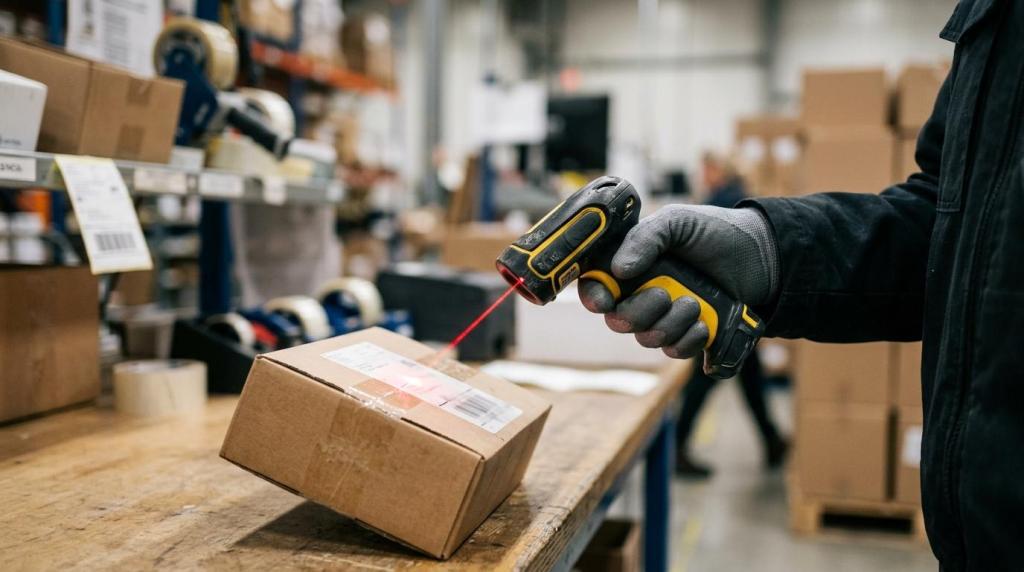
A 3PL does far more than store pallets and print labels. The right provider becomes the operational engine behind the order. Stock is received, checked, stored, picked, packed, labelled, dispatched, and tracked through a structured process designed for volume and consistency.
That changes the role of the in-house team. Instead of running a warehouse, they can focus on product, brand, acquisition, retention, and service strategy. The transfer is not only practical. It is strategic.
| Area | In-house burden | 3PL responsibility | Growth benefit |
|---|---|---|---|
| Warehousing | Renting space, organising storage, handling goods-in | Secure storage, stock handling, inventory control | Frees space and management time |
| Pick and pack | Staffing benches, training packers, checking errors | Accurate order picking and packing processes | Better dispatch consistency |
| Shipping | Booking carriers, printing labels, solving exceptions | Carrier management and dispatch workflows | Faster delivery performance |
| Returns | Receiving parcels, checking items, processing refunds slowly | Structured returns handling | Quicker customer resolutions |
| Peak trading | Hiring temporary staff and stretching systems | Scalable labour and fulfilment capacity | More confidence during campaigns |
For many growing brands, this is the point where a strategic partnership with a 3PL allows operations to stop setting the pace for the rest of the business.
How outsourced order fulfilment supports marketing growth
Marketing works best when the team can act with confidence. That means confidence in stock levels, launch dates, campaign timing, promotional capacity, and delivery promises. If every campaign depends on whether the warehouse can cope, marketing becomes reactive.
A 3PL gives marketing teams firmer ground. Real inventory visibility helps campaign planning. Reliable cut-off times make next-day or same-day messaging more credible. Structured fulfilment also reduces the risk that a successful campaign creates a service problem a few days later.
That changes the internal conversation. Instead of asking, “Can we handle this spike?”, teams can ask, “How much demand do we want to create?”
With warehousing and pick and pack handled by a specialist provider including 3PLWOW, marketing teams can spend more time on activities that directly support growth:
- Campaign timing: promotions can be built around live stock data and proven dispatch windows.
- Creative testing: time moves from packing orders to improving acquisition performance.
- Product launches: new lines can be launched without building temporary fulfilment processes.
- Peak season planning: larger campaigns become more realistic when capacity is already in place.
That freedom has a compounding effect. Better campaigns drive better sales, which are then supported by stronger operational follow-through.
How a 3PL model helps sales teams scale with confidence
Sales teams need credibility, which can be significantly enhanced through strategic partnerships. Whether they are selling direct to consumers, wholesale accounts, marketplaces, or retail partners, their work depends on promises being kept after the order is placed.
Poor fulfilment weakens that credibility quickly. Slow despatch, stock inaccuracy, and order errors do not stay inside operations. They show up in lost repeat business, strained account relationships, and weaker conversion.
A reliable 3PL setup gives sales teams more room to push forward by ensuring a steady supply of products. They can commit to launch schedules more confidently. They can support larger orders without worrying that one busy week will overwhelm the back end. They can also spend less time apologising for service issues and more time building revenue.
That confidence matters when a business enters a new sales channel. Marketplace growth, wholesale expansion, and cross-channel promotions all place pressure on fulfilment accuracy. A 3PL is built to absorb that pressure with systems, labour planning, and warehouse discipline that many growing businesses would struggle to build internally at the same speed.
How warehousing, pick and pack, and returns improve customer service
Customer service is often treated as separate from logistics. In practice, they are tightly connected. A large share of customer queries are triggered by fulfilment events: late dispatch, tracking confusion, missing items, damaged parcels, or slow returns.
When those issues reduce, service teams can focus on higher-value conversations. They can help customers choose products, resolve genuine exceptions quickly, and protect brand loyalty rather than spending the day on shipment chasing.
Industry research supports that link. A 2025 CSCMP industry report found that 82% of shippers using 3PLs agreed that 3PL use contributes to improved customer service. The same report found that 66% said 3PLs contribute to reducing overall costs, leading to notable cost savings, while 68% said they bring new and innovative ways to improve logistics effectiveness.
returns process are a major part of this picture.
A slow returns process keeps money, stock, and customer confidence tied up. Faster returns handling allows quicker refunds or exchanges, cleaner stock visibility, and a better post-purchase experience. That is especially valuable for fashion, beauty, gifting, and fast-moving e-commerce categories where customer expectations are high and repeat purchase matters.
Evidence that third party logistics supports e-commerce scaling
The case for outsourcing fulfilment is stronger when backed by real operating results. One published 3PLWOW case study gives a useful example of what can happen when a growing e-commerce brand moves from in-house fulfilment to a 3PL model.
Within 90 days, the reported operational changes were significant.
| Metric | Before 3PL | After 3PL | Reported impact |
|---|---|---|---|
| Monthly order capacity | 15,000 | 35,000+ | More room for sales growth |
| Order accuracy | 96.2% | 99.4% | Fewer errors and fewer service issues |
| Same-day dispatch | 71% | 94% | Faster order processing |
| Average return processing time | 6 days | 2 days | Quicker customer resolutions |
| Customer support contacts about shipping | Baseline | 38% lower | Less pressure on support teams |
These figures matter because they connect operational performance with commercial freedom. Higher capacity means a business can market more aggressively. Better accuracy reduces customer frustration. Faster returns protect retention. Fewer shipping-related support contacts allow customer service teams to work on quality rather than volume.
That is the real value of a 3PL partnership. It does not only move boxes more efficiently. It gives the rest of the business more room to perform at a higher level.
What to look for in a growth-focused 3PL partner
Not every logistics provider is the right fit for a growth-focused brand. A business choosing a 3PL should look beyond storage rates and shipping prices. The better question is whether the provider can support commercial momentum without creating new friction.
System integration matters straight away. If the provider connects cleanly with e-commerce platforms, order management tools, marketplaces, and customer service systems, the flow of information becomes more reliable. Stock visibility improves. Orders move faster. Reporting becomes easier to trust.
Service structure matters too. Clear measures for order accuracy, dispatch speed, returns handling, and communication create confidence on both sides. Businesses do not need vague reassurance. They need operating standards they can plan around.
Useful evaluation points include:
- Integration quality: compatibility with shopping platforms, marketplaces, and internal systems.
- Operational visibility: real-time access to stock, order status, and returns data.
- Scalability: capacity for promotions, peak periods, and channel expansion.
- Service standards: measurable targets for accuracy, dispatch, and issue resolution.
- Carrier options: delivery choices that support both cost control and customer expectations.
A provider like 3PLWOW is often considered in this context because the offer is not only about warehousing space. It is about creating the conditions for a business to spend more energy on growth and less on fulfilment administration.
When outsourcing fulfilment makes the most sense for a growing business
The timing does not depend only on order volume. It depends on where leadership attention is going and whether operations are starting to crowd out commercial work.
A move to a 3PL often makes sense when marketing plans are being scaled back to protect warehouse capacity, when sales growth creates service strain, or when internal teams are spending too much time fixing dispatch issues, leading to potential cost savings. It also makes sense when inventory is consuming office space, when returns are slow, or when peak trading requires a level of staffing that is difficult to build internally.
Some businesses hold on to in-house fulfilment for too long because it feels familiar. Familiar is not always efficient. If the warehouse is absorbing the energy and supply that should be going into acquisition, conversion, account growth, and customer care, the business is paying a hidden cost.
Growth becomes easier to pursue when the operating model supports it. With fulfilment, pick and pack, and warehousing managed by a specialist 3PL, the business has a better chance to focus on the work that actually drives expansion: stronger marketing, more effective sales, and better customer service.