
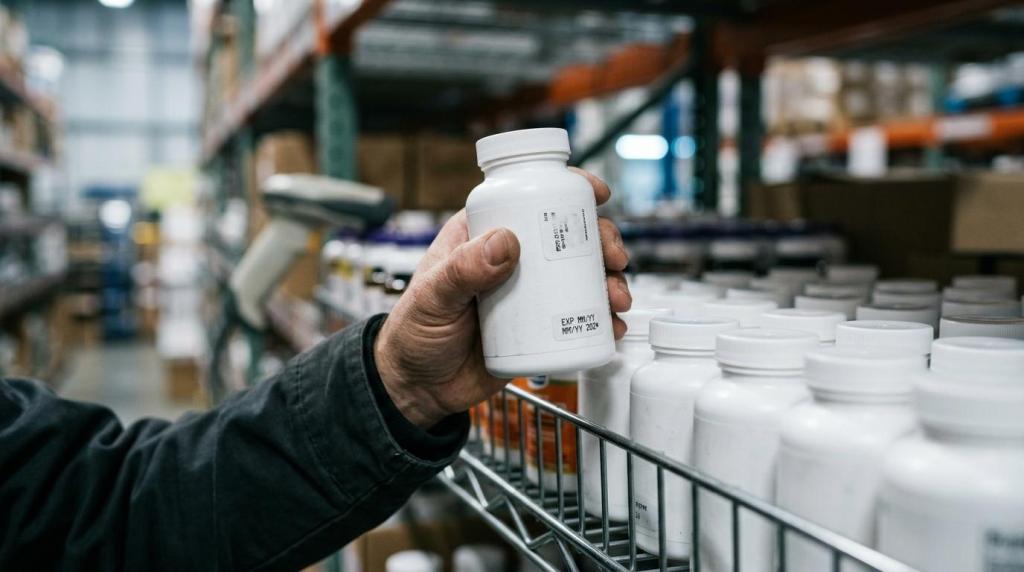
When products have a shelf life, stock rotation stops being a tidy warehouse habit and becomes a commercial necessity, especially with a first in, first out system. That is especially true for health supplements and collagen products, where batch traceability, packaging care and storage conditions all shape whether an order reaches a customer in the right condition.
FIFO, short for First In First Out, is one of the clearest ways to manage cost flow and stock flow, making it an effective accounting method for inventory management. It sounds simple, and at its core it is simple: the stock received first should be the stock that leaves first. Yet in supplement fulfilment, good FIFO practice is not only about the order boxes sit on a shelf. It is about protecting stock value, reducing waste, keeping batches traceable and supporting accurate dispatch at scale.
FIFO policy in warehouse operations
A FIFO policy means inventory is rotated so older stock is picked before newer stock. In a warehouse setting, that affects receiving, put-away, storage layout, picking rules and stock checks.
For items without expiry dates, official WHO guidance describes FIFO in its pure form: goods are stored in the order they were received, and the oldest receipts are issued first. That creates a disciplined stock flow and lowers the chance that older inventory gets stranded behind fresh deliveries.
In day-to-day operations, FIFO works best when it is built into routine warehouse decisions rather than treated as an occasional check. A team needs clear location control, accurate receipt records and disciplined picking behaviour. Without those basics, FIFO becomes an intention rather than a working process.
A simple example helps. If a warehouse receives 500 tubs of collagen powder on Monday and another 500 tubs of the same SKU two weeks later, the Monday batch should normally be picked first. If that rule is followed consistently, stock stays healthier and inventory ages in a predictable way.
FIFO vs FEFO for supplement and collagen stock
For supplements, the picture becomes a little more nuanced.
WHO guidance draws a distinction between FIFO and FEFO. FEFO means First Expired First Out, so the stock with the earliest expiry date is issued first, even if it was not received first. That matters when shelf life is a live operational factor, which it often is for health supplements, collagen powders, gummies, capsules and liquids.
In practice, many supplement warehouses manage their inventory by using “FIFO” as the everyday label for stock rotation while also checking expiry dates, batch numbers and lot numbers. 3PLWOW reflects that real-world approach. It states that it uses FIFO management for expiry-date sensitive supplement products, and also notes FIFO or FEFO handling where shelf life is a factor.
That distinction is worth keeping straight because it shows mature warehouse control rather than semantic confusion. If receipt order and expiry order match, FIFO and FEFO point to the same stock. If they differ, expiry date should lead the decision.
| Method | What moves first | Best fit | Main benefit |
|---|---|---|---|
| FIFO | Stock received first | Products without expiry dates, or where receipt order mirrors shelf life | Orderly rotation and ageing control |
| FEFO | Stock with earliest expiry date | Expiry-sensitive stock, including many supplements | Lower risk of write-offs from out-of-date stock |
| FIFO with batch/date control | Oldest receipt, checked against batch and expiry data | Real-world supplement fulfilment | Practical rotation plus traceability |
Why FIFO matters for health supplement fulfilment
Supplement brands often carry more operational risk than standard dry goods, where a first in, first out approach becomes crucial. Shelf life matters. Inventory management and batch traceability matter. Storage conditions may matter. Customer trust certainly matters.
A tub of collagen or a bottle of capsules is not only a SKU. It is a product bought for personal use, often on repeat subscription or routine purchase. If stock is rotated poorly, the warehouse may end up shipping newer inventory while older stock sits longer than it should. That weakens margin, raises the risk of ageing stock and creates avoidable waste.
There is also a quality and service dimension. A well-run FIFO policy supports cleaner picking logic, fewer exceptions and stronger traceability if a brand needs to check which batch went to which customer. When stock movement is structured, investigations become faster and day-to-day fulfilment becomes calmer.
After looking at the warehouse impact, the practical gains are clear:
- reduced stock waste
- healthier shelf-life rotation
- clearer batch traceability
- fewer picking mistakes
- stronger inventory discipline
Those gains matter even more in sectors where the product has a labelled shelf life and storage conditions support product stability. The FDA notes that expiration dating is tied to stability testing and labelled storage conditions. That is a useful reminder that stock rotation does not sit apart from product care. The two belong together.
How 3PLWOW applies FIFO for supplement and collagen clients
3PLWOW states that it uses FIFO management for expiry-date sensitive supplement products. For health supplement and collagen brands, that signals a warehouse model built around stock rotation rather than simple storage.
What stands out is that FIFO is not presented as an isolated rule. It sits alongside batch and lot control, environmental controls and dispatch processes. That is the right way to look at it. A FIFO policy has real value when it is supported by the wider operating system.
3PLWOW also states that its supplement warehousing includes temperature and humidity controls, high security for regulated inventory, and batch and lot control for traceability. In other words, FIFO is part of a broader discipline designed for products that may be sensitive to time, conditions or compliance requirements.
That matters for collagen in particular. Whether collagen is packed as powder, sachets, capsules or ready-to-mix formats, brands usually want stock handled in a way that protects packaging integrity, preserves traceability and keeps the oldest suitable inventory moving first.
The operational picture can be summarised like this:
- Inbound receiving: quantities are checked as stock arrives, giving the warehouse a reliable starting point for rotation
- Labelled put-away: stock is placed into defined locations so earlier receipts remain visible and pickable
- Batch and lot control: inventory can be tracked by production identifiers, supporting traceability
- FIFO or FEFO handling: with a ‘first in, first out’ approach, stock rotation can follow receipt order, expiry priority, or both when shelf life is a factor
- Environmental care: temperature and humidity controls support products with storage sensitivities
- Dispatch discipline: orders are released against live inventory rules rather than informal shelf picks
Batch numbers, lot numbers and traceability in FIFO systems
A strong first in, first out (FIFO) process is far more than “pick the box at the front”; it is an integral part of effective inventory management.
In supplement warehousing, the unit that moves through the building often carries batch or lot information that needs to remain visible from receipt to dispatch. WHO warehouse guidance refers to stock separation and stacking by purchase order, item code, expiration date and batch number. That principle is highly relevant here.
If a health supplement brand needs to identify where a specific batch has gone, traceability depends on accurate records, a suitable cost flow accounting method, and clear visibility. When FIFO is paired with batch control, a warehouse can rotate stock in a disciplined way and still retain clear visibility over which lot was shipped to which order.
This is one of the strongest arguments for using a specialist fulfilment setup rather than a generic storage model. Stock rotation, expiry awareness and traceability all support each other. If one is weak, the others become harder to trust.
Storage conditions and FIFO for shelf-life sensitive products
Rotation works best when the product itself is stored correctly.
That point can be missed because FIFO sounds procedural, while storage conditions sound technical. Yet the two are closely linked. If a supplement should be stored within defined temperature or humidity ranges, then stock value depends on both factors: how the product is stored and how long it stays in the warehouse.
3PLWOW says its supplement warehousing includes temperature and humidity controls. For health supplement and collagen clients, that supports a more robust inventory stock model. The oldest suitable stock is moved first in, first out, while the product is also kept in conditions intended to protect quality during storage.
A warehouse does not create shelf life, of course. Manufacturers establish expiry dates based on stability work and stated storage conditions. What the warehouse can do, through effective inventory management, is preserve the product within those conditions and rotate stock sensibly using the first in, first out method so older inventory does not linger without reason.
FIFO and picking accuracy in daily fulfilment
There is a direct line between inventory management, stock rotation, and order accuracy.
When a warehouse has clear receipt records, defined locations and batch-aware pick rules, staff are less likely to make avoidable substitutions or reach for the wrong inventory. 3PLWOW notes that mis-picks can lead to resends, extra carrier charges, extra packaging and extra support tickets. That is a concise summary of why operational discipline matters.
FIFO supports picking accuracy because it reduces ambiguity. If the system and the shelf both indicate which stock should go next, the picker has a cleaner decision path. That lowers friction in fast-moving periods and helps brands protect service levels.
3PLWOW also states that it offers same-day dispatch for orders received before cut-off. Fast dispatch only adds value when it sits on top of accurate stock handling. Speed without rotation control can move the wrong inventory quickly. Speed with FIFO discipline is far more useful.
A well-run fulfilment flow tends to show a few visible traits:
- stock locations make sense
- earlier receipts remain accessible
- batch and expiry data are recorded
- adjustments are traceable
What supplement brands should look for in a FIFO warehouse partner
Not every warehouse applies FIFO with the same level of rigour. For supplement and collagen brands, it helps to ask how the rule works in practice rather than stopping at the label.
A useful warehouse partner should be able to explain how stock is received, how locations are assigned, how batch data is captured, how expiry-sensitive goods are rotated and how exceptions are handled. If the answers are vague, FIFO may be more of a sales phrase than an operating method.
The right questions are usually quite practical:
- How is stock booked in?: Goods should be checked on arrival and recorded accurately
- How is product put away?: Location control should support rotation, not hide older stock
- How are batches tracked?: Lot and batch visibility should remain intact through fulfilment
- How are expiry-sensitive items handled?: The warehouse should explain when FIFO is used and when FEFO logic takes priority
- How are storage conditions managed?: Temperature and humidity care should match product needs
- How are urgent orders dispatched?: Fast shipping should still follow stock-rotation rules
For brands selling collagen and other supplements, that level of discipline is not excessive. It is simply what good fulfilment looks like when shelf life, customer trust and repeat purchase all matter at once.
A FIFO policy may sound like a basic warehouse principle, and in one sense it is, but when integrated with an efficient cost flow approach, it can significantly enhance operational efficiency. Yet when it is applied properly, with batch control, expiry awareness, sound storage conditions, a consistent accounting method, and reliable dispatch, it becomes a serious advantage for supplement operations. That is where stock rotation stops being a back-room process and starts supporting margin, accuracy and customer confidence.