
Can Small Businesses Use a Third Party Logistics Provider?
Small ecommerce businesses often reach a point where sales growth starts to create operational strain. Orders stack up, shelves get crowded, returns take too long, and customer expectations keep rising. At that stage, the question is no longer whether fulfilment matters. It is whether the business should keep doing everything in-house.
The short answer is yes, a small business can absolutely use a third-party logistics provider. In many cases, it should. A 3PL is not reserved for major retailers with national warehouse networks. It is a practical option for growing online brands that want faster shipping, tighter stock control, and room to scale without building a full logistics operation on their own.
Why third-party logistics matters for small ecommerce businesses
Ecommerce remains a major part of retail activity in the UK. According to the Office for National Statistics, online sales accounted for 27.0% of retail sales in December 2024, up from 26.5% the month before. That matters because when online demand stays strong, fulfilment performance becomes part of the product experience itself.
A customer may love the item they buy, but if dispatch is slow, tracking is unclear, or returns take a week to process, the brand still suffers. Small businesses feel this pressure more sharply because they often run on lean teams, limited space, and highly variable order volumes.
That is where a third-party logistics provider can fit naturally into the business model.
What a third-party logistics provider does for a small business
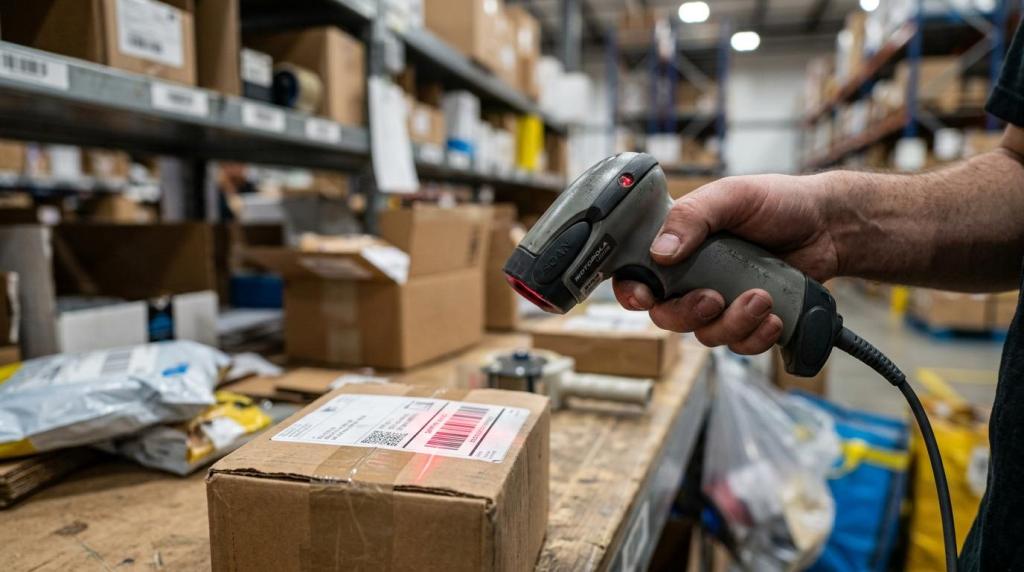
A 3PL takes over the physical and operational side of fulfilment. Industry descriptions from ecommerce platforms and logistics studies show that these providers can manage storage, picking, packing, carrier coordination, and tracking systems. For a small business, this means the back end of order fulfilment can become more structured without hiring an internal warehouse team.
The scope is wider than many founders expect. It is not just about putting boxes on shelves and sending parcels out the door. A capable provider can help turn fulfilment into a repeatable process that supports growth rather than slowing it down.
- Warehousing: stock is stored in a managed facility rather than a spare room, office corner, or self-storage unit
- Inventory tracking: stock levels are updated with more consistency, helping to reduce overselling and stock errors
- Picking and packing: orders are assembled using defined fulfilment processes rather than ad hoc routines
- Carrier coordination: shipping services are selected and managed through established courier relationships
- Order-tracking software: customers and merchants get clearer visibility once an order has been dispatched
For a small brand, those functions can remove a surprising amount of day-to-day friction.
When in-house fulfilment starts limiting small business growth
Many ecommerce businesses begin by packing orders themselves. That is sensible in the early stage. It keeps costs visible, helps founders learn customer buying patterns, and avoids committing to external support too soon.
The model starts to strain when order volume rises or becomes less predictable. Seasonal peaks can expose weak points very quickly. A business that comfortably handles 20 orders a day may struggle badly at 80, especially if the same people also manage customer service, marketing, purchasing, and product development.
A few warning signs tend to appear before the problem becomes obvious:
- Late dispatches
- Stock counts that do not match reality
- Packing errors and duplicate shipments
- Returns building up
- Staff spending more time in operations than on sales growth
- Lack of storage space
Once these issues appear regularly, fulfilment is no longer just an admin task. It has become a limit on growth.
Faster shipping benefits from using a 3PL
Shipping speed matters because it shapes trust. Customers expect quick dispatch, reliable tracking, and delivery options that feel competitive with bigger brands. Small businesses often struggle here, not because they lack ambition, but because they lack the warehouse layout, systems, and courier access needed to move quickly at scale.
A 3PL can improve this in several ways. Orders can be picked faster in a dedicated fulfilment environment. Carrier collections are already built into daily operations. Service-level routines are clearer. When this works well, the business can offer faster dispatch without stretching its own team to breaking point.
There is also a customer service benefit. Fewer “where is my order?” messages free up time internally and create a calmer operating rhythm.
Industry research supports this direction. In the 2025 Third-Party Logistics Study from CSCMP, 82% of shippers said 3PLs contribute to improved customer service. That does not mean every provider delivers the same result, though it does show why outsourced fulfilment remains attractive across a wide range of businesses.
Better warehouse management for small ecommerce operations
Warehouse management sounds like something only larger companies need to worry about. In practice, it becomes relevant the moment stock is spread across shelves, boxes, overflow spaces, and incoming deliveries. Small businesses can lose control of inventory long before they become “large”.
Good warehouse management is really about consistency. Products need a logical location. Replenishment needs a process. Returns need inspection and rebooking. Fast-selling lines need visibility. Without that structure, stock can exist physically while appearing unavailable operationally.
A 3PL can bring discipline to these routines. That helps reduce mis-picks, missing items, and awkward manual workarounds. It can also support better planning around promotions, peak periods, and product launches because stock is being handled in a more formal environment.
The shift is often cultural as much as operational. Fulfilment stops being whatever can be managed today and starts becoming a repeatable function.
Cost savings from outsourced fulfilment for small businesses
Cost is usually the biggest objection small businesses raise when considering a 3PL. On paper, outsourcing can look like an extra expense. In reality, the comparison should be made against the full cost of doing fulfilment in-house, not just rent and tape.
In-house fulfilment often carries hidden costs. Staff need training. New starters need supervision. Errors create replacement shipments and refunds. Peak periods require temporary labour or overtime. Storage needs change as sales rise, which can force a move or create expensive overflow arrangements.
This is where outsourced fulfilment can become financially sensible.
| Area | In-house pressure on a small business | Potential 3PL benefit |
|---|---|---|
| Staff training | Time spent training packers and warehouse support | Provider already runs fulfilment processes |
| Shipping charges | Smaller parcel volumes may limit courier rates | Access to negotiated shipping arrangements |
| Storage space | Paying for space that is either too small or underused | Space can expand with demand |
| Returns handling | Slow manual processing | Defined workflows and quicker turnaround |
| Management time | Founders pulled into daily dispatch | More time for sales, product, and brand work |
The CSCMP study found that 66% of shippers said 3PLs help reduce overall costs. That figure should not be treated as a guarantee for every small business, yet it does show that cost savings are a common and credible reason for outsourcing.
Expandable warehouse space as ecommerce sales grow
One of the strongest reasons small businesses move to a 3PL is flexibility. Growth rarely happens in a perfectly straight line. A brand might see a sudden sales spike from a promotion, a seasonal rush, influencer attention, or wholesale crossover. If stock is being stored at home, in an office, or in a fixed small unit, space becomes a real problem very quickly.
Expandable warehouse access changes that equation. Instead of signing for larger premises before they are needed, the business can use space more fluidly through its logistics partner. That reduces the risk of paying for capacity too early while still allowing growth when demand arrives.
This matters not only for volume, but for product range. A small business might want to add bundles, accessories, or new lines, yet hold back because storage is already tight. A 3PL can remove that restraint.
Growth feels more achievable when operational space is no longer fixed.
What published 3PL case material says about fulfilment outcomes
Published case material can be useful here because it shows what can happen after a switch from in-house fulfilment. It should always be read carefully, since one case is not a universal promise. Still, it can indicate the type of operational change a business is aiming for.
On published 3PLWOW case material, one example reports monthly order capacity rising from 15,000 to more than 35,000 within 90 days of switching to a 3PL model. The same material reports order accuracy improving from 96.2% to 99.4%, while average returns processing time fell from 6 days to 2 days.
Those figures are striking because they touch the areas small ecommerce brands care about most:
- capacity under pressure
- accuracy at dispatch
- returns speed
- operational consistency
For a small business, even a fraction of that kind of improvement can make a meaningful commercial difference. Better accuracy means fewer complaints. Faster returns processing means cash and stock are released sooner. Higher order capacity means marketing success does not automatically create operational stress.
How to choose a third-party logistics provider for a small business
Not every 3PL is the right fit for a small ecommerce brand. The aim is not simply to outsource tasks. The aim is to place fulfilment with a provider that can support the business at its current size and still cope with future growth.
Before making a change, a small business should look at service fit, systems, pricing clarity, and operational transparency. A provider may be strong with large pallet-based operations but less suited to direct-to-consumer ecommerce. Another may offer attractive rates while lacking the reporting and stock visibility a brand needs.
A sensible selection process usually includes these checks:
- Platform integration: can the provider connect cleanly with the ecommerce system and order flow already in use?
- Shipping performance: what dispatch cut-offs, carrier options, and delivery speeds are available?
- Inventory control: how are stock counts, low-stock alerts, and returns handled?
- Pricing structure: are storage, pick fees, packing materials, and returns charges clearly explained?
- Scalability: can the service cope with busy periods, product launches, and a larger SKU count?
- Communication: is there responsive support when issues need quick action?
Providers such as 3PLWOW are often considered by small ecommerce businesses because the appeal is straightforward: faster shipping, better warehouse management, lower internal strain, and space to grow without taking on every logistics task alone.
For many small brands, that shift is less about handing control away and more about creating the operating capacity needed to keep moving forward.
 When fulfilment stops absorbing every spare hour, the business gets more room to focus on what actually drives growth: product, customers, marketing, and repeat sales.