
Understanding How Order Fulfilment Works
Order fulfilment is the practical craft of turning a customer’s click into a delivered parcel, with every step recorded, checked, and repeatable. When it runs well, it feels effortless to the buyer. When it slips, the business pays twice: once in extra operational cost, and again in lost trust.
At its heart, fulfilment is a system. It links your shopfront, your stock, your warehouse routines, your carriers, and your customer communications into one dependable flow.
What “order fulfilment” actually covers
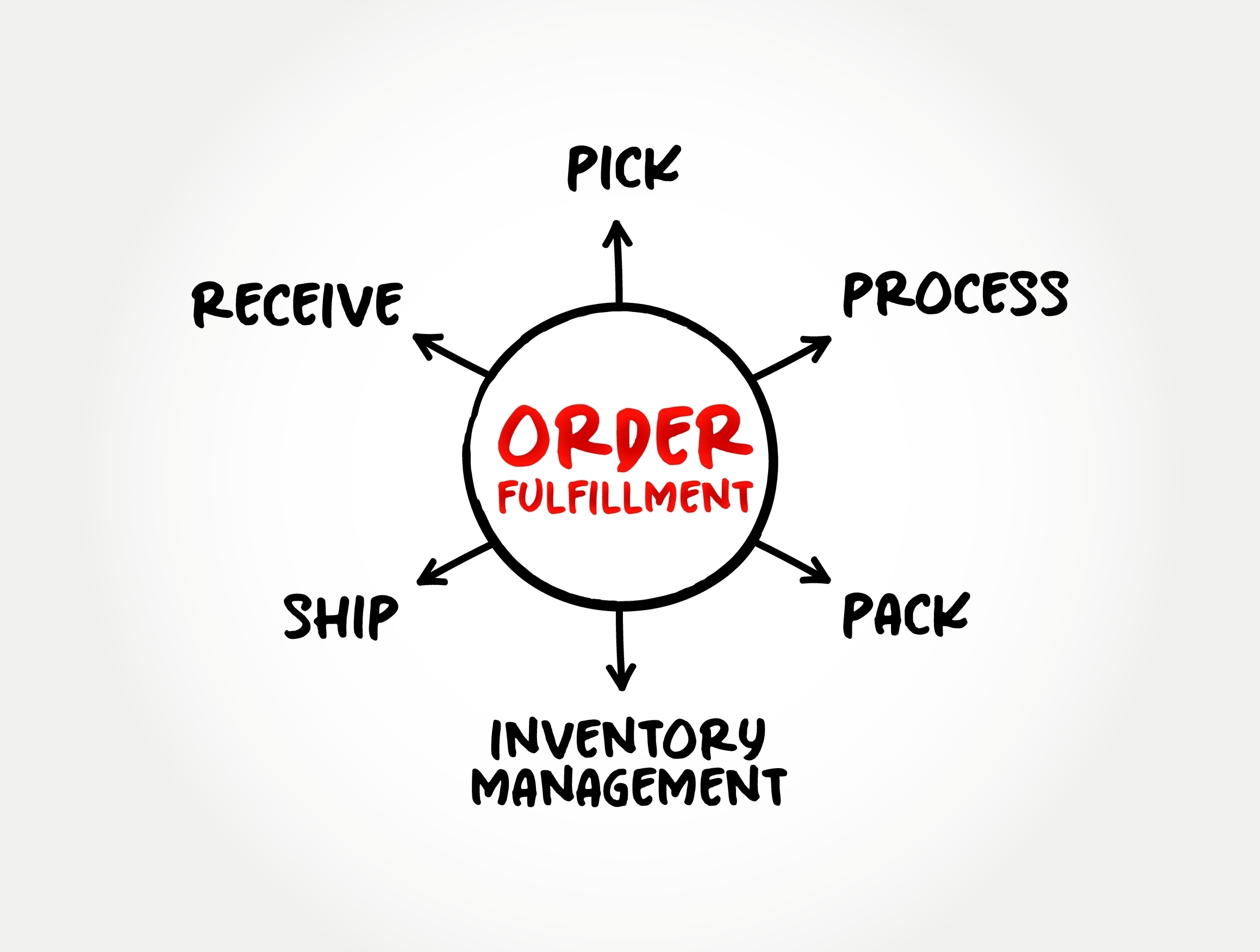
Order fulfilment is often described as “pick, pack, ship”, yet that shorthand hides the real work. A fulfilment operation manages inventory accuracy, safe storage, labour planning, packaging selection, carrier performance, returns processing, and the small administrative details that keep parcels moving legally and predictably.
A good way to think about it is this: fulfilment is your brand experience made physical.
If you sell online, the warehouse is part of your customer service team, even if customers never see it.
The fulfilment cycle, step by step
An order begins as data, becomes a physical movement of goods, and ends as confirmation. Each stage introduces risk, which is why disciplined processes matter.
The usual sequence looks like this:
- Order import from your ecommerce platform
- Payment and fraud checks (as relevant)
- Inventory allocation, so stock is reserved
- Picking the items from storage locations
- Packing with the right materials and documents
- Labelling, manifesting, and handing over to a carrier
- Tracking notifications and delivery confirmation
- Returns and exchanges (when needed)
- Stock reconciliation and reporting
That list sounds linear, yet real operations run many orders at once and juggle priorities: next day cut-offs, split shipments, pre-orders, and orders containing fragile or regulated items. The best fulfilment teams design the workflow so that speed never undermines accuracy.
Inventory receiving and putaway: the quiet foundation
Fulfilment quality is set long before the first order is packed. It starts when stock arrives at the warehouse.
Receiving checks what arrived against what was expected. Putaway decides where each unit lives so it can be found quickly and counted reliably. If receiving is rushed, errors get “baked in”, and later you see mysterious stockouts, cancelled orders, or wasted hours searching shelves.
Two disciplines make an outsized difference: consistent SKU labelling, and regular cycle counts (small, frequent stock checks) rather than rare, disruptive full counts.
Picking and packing: speed with proof
Picking is the act of collecting items for an order. Packing is where you protect the goods, reduce shipping cost, and present your brand.
Picking methods vary by scale. A smaller operation may pick one order at a time. Larger sites use batch picking (collecting items for many orders in one trip) and then sort them at pack stations. Either way, scanning and verification matter. A fast picker who is occasionally wrong costs more than a slower picker who is consistently right, once you account for re-shipments, support tickets, and refunds.
Packing is also commercial judgement. The right box size reduces dimensional weight charges. The right void fill reduces breakages. The right documents reduce customs delays. This is where operational detail becomes margin.
Shipping and carrier handover: cut-offs shape the day
Shipping is not just buying a label. It is selecting a service level, applying the correct address formatting, producing compliant paperwork, and hitting carrier cut-offs.
Many warehouses plan backwards from the last collection time. If a carrier collects at 5pm, the warehouse needs a realistic “order by” promise on the website, plus an internal cut-off that accounts for picking queues, packing capacity, and label printing. Missed cut-offs create the most painful kind of customer message: “your order is delayed” when the customer believed it had already shipped.
Returns fulfilment: where loyalty is won or lost
Returns are part of modern ecommerce economics. A return can be processed quickly and fairly, turning a disappointment into repeat purchasing, or it can become a slow, opaque experience that pushes customers away.
A strong returns process typically includes inspection, grading (resellable, refurbishable, not resellable), restocking with traceability, and fast refund triggers. It also includes learning: which SKUs drive returns, which carriers cause damage, which packaging choices reduce problems.
Common friction points inside fulfilment operations
Even well-run businesses hit operational ceilings as order volume rises, SKU ranges expand, or international shipping increases. The issues are rarely glamorous, yet they are predictable and fixable.
Here are frequent pressure points:
- Stock accuracy: mismatched counts between the shopfront and the warehouse system
- Peak demand: promotions and seasonal spikes that exceed labour capacity
- Packaging choices: oversized cartons and inconsistent materials driving cost and damage
- Process drift: “temporary” workarounds that become permanent and create errors
- Returns backlog: slow inspection and restocking creating hidden stockouts
- Carrier performance: late collections, poor scanning, or service mismatch for the product type
Once these appear, leaders often face a choice: invest heavily in warehousing capability, or partner with a specialist.
In-house fulfilment vs outsourcing: what changes
Keeping fulfilment in-house gives control, yet it also concentrates operational risk. Outsourcing to a third-party logistics provider (3PL) turns warehousing into a service, paid for in a more variable way. The right choice depends on your growth plans, product profile, and appetite for operational complexity.
A clear comparison helps:
| Area | In-house fulfilment | 3PL fulfilment |
|---|---|---|
| Fixed costs | Higher: rent, equipment, permanent staff | Lower: costs shift towards per-order and storage fees |
| Speed to scale | Slower: hiring and layout changes take time | Faster: capacity and labour can flex |
| Systems | You build and maintain WMS and integrations | 3PL provides WMS and standard integrations |
| Expertise | Depends on your team’s background | Logistics is the provider’s core competence |
| Control | Direct oversight of every step | Managed via SLAs, reporting, and agreed processes |
| Peak resilience | Can be strained during spikes | Often stronger, with shared resources |
Outsourcing is not a silver bullet. It works best when expectations are explicit: service levels, packaging rules, cut-off times, and exception handling.
What a 3PL actually does day to day
A 3PL is a warehouse operation built to serve multiple brands with consistent processes. Instead of you managing racking, scanners, labour rotas, and carrier contracts, the 3PL runs those as a service and connects them to your sales channels.
A provider like 3PLWOW LTD is an example of a specialist partner a growing ecommerce brand might use to outsource storage, pick and pack, and shipping management. The core value is not simply “space” or “hands”. It is repeatable execution, supported by warehouse management systems and experienced teams that spend all day refining the same workflows.
The practical scope usually includes inbound receiving, inventory storage, order processing, packing standards, dispatch, and returns handling, with reporting that helps you run the commercial side with confidence.
How a 3PL can strengthen customer experience
Customers experience fulfilment as speed, reliability, and communication. A 3PL can improve all three when the partnership is set up well.
After you map your promise to customers, a good provider can translate it into warehouse rules: priority shipping methods, branded inserts, gift notes, fragile handling, and proactive exception management. This matters because customer service teams work best when fulfilment is predictable.
Benefits commonly seen by businesses that move to a capable 3PL include:
- Later order cut-offs: more same-day dispatch opportunities without rushing the team
- Fewer mis-picks: scanning and standardised checks reducing the “wrong item” scenario
- Better packaging discipline: consistent box selection and protective materials reducing damage rates
- More reliable tracking: cleaner carrier handover processes and faster scan events
Those gains show up in reviews, repeat purchase rates, and support ticket volumes.
The commercial upside: turning operations into a growth platform
When fulfilment becomes stable, it stops consuming leadership attention. That creates room to invest energy in product, marketing, and customer relationships.
Cost control is another lever. Warehousing is full of small unit costs that add up: wasted void fill, oversized cartons, rework from errors, time lost hunting stock, or shipping on the wrong service. A well-run 3PL environment can reduce these through standard processes and continuous measurement.
It also changes your risk profile. Instead of betting on a single warehouse footprint and a staffing model that may struggle in peaks, you can operate with more flexibility as order volume shifts.
KPIs that show whether fulfilment is healthy
You cannot manage fulfilment by anecdotes. The metrics tell you where the system is leaking time or money.
The most useful KPIs are a mix of customer outcomes and operational drivers:
- Order accuracy rate: percentage of orders shipped without errors
- On-time dispatch: orders shipped within the promised window
- Inventory accuracy: match between system stock and physical counts
- Pick rate and pack rate: productivity measures, best used to spot process issues
- Damage rate: often tied to packaging decisions and carrier handling
- Return rate and return reasons: signals about product, sizing, or expectation-setting
- Cost per order: including packaging, labour, and outbound shipping
A 3PL should be able to report these routinely, then work with you on the actions that move them in the right direction.
How onboarding to a 3PL like 3PLWOW LTD tends to work
Switching fulfilment providers is a project, not a button press. The good news is that it follows a clear pattern, and most of the complexity is front-loaded.
A typical onboarding covers integration, stock transfer, process definition, and then a controlled go-live. The most important part is agreeing the operational rules before the first pallet arrives: what “good” looks like, what gets escalated, and how exceptions are handled.
A practical onboarding checklist usually includes:
- Data readiness: clean SKUs, dimensions, weights, and barcodes
- Integration plan: ecommerce platform, marketplaces, and shipping rules
- Packaging spec: box sizes, inserts, kitting, gift options, and fragile handling
- Service levels: dispatch cut-offs, weekend handling, and priority order rules
- Returns flow: addresses, inspection standards, and refund triggers
- Go-live approach: soft launch with a subset of orders before full volume
The strongest partnerships treat onboarding as the start of an operating rhythm: regular performance reviews, seasonal planning, and continuous refinement of packaging and carrier mix.
Choosing a fulfilment model that matches your ambition
Fulfilment is one of the few parts of commerce where operational discipline becomes customer trust in a visible way. Whether you keep it in-house or work with a 3PL, the goal is the same: a system that stays accurate at speed, keeps promises under pressure, and gives you clear data about what is happening on the warehouse floor.
If you are growing quickly, adding channels, or expanding your product catalogue, a specialist 3PL partner can be a straightforward way to gain capacity and consistency without turning warehousing into your main business. The most rewarding outcomes tend to come when you treat fulfilment as a strategic capability and set expectations with the same care you put into your products and marketing.