Growth is exciting until the fulfillment process falters and the back room starts to look like a packing bench, customer emails are piling up, and every stock delivery eats half the day. Many ecommerce brands reach a point where logistics, inventory management, inventory control, third-party logistics, e-commerce solutions, order fulfillment, 3pl, and shipping orders are no longer simple tasks tucked between marketing, product work, and customer service. It becomes a full operational function.
That is where third-party logistics (3PLs) enter the picture, offering a simple guide for e-commerce brands to understand what a 3PL is and how it can transform their operations. For fast-moving brands, they can turn fulfilment from a daily scramble into a supply chain system with structure, speed, and room to grow.
A quick definition
A 3PL, or third-party logistics provider, is a company that stores your stock and handles fulfilment services on your behalf, usually including receiving inventory, warehousing, picking, packing, shipping, and returns.
What a 3PL actually does
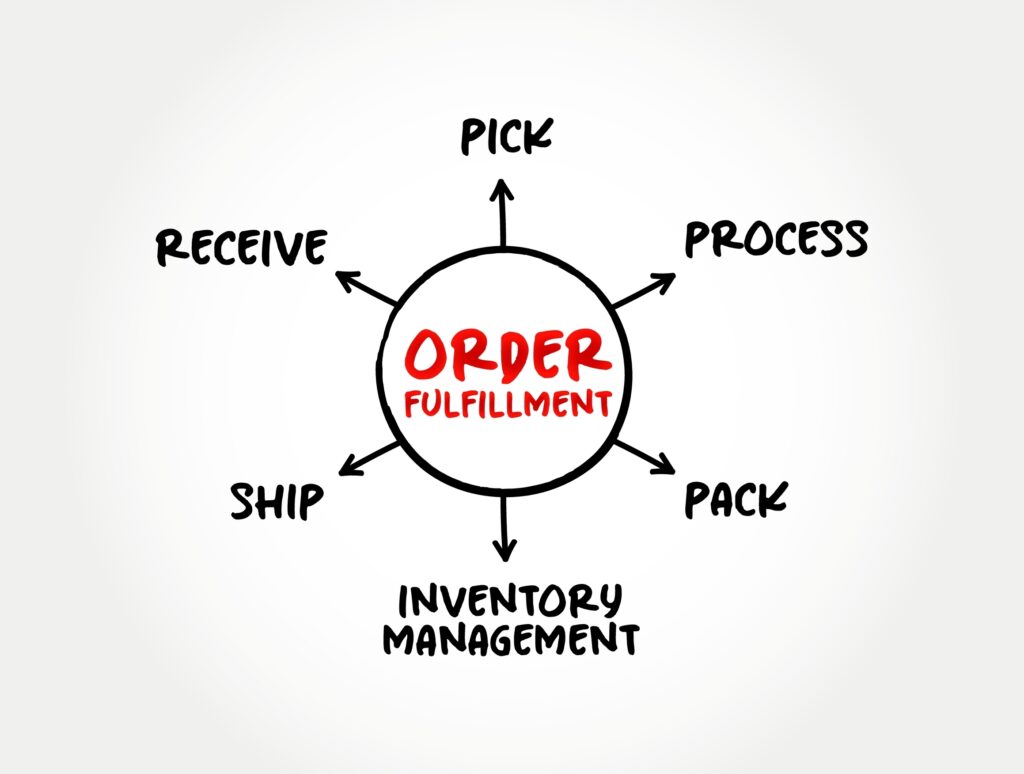
A good third-party logistics provider does much more than put boxes on shelves. It sits between your online store and your customers, making sure each order is processed accurately, shipping them out on time, ensuring efficient order fulfillment. When a customer clicks “buy”, the 3PL receives the order data, pulls the right items from storage, packs them, books the shipment, and passes tracking back to the customer.
That core process is only part of the job. Most third-party logistics (3PL) providers also manage inbound deliveries from suppliers, handle inventory management by tracking inventory levels, deal with stock discrepancies, and support reverse logistics for returns. Some also handle subscription boxes, kitting, retail prep, fragile items, or products with expiry dates.
For an ecommerce brand, partnering with a 3PL matters because fulfilment is tied to customer experience. Fast dispatch, accurate orders, and clean returns handling all shape how the brand is remembered.
Common 3PL activities include:
- Goods receiving
- Storage and warehousing
- Inventory tracking
- Pick and pack
- Shipping label creation
- Carrier management (3pl)
- Returns processing
- Kitting and bundling
- Reporting and order data
The technology layer is just as important as the physical work. Most 3PLs connect with platforms like Shopify, WooCommerce, Amazon, and marketplaces, which means orders can flow in automatically. Strong reporting also helps brands see stock on hand, order volumes, shipping performance, and return trends without relying on manual spreadsheets.
Why e-commerce brands use them
Running fulfilment in-house gives a brand direct control, though that control comes at a price compared to using a 3pl. Space, staff time, packaging materials, carrier relationships, and process design all need attention. When order volumes are modest, that can be manageable. Once volume rises, the model often starts to strain.
A 3PL lets a brand buy access to established infrastructure rather than building everything alone. That includes warehouse space, trained staff, software, and shipping networks. Instead of hiring a team and leasing more room, a brand can plug into an operation that already exists.
This scalability is one reason 3PLs are popular with growing online stores, subscription brands, and businesses selling across several channels at once, ensuring seamless fulfillment at each stage.
When should a brand outsource fulfilment?
There is no universal order threshold that tells a business it is “ready”. The better question is whether fulfilment is getting in the way of growth, margin, or customer service.
A founder packing twenty orders a day from a spare room may still be fine. A team packing two hundred orders a day while stock accuracy slips and dispatch deadlines are missed is in a very different place. Outsourcing to a third-party logistics provider (3PL) tends to make sense when order fulfillment stops being a small task and becomes a recurring operational bottleneck.
Seasonality is another trigger. Brands with sharp spikes around Christmas, product launches, promotions, or influencer campaigns often struggle to scale temporary in-house operations without effective ecommerce solutions. A third-party logistics provider (3PL) can provide more labour and warehouse capacity when order fulfillment and order volume jumps.
Useful signs include:
- Time drain: fulfilment is taking attention away from growth, product, or customer retention, an issue that a 3pl provider could alleviate
- Space pressure: stock is filling the office, studio, shop floor, or home
- Order volume: daily dispatch is now too large for a small internal team, indicating a potential need for 3pl assistance
- Shipping speed: customers expect next-day or two-day delivery that is difficult to manage alone without 3PL solutions
- Stock issues: inventory counts are unreliable, inventory management practices are lacking, or overselling is becoming a problem
- Multi-channel sales: orders are coming from your site, marketplaces, and wholesale accounts at the same time
- Peak periods: promotions or seasonal surges create repeated strain
- Team cost: hiring and training an internal fulfilment team no longer looks efficient, making the use of 3pl services more attractive
Some brands also outsource third-party logistics earlier than expected because they want to offer a better delivery promise. If a 3PL has multiple warehouse locations or stronger carrier rates, the service improvement can justify the move before the operation feels overwhelmed.
What does a 3PL cost?
Third-party logistics (3PL) pricing can look simple at first and confusing a week later. Most providers charge across several categories rather than one flat monthly fee, which includes various shipping costs. That means the lowest quoted rate is not always the lowest total cost.
The main charges for 3pl services usually cover receiving stock into the warehouse, storing it, picking and packing orders, packaging materials, postage, returns, and reverse logistics management. Some providers also charge setup fees, integration fees, account management fees, or minimum monthly commitments.
Here is a simple view of the fees e-commerce brands are most likely to see when working with a 3PL provider:
| Cost area | How it is usually charged | What to watch |
|---|---|---|
| Onboarding | One-off fee | Setup work, integrations, SKU mapping |
| Receiving | Per delivery, per carton, per pallet, or per hour | Costs can rise if inbound stock is poorly labelled |
| Storage | Per pallet, bin, shelf, or cubic metre per month | Slow-moving stock increases cost over time |
| Pick and pack | Per order and sometimes per item | Multi-item orders may cost more than expected |
| Packaging | Per parcel or per packaging type | Branded packaging may sit outside standard rates |
| Postage | Per shipment | Carrier rates and surcharges vary widely |
| Returns | Per returned order or per item | Check whether inspection and restocking are included |
| Special projects | Hourly or per task | Rework, relabelling, kitting, and retail prep often sit here |
The right way to assess cost is to compare total fulfillment cost, not just line items. In-house fulfilment includes rent, labour, packing supplies, software, damaged stock, equipment, management time, and the cost of shipping errors. Those expenses are often spread across different budgets, so they can look smaller than they really are.
A 3PL may cost more per order on paper and still save money overall if it cuts labour pressure, reduces mistakes, improves delivery speed, and frees the team to focus on sales and retention. The reverse can also be true. Brands with low order volume, simple product ranges, and spare internal capacity may find in-house fulfilment more economical for longer.
The main benefits, and the trade-offs
The biggest benefit is capacity. A 3PL gives a brand room to grow without rebuilding operations every few months. More orders can be processed without renting a bigger space, recruiting warehouse staff, or rewriting every workflow from scratch.
There is also a customer benefit. Faster dispatch, better stock visibility, cleaner tracking updates, and smoother returns can all raise trust. Customers may never know a 3PL is involved, but they will notice if orders arrive quickly and accurately.
Then there is focus. When fulfilment, such as through a 3pl provider, is handed to a capable partner, internal time can move back to what builds the brand, which usually means product, marketing, retail expansion, repeat purchase, and customer care.
The trade-offs are real as well:
- Less direct control: your stock and order flow sit with another business
- Setup effort: onboarding takes planning, data cleanup, and testing
- Service variation: not every warehouse delivers the same accuracy or speed
- Minimums and contracts: some providers are built for larger brands, not early-stage stores
- Communication risk: slow support can cause frustration during urgent issues
This is why choosing a 3PL is an operational decision, not only a price decision. A poor fit can create just as many problems as it solves.
What a strong 3PL relationship looks like
The best partnerships are built on clear service levels and clean data. Orders need to flow correctly from the store to the warehouse. SKUs need to be mapped properly. Product dimensions, packaging rules, and return instructions need to be agreed in advance. When that groundwork is done well, daily fulfilment becomes far more reliable.
Communication matters just as much. Brands should know who to contact, how issues are escalated, when inventory reports are updated, and what happens during busy periods. A provider that responds well under pressure is worth far more than one with a polished sales pitch and weak follow-through.
Location also deserves attention. A warehouse near the majority of your customers can reduce transit times and shipping costs. If most sales are within the UK, a UK-based site may be enough. If a brand is sending regular volumes into Europe or North America, a broader network may become more attractive.
Questions worth asking before signing
Price should be one part of the decision, not the whole thing. A strong shortlist usually comes from asking direct, practical questions about performance and fit.
Ask how stock is counted, how returns are processed, what cut-off times apply, what accuracy rates are achieved, and how peak periods are handled. Check which e-commerce platforms and carriers are supported. Ask whether the warehouse already works with products similar to yours, especially if you sell fragile items, bundles, cosmetics, food, apparel with size variants, or high-SKU catalogues.
It also helps to ask how reporting works day to day. Can you see live stock levels? Can you track ageing inventory? Can the team help spot fulfilment issues before they become customer problems? Good visibility often separates a useful 3PL from one that simply manages shipping boxes.
For many e-commerce brands, the right time to speak with providers is earlier than expected. Not when the warehouse is already in chaos, but when growth is clearly starting to outpace the current setup. That gives enough space to compare options, model costs properly, and move on a schedule that protects the customer experience rather than putting it at risk.