
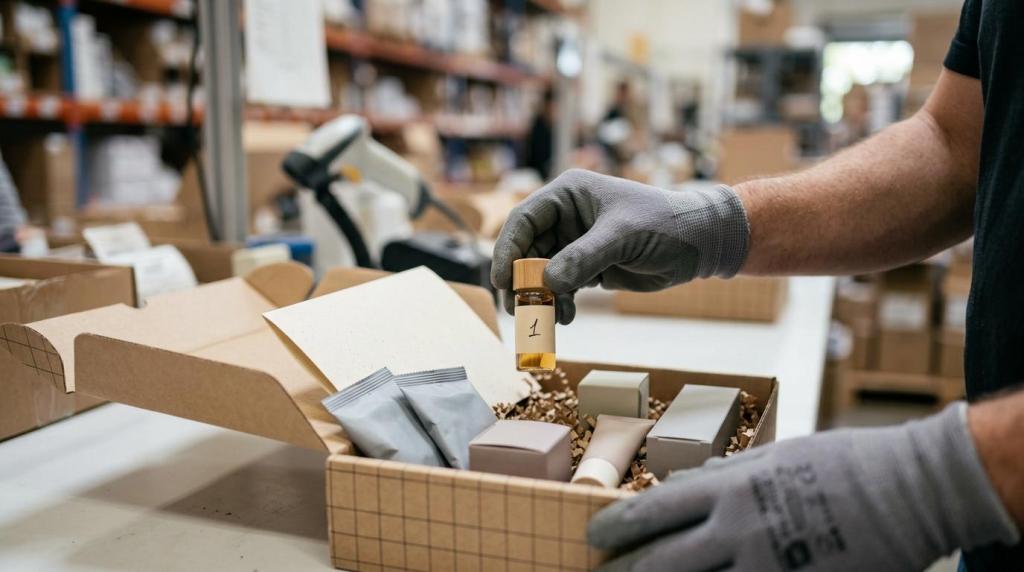
Monthly subscription services can look beautifully simple from the customer side: sign up, wait, receive a curated box or repeat supply, then decide whether to stay. Behind that tidy experience, enhancing customer experience, sits a demanding operational rhythm that includes order processing. Orders arrive in waves, pack contents may change by month or quarter, personalisation often matters, and one missed cut-off can affect hundreds or thousands of subscribers at once.
That is why fulfilment for subscription commerce is not just about storing stock. It is about repeatable accuracy, disciplined dispatch, and the ability to scale without damaging the customer experience. For growing e-commerce brands, a third party logistics partner such as 3PLWOW can give structure to that process and remove pressure from an in-house team that is already stretched.
Why subscription order fulfilment needs more than warehouse space
Subscription businesses live on retention. A standard one-off order can survive the odd hiccup. A subscription model has less room for error because customers judge the service every month, not just at checkout.
The operational standard is often described through OTIF, or on-time in-full delivery. Shopify describes OTIF as the percentage of orders delivered on time and with all correct items included. That matters greatly for subscription brands because a recurring order is a promise, not merely a purchase.
When a subscriber receives the wrong shade, the wrong snack selection, or a late refill, the damage is broader than a single return.
A strong fulfilment partner helps protect several pressure points at once, including order management:
- Order accuracy
- Inventory control
- Dispatch speed
- Tracking visibility
- Returns handling
Published ecommerce guidance also shows why these areas have financial weight. Shopify has stated that good order accuracy often sits between 96% and 98%, while accuracy below 95% can put a merchant at a competitive disadvantage. Wrong orders also create extra shipping costs, refunds, discounts, and support work. In a subscription model, those costs repeat quickly if the process is weak.
How 3PLWOW supports subscription box fulfilment operations
3PLWOW publicly presents subscription fulfilment around kitting, distribution, personalisation, and on-time delivery rather than storage alone. That is a useful distinction. Many subscription services do not ship a single SKU in a plain carton. They ship assembled experiences: monthly edits, replenishment packs, gift-style presentations, and promotional inserts.
Kitting capabilities matter here. A subscription order might require five or six separate products, printed collateral, branded packaging, and a variable item chosen from survey data or customer preferences. Those tasks are manageable at small volume. They become harder when growth brings thousands of repeat orders that all need to leave on a narrow dispatch window.
Published 3PLWOW material gives a practical example from the cosmetics sector, where a quarterly subscription box used kitting to include personalised samples based on subscriber surveys. That type of workflow is exactly where a specialist fulfilment centre can create value. The benefit is not just labour. It is process design, scanning discipline, pick accuracy, and the ability to repeat the same standard cycle after cycle.
A growing brand often needs a provider that can handle details like these:
- Batch kitting: building large runs of repeat boxes ahead of release dates
- Personalisation rules: matching inserts, samples, or product variants to subscriber data
- Packaging consistency: keeping presentation reliable across every shipment
- Cut-off management: moving high volumes through a short dispatch period
- Reverse logistics: processing returns, replacements, and damaged-item claims efficiently
That last point deserves more attention than it often gets. Subscription brands usually focus on outbound shipping, yet reverse logistics can affect retention just as much. If a customer reports a missing item and the replacement takes too long, trust weakens quickly.
Same-day dispatch and repeat orders are closely linked
Same-day dispatch sounds like a general e-commerce benefit, though it has special value in subscription fulfilment. Repeating orders are usually planned around agreed customer expectations. The brand may have a fixed monthly shipment date, a renewal cut-off, or a first-box promise tied to sign-up timing. If dispatch slips, the business is not just late. It is seen to have missed a known routine.
That is why a 3PL with trained staff and clear workflows can make a visible difference. Published 3PLWOW case material reports stronger outsourced fulfilment after outsourcing fulfilment. One case says same-day dispatch improved from 71% to 94%, while order accuracy rose from 96.2% to 99.4%. Another subscription-focused example reports inventory accuracy approaching 100% and on-time delivery above 99%, supported by efficient distribution processes.
Those figures matter because customer expectations are now firm. Shopify has reported that customers expect on-time deliveries and total order accuracy, while real-time tracking and accurate delivery estimates have shifted from nice extras to standard expectations.
The relationship between speed and stability is often overlooked. Fast dispatch is useful, yes, though reliable dispatch is even better. Subscription brands need both.
Lower shipping costs can protect subscription margins
Margins in subscription commerce can be surprisingly tight. Packaging is branded. Products may be curated. Free shipping is often included in the subscription price. Customer service expectations are high, as they significantly impact the overall customer experience. If shipping costs drift upward, profit can shrink quietly in the background.
Shopify has stated that shipping makes up nearly 90% of total order fulfilment costs. That makes carrier rates and shipping operations central to the business model, not a side issue.
A third party logistics provider can often help reduce shipping costs through scale. A larger fulfilment operation may secure better carrier rates than a single merchant can access alone. It may also route orders through the best service level for the parcel type, destination, and time requirement, enhancing overall order management efficiency. Even modest savings per parcel become meaningful when orders repeat every month, primarily due to the efficiencies in order processing.
The savings do not only come from postage rates. They also come from avoiding avoidable errors.
- Fewer mis-picks: less spend on reships and compensation
- Better packaging choices: reduced dimensional weight where suitable
- Rate shopping: selecting the right carrier service for the order profile
- Inventory accuracy: fewer emergency replenishment moves or split shipments
For a subscription brand, that kind of discipline helps create a business that is easier to price and easier to scale.
A larger trained staff base helps when subscription volume spikes
Many subscription businesses grow in bursts rather than straight lines. A campaign lands well. A creator partnership performs strongly. A festive promotion brings a sudden intake of new subscribers. The operational question arrives very quickly: can the business fulfil the next cycle without delays?
This is where outsourced fulfilment becomes attractive. An in-house team may be excellent, though it is still limited by floor space, headcount, shift cover, seasonal hiring, and management time. A specialist provider can spread fixed operational capability across many clients, which gives each brand access to more labour capacity than it could easily justify alone.
Published 3PLWOW case material reflects this scaling effect. One direct-to-consumer brand is reported to have grown from roughly 4,000 monthly orders to more than 14,000 after moving past a small in-house warehouse setup. Another case states that monthly order capacity increased from 15,000 to more than 35,000 within 90 days of outsourced fulfilment.
That kind of headroom can change the way a subscription brand plans its marketing calendar.
| Fulfilment factor | In-house growing brand | Third party logistics support |
|---|---|---|
| Monthly dispatch peaks | Often difficult to staff | Staff pool can absorb spikes more easily |
| Kitting projects | Competes with daily picking | Dedicated workflows can be built around campaigns |
| Order accuracy controls | Depends on internal systems and training | Often supported by scanning and repeat SOPs |
| Carrier buying power | Usually limited | Better access to negotiated shipping rates |
| Returns processing | Can build up during busy periods | Structured reverse logistics can shorten turnaround |
| Tracking communications | Varies by platform setup | Often integrated into fulfilment workflows |
A large trained staff base does not only increase output. It also reduces single points of failure. Holidays, illness, and unexpected demand become less disruptive when operations are not resting on a very small team.
Tracking, accuracy, and inventory visibility shape subscriber trust
Subscribers do not simply want a parcel. They want certainty. If a card is charged today, they want to know when the box leaves, where it is, and whether the contents are correct.
Real-time tracking cuts down the “where is my order?” burden that can overwhelm a fast-growing brand.
Strong fulfilment providers support that expectation through systems, scanning, and inventory visibility. Accurate stock records help prevent substitutions, stockouts, and partial shipments. Order accuracy reduces support tickets. Real-time tracking cuts down the “where is my order?” burden that can overwhelm a fast-growing brand.
Published 3PLWOW subscription material points to inventory accuracy approaching 100% in one snack subscription example. Even allowing for the fact that this comes from company-published material, the broader principle is sound: inventory accuracy and on-time delivery are closely tied to subscriber satisfaction.
A useful way to assess fulfilment performance is to look beyond simple parcel counts and focus on service quality:
- OTIF rate
- Order accuracy rate
- Inventory accuracy
- Same-day dispatch percentage
- Returns turnaround time
When these metrics stay strong, the distribution of resources becomes more efficient, and order management and retention have a better foundation.
What growing ecommerce brands should ask before choosing a subscription fulfilment partner
Not every 3PL is a strong fit for subscription work. Some are set up mainly for simple pick-and-pack e-commerce, where every order is relatively similar and personalisation is limited. Subscription businesses often need more operational flexibility than that.
A good selection process should test how a provider handles repetition, variation, and release-day pressure. It should also ask whether the provider can keep service quality stable as volume rises.
Useful questions include:
- Subscription workflows: can the provider manage recurring order waves and fixed monthly cut-offs?
- Kitting depth: can they assemble multi-item boxes with inserts, sleeves, and variable contents?
- Personalisation support: can customer data drive sample selection or tailored box contents?
- Carrier options: what scope is there for lowering shipping costs without weakening service?
- Service reporting: how are OTIF, order accuracy, and inventory accuracy monitored and shared?
It is also sensible to ask about returns processing. Published 3PLWOW case material says returns processing fell from six days to two days in one outsourcing example. That is the kind of operational shift that can improve customer satisfaction quickly, especially when a subscription brand deals with damaged items, unwanted variants, or replacement requests.
Subscription fulfilment can become a growth engine rather than a bottleneck
For many ecommerce brands, the turning point comes when fulfilment stops being a back-room function and starts being treated as a commercial advantage. Faster dispatch, lower shipping costs, better tracking, and a deeper labour base all support growth. They also protect the consistency that subscription customers expect.
A provider like 3PLWOW can be valuable because the service is framed around the real shape of subscription commerce: kitting, personalisation, repeat cycles, dependable on-time delivery, order processing, and improved customer experience. That focus suits monthly subscription services far better than a storage-first model.
When fulfilment is steady, brands gain more freedom to market boldly, launch themed boxes, test new subscriber offers, and handle demand with confidence. That is often the difference between a subscription programme that merely survives and one that scales with control.