
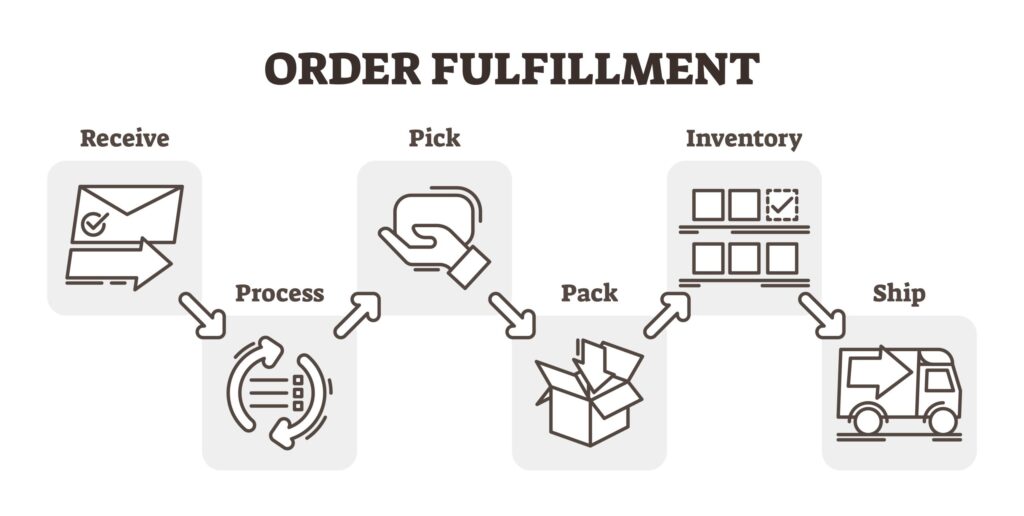
When people ask how much order fulfilment costs in the UK, the honest answer is: it depends on what you sell, how often you ship, and how much handling your products need. A lean operation sending small, lightweight parcels can run at a very different cost level from a brand managing fragile goods, multiple sales channels, and high return volumes.
That said, there are reliable patterns in UK fulfilment pricing. Once the cost structure is clear, it becomes much easier to compare providers, build margins with confidence, and spot quotes that look attractive on the surface but become expensive in practice.
Order fulfilment cost ranges in the UK
A typical UK fulfilment cost for a standard ecommerce order often sits somewhere between £2 and £6 per order before postage, with shipping charged separately in many cases. Once carrier costs are included, a basic small-parcel order may land closer to £5 to £12 per order. For larger, heavier, or more complex orders, the total can move well beyond that range.
Small businesses often see a wider spread because lower order volume usually means less buying power and fewer economies of scale. Higher-volume merchants may secure lower rates per order, though they can still face meaningful costs if they have many SKUs, custom packaging, or seasonal spikes.
The table below shows the charges that appear most often in UK fulfilment quotes.
| Cost element | Typical UK pricing approach | Indicative range |
|---|---|---|
| Setup and onboarding | One-off fee | £100 to £1,000+ |
| Integration with sales channels | One-off or monthly | £0 to £500+ |
| Goods-in / receiving stock | Per pallet, carton, or hour | £5 to £25 per pallet, or hourly charges |
| Storage | Per pallet, bin, shelf, or cubic metre | £10 to £40+ per pallet per month |
| Pick and pack | Per order, often with item charges | £1.50 to £4+ first item, plus extra item fees |
| Additional item picks | Per extra unit in the order | £0.20 to £1 per item |
| Packaging materials | Per order or included | £0.20 to £1.50+ |
| UK shipping | Per parcel, by size, weight, speed | £2.50 to £8+ for common parcel types |
| Returns handling | Per returned parcel or per action | £1 to £5+, excluding postage |
| Account management / minimum fees | Monthly | £25 to £250+ |
Those ranges are not fixed market rules. They are simply useful planning figures. A quote can sit above them and still be sensible if the service level, speed, or product handling needs justify it.
Main order fulfilment cost components in the UK
Order fulfilment is rarely just one fee.
Most UK providers build pricing from several layers, and that is where confusion often begins. A low pick-and-pack rate may look excellent until storage, packaging, software, and returns are added back in.
The core cost areas usually include:
- Setup and integration
- Goods-in and receiving
- Storage
- Pick and pack
- Packaging materials
- Carrier charges
- Returns processing
Setup fees are common when a provider needs to connect your store, map SKUs, test order flow, and create warehouse rules. Some waive these charges for larger accounts or longer contracts, while others keep them as a clear one-off line item.
Storage is usually charged monthly, but the basis matters. One provider may charge by pallet, another by bin location, and another by cubic metre. That difference can change your bill sharply, especially if your stock is bulky, irregularly shaped, or slow moving.
Pick-and-pack fees cover the labour of locating products, assembling the order, checking it, packing it, and preparing the shipping label. This is often the largest operational cost outside postage. A very simple order with one SKU and standard packaging will cost less than a multi-item subscription box or gift set that needs inserts, tissue, sleeves, or serial-number checks.
Shipping can easily become the biggest single cost in the full fulfilment picture. UK parcel rates move according to weight, dimensions, service speed, delivery zone, and surcharges. The difference between a parcel that fits neatly within a small-parcel threshold and one that tips into a higher band can be dramatic.
UK storage costs and pick-and-pack charges explained
Storage sounds simple, yet it often creates avoidable overspend.
If stock turns quickly, storage may remain a small part of the monthly bill. If stock sits for long periods, or if the range is wide with low unit movement per SKU, storage becomes more significant. Slow-moving lines are especially costly when they occupy pallet space that could be used for faster stock.
Pick-and-pack pricing usually follows one of three models: a flat rate per order, a first-item fee plus extra-item fees, or a more customised labour-based structure. For many ecommerce businesses, the first-item-plus-additional-items model is the most common.
A simple example helps. If the first item costs £2.50 to pick and pack, and each extra item costs £0.40, a three-item order would carry a fulfilment handling cost of £3.30 before packaging and postage. That model tends to work well when basket sizes vary.
Fragile goods, apparel needing folding or bagging, bundles, subscription kits, and products with expiry dates can all attract extra handling fees. These charges are not automatically bad news. They often reflect care, accuracy, and a lower risk of costly shipping errors.
Common UK order fulfilment pricing models
A quote is easier to judge when you know the billing model behind it. Two providers can offer similar overall value while presenting their numbers in very different ways.
The most common pricing structures include the following:
- Per-order model: a clear charge each time an order ships, often with separate fees for extra items, packaging, and postage.
- Monthly minimum: a set spend threshold each month, which can work well for providers managing warehouse capacity and support resources.
- All-in rate: a bundled price that may include fulfilment, storage allowance, packaging, and standard delivery.
- Hybrid pricing: a mix of fixed monthly charges and variable operational fees.
Per-order pricing is often attractive for growing brands because it follows sales activity. Monthly minimums can still be good value if volume is steady enough to make full use of them. All-in pricing can simplify forecasting, though it needs careful checking to confirm what is actually included.
A provider that seems slightly more expensive on paper may still offer the better commercial fit if billing is more predictable, service levels are stronger, or returns handling is better organised.
Example UK order fulfilment cost scenarios
Real numbers help turn abstract pricing into something useful.
A smaller ecommerce brand shipping 300 orders per month with mostly one-item orders might see costs along these lines:
- Pick and pack: £600 to £1,050
- Storage: £40 to £120
- Goods-in: £30 to £100
- Packaging: £60 to £240
- UK shipping: £900 to £1,500
That places the rough monthly total at £1,630 to £3,010, or about £5.40 to £10.03 per order.
A more established merchant shipping 2,000 orders per month may achieve lower handling and postage rates. Even so, if average basket size is higher and the product range is broader, the savings per order may be smaller than expected. Volume helps, but complexity can absorb those gains quickly.
A subscription brand is a good example of this. Orders may be predictable, which warehouses like, but packing work is often more involved. If every box needs a printed insert, a product sequence, and a timed dispatch window, labour costs can stay firm even at scale.
Factors that push UK fulfilment costs up or down
The strongest influence on cost is not always order volume. Product shape, handling needs, returns rate, and delivery profile often matter just as much.
Several operational details tend to have the biggest effect:
- Product size and weight
- Number of SKUs
- Average items per order
- Sales channel complexity
- Return rate
- Packaging requirements
- Seasonal order peaks
Large or awkward products cost more to store, pick, pack, and deliver. A high SKU count can slow warehouse operations and increase space use. A brand selling across its own website, marketplaces, and wholesale channels may also need more system rules, reporting, and stock controls.
Seasonality deserves close attention. Many fulfilment partners are well set up for peak demand, but some add temporary labour surcharges or capacity fees during the busiest periods. If a large share of annual sales lands in the final quarter, that should be modelled early.
Returns can be a hidden margin drain too. Fashion, footwear, and gifting categories often see meaningful return activity, and every return creates work: receiving, checking, restocking, relabelling, or disposal.
Hidden order fulfilment charges in UK quotes
A quote can look competitive while leaving out costs that appear later on invoices. Reading the charging schedule in detail is one of the smartest financial habits a merchant can build.
The lines worth checking closely include:
- Receiving stock: billed by pallet, by carton, or by labour time.
- Storage basis: charged per pallet, shelf, bin, or cubic space.
- Packaging materials: boxes, tape, void fill, labels, and branded inserts.
- Carrier surcharges: fuel, remote postcode fees, oversized parcels, and failed delivery charges.
- Returns handling: inspection, grading, restocking, and disposal.
- Software and support: dashboard access, account management, reporting, and custom development.
VAT also matters. Some quotes are presented before VAT, while others mix VAT treatment across service lines and shipping. That can make quick comparisons misleading if one provider appears cheaper simply because the tax position has not been presented in the same way.
Contract length, exit terms, and stock transfer charges are also worth attention. A low upfront rate loses appeal if moving out later becomes expensive or operationally awkward.
How to reduce order fulfilment costs without hurting service
Lower cost does not need to mean lower quality.
The best savings usually come from simpler operations rather than pressure on warehouse teams. When products are easier to store, easier to identify, and easier to pack, both cost and error rates tend to improve together.
Start with packaging. A small adjustment to carton size can reduce material use and keep more parcels within favourable carrier bands. That single change can affect shipping costs every day, not just once.
SKU rationalisation is another strong move. If slow-moving variants create storage pressure and picking complexity, trimming them can improve cash flow as well as fulfilment economics. Better stock forecasting also helps by reducing emergency inbound deliveries and limiting old inventory sitting in paid space.
Returns prevention is just as valuable as returns handling. Clear sizing guidance, better imagery, stronger product descriptions, and accurate dispatch communication can all reduce unnecessary reverse logistics costs.
What to ask when comparing UK fulfilment providers
A good quote should let you build a realistic cost per order before signing any agreement.
Ask for a sample invoice based on your own trading pattern. Use real order data where possible: average monthly orders, average items per order, parcel dimensions, current return rate, peak trading weeks, and expected inbound deliveries. The more realistic the dataset, the more useful the comparison.
It is also sensible to ask how errors, claims, and service credits are handled. A lower-cost operation that creates stock discrepancies or late dispatches can become expensive very quickly through refunds, replacement stock, and customer support load.
When a provider can show clear charging logic, transparent storage rules, and accurate modelling against your order profile, pricing becomes much easier to trust. That clarity is often the first sign of a fulfilment setup built to support profitable growth in the UK market.