
Better Shipping With Third Party Logistics
Freight management has become one of the clearest competitive tests in e-commerce. Customers notice price, speed, accuracy, tracking quality, and how quickly a problem is put right. When those pieces work well, brands feel reliable. When they do not, even a strong product can lose momentum.
That pressure is not easing. The Office for National Statistics reported that online sales made up 27.0% of retail sales in Great Britain in December 2024, up from 26.5% in November, with online spending values also rising year on year. A larger online market creates a larger delivery expectation. For many merchants, that is the point where third party logistics becomes less of an operational option and more of a commercial decision.
A provider like 3PLWOW can help e-commerce businesses build better shipping performance in three practical solutions: cheaper shipping rates, same-day dispatch, and the capacity to process high order volumes without service slipping.
Why e-commerce shipping becomes more difficult as order volumes rise
In the early stages of an online business, shipping often looks manageable. A small team can pick and pack orders, book courier labels, answer delivery queries, and keep stock moving with basic systems. Growth changes that picture very quickly. The same process that worked for 30 orders a day can start to fail at 300.
The problem is not only volume. It is volume arriving unevenly. Promotions, payday spikes, seasonal peaks, influencer campaigns, and marketplace activity can all compress a week’s workload into a day or two. That is where late dispatch, picking errors, stock confusion, and rising support tickets begin to appear.
Common signs that shipping operations are under strain include:
- Picking delays
- Missed carrier cut-off times
- Higher parcel costs
- Stock location errors
- Slow returns handling
- Rising “where is my order?” enquiries
At that stage, shipping is no longer just a warehouse task. It becomes a growth constraint.
How third party logistics providers reduce shipping costs
One of the strongest reasons merchants move to a 3PL is access to better shipping rates. A specialist fulfilment provider aggregates volume across many clients, which gives it stronger buying power with carriers than most single e-commerce brands can secure alone. That difference can be significant, especially for businesses shipping across multiple parcel sizes, service levels, and destinations.
A good 3PL also gives merchants more than a cheaper label price. It can improve how parcels are routed, matched to service levels, and packed. If a parcel can move on a more suitable service without hurting delivery promise, the saving is immediate. If packaging is standardised properly, dimensional weight charges can fall. If the provider manages several carriers, the merchant is less exposed to the pricing limitations of a single account.
Industry data supports that value. The 2025 Third-Party Logistics Study by the Council of Supply Chain Management Professionals found that 66% of shippers said 3PLs contribute to reducing overall logistics costs, while 68% said 3PLs provide new and innovative ways to improve logistics effectiveness. Cost reduction is rarely only about the courier invoice. It also comes from fewer mistakes, less rework, and better use of labour.
The table below shows how the economics often change when shipping moves from an in-house model to a 3PL model.
| Area | In-house pressure | 3PL advantage | Business effect |
|---|---|---|---|
| Carrier pricing | Limited negotiating power | Shared volume secures stronger rates | Lower per-order shipping cost |
| Dispatch process | Labour varies with demand | Trained fulfilment teams and defined workflows | More stable output |
| Packaging | Inconsistent pack choices | Standardised packing methods | Lower waste and fewer surcharge risks |
| Technology | Manual booking and tracking gaps | Integrated fulfilment and carrier systems | Better visibility and fewer errors |
| Peak periods | Overtime or backlog | Scalable labour and warehouse capacity | Fewer service failures during spikes |
For an e-commerce business, cheaper shipping rates matter twice. They protect margin, and they create more freedom in the offer presented to customers. That may mean more competitive standard delivery, a lower threshold for free shipping, or a premium same-day or next-day option that still makes commercial sense.
How same-day dispatch improves e-commerce delivery performance
Fast dispatch is often the hidden engine behind fast delivery. A next-day courier service means little if orders sit in a queue until tomorrow. That is why same-day dispatch can have a direct effect on customer satisfaction and seller performance across a brand’s own site and marketplace channels.
A capable 3PL builds its operation around cut-off times, order flow, and warehouse discipline. Orders need to enter the system cleanly, be allocated quickly, picked accurately, packed to a standard, and handed to the right carrier before collection closes. When that rhythm is managed well, shipping becomes more predictable rather than more frantic.
3PLWOW’s published case material gives a useful picture of what improvement can look like after outsourcing fulfilment. In one case study, same-day dispatch improved from 71% to 94%. That is a meaningful operational shift. It means more customers receive dispatch confirmation on time, more parcels enter the carrier network earlier, and fewer orders spill into the next working day.
The customer effect is easy to see:
- Delivery promise: orders are more likely to arrive when expected
- Customer service load: fewer parcel-related support contacts need handling
- Channel performance: stronger dispatch metrics support marketplace reputation
- Team focus: internal staff spend less time firefighting shipping delays
That support burden matters more than it first appears. Efficient freight management, as observed in another 3PLWOW case study, reported a 38% reduction in shipping-related support contacts after fulfilment outsourcing. When dispatch improves, customer service pressure often falls with it.
A 2025 industry study also found that 82% of shippers said 3PLs contribute to improved customer service. That result reflects a simple commercial truth: customers do not separate fulfilment quality from brand quality, which is why providing reliable solutions is essential. They experience them as the same thing.
How 3PLs handle large e-commerce order volumes without losing control
Growth is exciting right up until the order count starts to outrun the operation.
This is where third party logistics can change the shape of the business. Instead of building warehouse space, labour planning, systems, and carrier relationships internally at speed, a merchant can move into an existing fulfilment structure built to absorb higher throughput. That does not remove operational discipline. It gives it a stronger platform.
A scalable 3PL should be able to flex labour, shelf space, packing stations, warehousing services, and dispatch workflows as order patterns change. During ordinary weeks, that keeps costs sensible. During peak periods, it helps the brand avoid the familiar slide into backlogs, overtime, and service deterioration.
3PLWOW’s published numbers are particularly relevant here. One case study reports monthly order capacity rising from 15,000 to 35,000+ within 90 days after switching to a 3PL model. The same case study reports order accuracy improving from 96.2% to 99.4%.
Those figures matter because scale without accuracy is expensive. Every wrong item, missing line, or failed address creates a second shipment, a support case, and a damaged customer experience. Better shipping is not only about moving faster. It is about moving correctly, at volume, every day.
The strongest high-volume fulfilment operations usually share a few features:
- Clear stock locations
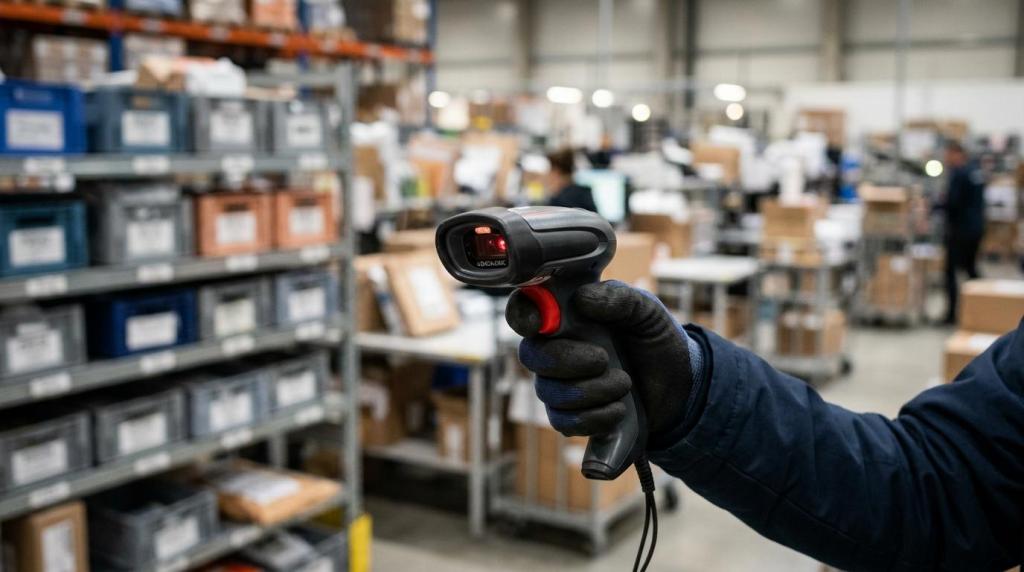
- Barcode-driven picking
- Multi-carrier shipping options
- Capacity planning around peaks
- Defined cut-off management
For growing e-commerce businesses, that kind of structure can remove a major barrier to sales. Marketing can become more confident, promotions can scale with less operational risk, and the business can accept volume that once would have felt dangerous.
Why faster returns processing supports better shipping performance
Shipping quality does not end when the parcel arrives. Returns are part of the same service promise. If outbound delivery is quick but returns take days to process, customers still feel friction, and stock remains unavailable for resale longer than necessary.
A capable 3PL can improve this part of the operation as well. Returned goods need to be received, checked, categorised, and either returned to stock or routed appropriately. Done slowly, that locks up working capital and causes avoidable delay. Done well, it shortens refund times and restores inventory visibility faster.
In published 3PLWOW case material, average return processing time fell from 6 days to 2 days after outsourcing fulfilment. That is a strong reminder that better shipping solutions are not only about outbound parcels. Reverse logistics shapes customer trust, stock efficiency, and support effort just as directly.
What to look for in a third party logistics partner for better shipping
Not every 3PL will suit every e-commerce business. The right partner should match the brand’s order profile, product type, service promise, and growth plans. Cheap rates alone are not enough if systems are weak or dispatch consistency is poor.
A practical selection process should focus on warehousing services, performance, visibility, freight management, and operational fit. Merchants should ask how the provider manages cut-off times, what service levels are realistic during peak periods, which carriers are available, how returns are handled, and what reporting can be shared. It is also sensible to ask for published results or case material where available.
Useful questions include:
- Shipping rates: how are carrier savings passed on to clients?
- Same-day dispatch: what cut-off times apply, and how often are they achieved?
- Order accuracy: what service levels are reported and tracked?
- Peak capacity: how does the operation absorb sudden order surges?
- Returns processing: how quickly are returns checked and updated?
- Systems: which platforms and marketplaces can be integrated?
The best shipping setup is rarely the one with the most noise around it. It is the one that gives an e-commerce business room to grow while keeping cost, speed, and control in balance.
For brands facing rising order volume, tighter margin pressure, and higher customer expectations, a provider like 3PLWOW represents a practical model: lower shipping costs through scale, faster dispatch through specialist fulfilment processes, and the ability to handle larger volumes without service quality breaking down. That combination can turn shipping from a source of strain into one of the business’s strongest operating advantages.