
The Benefits of Outsourcing Order Fulfillment to 3PLWOW
For many e-commerce businesses, order fulfillment starts as a practical in-house task and then turns into a brake on growth. More orders should mean more revenue, yet they also bring more picking errors, more stock checks, more carrier admin and more pressure on customer service.
That is why outsourcing fulfillment has become a strategic move rather than a back-office fix. A strong third-party logistics partner can take over the repetitive, time-sensitive work of storing stock, picking products, packing orders and shipping them to customers, while giving the business better control over speed, cost and service quality. When that partner also offers published evidence around capacity, dispatch performance and returns handling, the decision becomes much easier to assess. In that context, 3PLWOW stands out as a provider built around fast dispatch, scalable warehouse operations and practical e-commerce support.
Why third-party order fulfillment matters for growing ecommerce brands
The case for outsourcing is no longer based on cost alone. According to Inbound Logistics’ 2024 3PL market research, 74% of shippers said service is more important than price. That says a great deal about how fulfillment is judged today. Customers expect quick delivery, accurate orders and clear communication, and brands know that poor fulfillment damages trust far faster than a modest increase in shipping cost.
Research also points to broad confidence in the model itself. The 2024 Third-Party Logistics Study reported by Penske Logistics found that 95% of shippers were satisfied with their 3PL relationships, up 12 points on the prior year. That level of satisfaction suggests outsourced fulfillment is not a niche fix for struggling operations. It is a well-established operating model for businesses that want stronger service and fewer internal bottlenecks.
When fulfillment is kept in-house for too long, the same pattern tends to appear. Space gets tight, dispatch cut-off times become harder to hit, stock counts drift, and management time is pulled into operational firefighting.
Common warning signs include:
- late dispatches
- stock discrepancies
- seasonal bottlenecks
- rising storage costs
- too many delivery-related support tickets
Pick and pack services with 3PLWOW and why accuracy matters
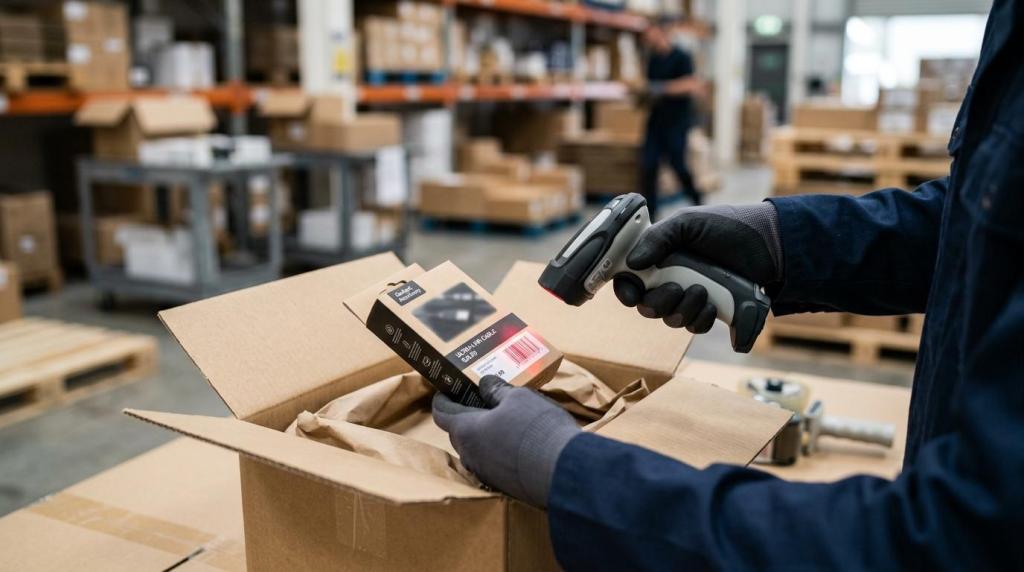
Pick and pack is one of the easiest areas to underestimate. On paper, it sounds simple: take an order, pick the items, pack the parcel and send it out. In practice, it is a precision process where small failures create very visible customer problems. A wrong size, a missing item or damaged packaging can turn a profitable sale into a refund, a complaint and a lost repeat customer.
This is where specialist fulfillment providers earn their place. A dedicated 3PL builds standard operating procedures around layout, scanning, checking and packing consistency. That improves order accuracy and makes performance less dependent on whoever happens to be on shift. It also removes a major operational burden from internal teams, who can then spend more time on sales, merchandising and customer retention.
3PLWOW’s published figures are especially relevant here. The company states that it operates from a 15,000+ pallet warehouse, offers pick and pack from £0.40 per order, and ships precision-checked orders the same day. In one published case study, 3PLWOW says monthly order capacity moved from 15,000 to 35,000+ within 90 days after switching to a 3PL model. The same case study states that order accuracy improved from 96.2% to 99.4%.
That improvement matters because fulfillment quality is cumulative. A business does not need perfect operations to win customer loyalty, but it does need reliable consistency.
Published benefits in this area include:
- Order accuracy: 3PLWOW says one client improved from 96.2% to 99.4%
- Scalability: monthly order capacity in that case study rose from 15,000 to 35,000+ in 90 days
- Dispatch pace: 3PLWOW reports same-day dispatch performance improving from 71% to 94%
- Cost visibility: published starting prices create a clearer baseline for fulfillment planning
Inventory management benefits with outsourced fulfillment
Inventory management is often where hidden costs accumulate. Overstocking ties up cash. Understocking leads to missed sales. Poor stock visibility creates a false sense of security right up until a bestseller cannot be shipped. Many brands feel these pressures long before they label them as inventory problems.
A well-run 3PL can improve stock control by combining physical storage discipline with better system visibility. That includes cleaner goods-in processes, more organised bin locations, cycle counting routines and integration with e-commerce platforms. The result is not simply “where the stock is”, but a stronger view of what is available, what is moving and where replenishment risk is building.
Technology has become part of that promise. The 2024 Third-Party Logistics Study found that 87% of shippers and 94% of 3PLs agreed that emerging technology adoption is vital to future supply-chain growth. That supports the wider shift towards connected fulfilment systems, where orders, stock and dispatch data move quickly between the sales platform and the warehouse floor.
3PLWOW publishes claims around integration as part of its service model, which is significant for businesses that need fulfillment to slot into existing ecommerce workflows rather than sit beside them as a separate manual process. Good integration reduces double handling, helps prevent overselling and gives customer service teams cleaner order status information.
| Fulfillment area | Common in-house pressure | 3PLWOW published position |
|---|---|---|
| Storage capacity | Limited room for growth | 15,000+ pallet warehouse |
| Pick and pack | Staff time and inconsistency | Pick and pack from £0.40 per order |
| Dispatch speed | Missed cut-off times | Same-day shipping for precision-checked orders |
| Shipping cost planning | Hard to model per-order cost | Next-day shipping from £2.00 |
| Returns handling | Slow processing and admin drag | Published case study shows returns dropping from 6 days to 2 days |
The real gain here is control. Better inventory management helps protect revenue, reduce write-offs and keep fulfillment promises credible during busy trading periods.
Shipping orders to customers faster and more reliably
Fast shipping gets attention, but reliable shipping is what keeps customers calm. A business can survive the occasional delayed parcel. It struggles when dispatch becomes inconsistent, tracking updates are unclear or support teams cannot confidently answer “Where is my order?”
An experienced 3PL shortens the gap between order placement and carrier handover. That matters because every hour saved in the warehouse increases the chance of hitting the expected delivery window. 3PLWOW states that precision-checked orders are shipped the same day, and its published case study reports same-day dispatch improving from 71% to 94%. That is a meaningful shift in operational performance, not just a marketing phrase.
There is also a service perception issue. If customers receive orders quickly, accurately and with proper packaging, they tend to treat the brand as efficient and dependable. Fulfillment may happen behind the scenes, yet it shapes the customer’s judgement of the whole business.
Cost control, labor pressure and scaling without warehouse strain
One of the strongest arguments for outsourcing fulfillment is cost structure. Running warehousing in-house means paying for space, staff, equipment, consumables, systems and carrier administration, whether order volume is steady or not. During quiet periods, that fixed base can feel heavy. During peak periods, it can be too small.
A 3PL shifts much of that burden into an operating model that moves more closely with order volume. That does not mean fulfillment becomes cheap by default. It means the cost is often easier to model against sales activity, customer expectations and growth plans. 3PLWOW’s published starting prices of £0.40 for pick and pack and £2.00 for next-day shipping are useful in that sense, even though actual costs will vary by product profile, packaging and destination.
Labour is another major issue. Penske’s reported study found that 78% of shippers and 40% of 3PLs said labour challenges had affected service level agreements. That finding helps explain why many brands struggle when they try to keep fulfillment fully in-house. Recruitment, training, cover for absence and peak staffing all sit inside the business rather than being spread across a specialist operation.
The commercial advantages often look like this:
- variable cost structure
- reduced internal warehouse overhead
- shared operational labour pool
- easier peak-season scaling
The published 3PLWOW case study gives this point extra weight. A move from 15,000 monthly orders to 35,000+ in 90 days suggests a fulfillment setup designed to absorb growth quickly. For a brand facing sudden demand spikes, promotional surges or seasonal peaks, that kind of capacity can protect both revenue and reputation.
Returns handling, reverse logistics and customer retention
Returns rarely get the same attention as outbound shipping, yet they shape margin and customer trust just as strongly. Slow returns processing delays refunds, clogs inventory visibility and creates avoidable support tickets. It can also stop resalable stock from getting back into circulation quickly.
Reverse logistics is now a normal part of 3PL capability. Inbound Logistics reports that 63% of 3PLs offer reverse logistics or product lifecycle management services. That reflects a wider market reality: brands need fulfillment partners that can handle the full order cycle, not just the happy path of first-time delivery.
3PLWOW’s published case study reports average returns processing time falling from 6 days to 2 days. If that performance is replicated in the right operating context, it can make a noticeable difference to customer satisfaction and stock recovery. Faster returns handling helps finance, customer service and warehouse planning all at once.
Service resilience and contingency planning in outsourced fulfilment
Good fulfilment is not only about normal trading weeks. It is also about what happens when demand jumps, labour becomes tight or carrier conditions change.
Inbound Logistics reports that 43% of 3PLs now offer contingency or crisis planning, up from 31% in 2023. That is an encouraging shift. It suggests resilience is moving closer to the centre of the service offer, which matters for brands that cannot afford disruption during launches, sales periods or external shocks.
A specialist 3PL can bring more structured processes to these moments, including overflow handling, workforce flexibility and established dispatch routines. For businesses that have grown around founder-led operations or improvised warehouse systems, that extra resilience can be just as valuable as lower fulfillment friction on a normal day.
Signs a 3PLWOW fulfillment model may fit your business
The move to a 3PL usually makes sense when the business has outgrown “good enough” warehouse habits but is not ready to build a larger in-house logistics function. That middle stage is common in e-commerce. Sales are healthy, customer expectations are rising and operations need a firmer base.
A provider like 3PLWOW is likely to appeal when speed, accuracy and operational efficiency are more important than owning every step internally, especially if management wants clearer per-order cost planning and a warehouse setup already built for scale.
Key indicators include:
- Order growth is outpacing operations: the team spends too much time packing and not enough time growing the business
- Stock control is becoming unreliable: inventory counts, replenishment timing and product availability need tighter discipline
- Dispatch performance is inconsistent: customers are noticing slower shipping or support teams are fielding more delivery questions
- Returns are taking too long: refunds, inspections and restocking are draining time and delaying resale opportunities
For brands that want dependable pick and pack, stronger inventory control and faster shipping to customers, outsourced fulfillment can shift operations from reactive to ready. 3PLWOW’s published capacity, pricing and performance claims suggest a model built around that shift.