
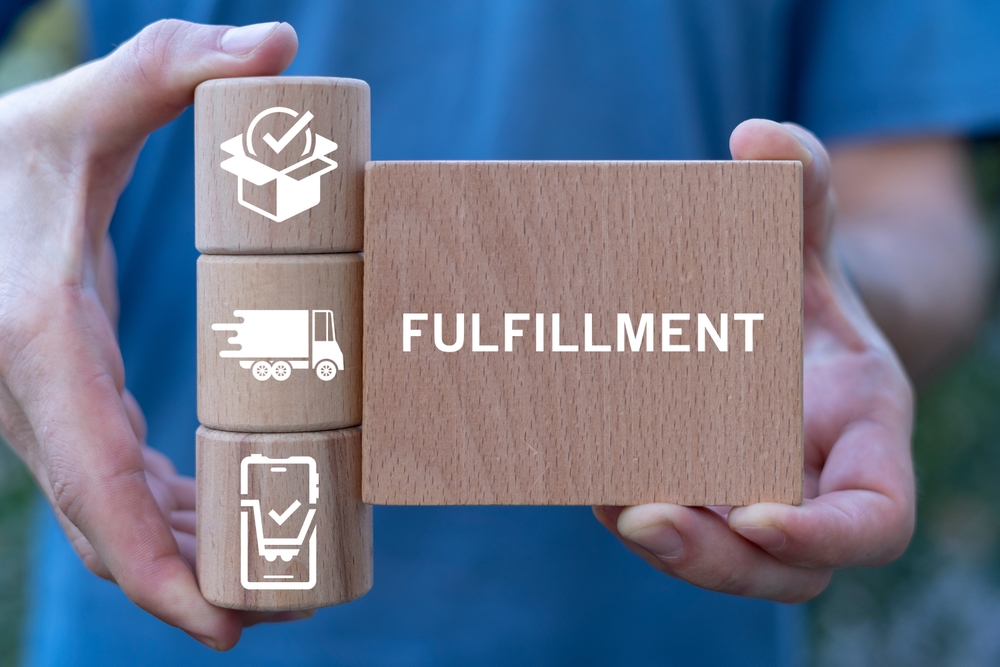
There is a point in almost every ecommerce business where packing orders stops feeling productive and starts feeling expensive. What began as a sensible in-house setup can become the thing that slows growth, drains working hours, and chips away at customer experience.
That is usually the moment behind the question: do I need a 3pl or 3pl solutions? For many brands, the answer is less about size alone and more about logistics strain. If fulfillment is taking too much time, space, money, or management attention, it may be time to integrate technology by moving to a specialist partner.
When should an ecommerce business outsource fulfilment?
If you are asking when should an ecommerce business outsource fulfilment, or when should you switch to a 3pl, the clearest answer is this: switch when fulfilment starts limiting growth instead of supporting it.
In the early stage, founder-led fulfilment often works well enough. A small product line, steady order volume, and one sales channel can be handled from a stock room, office, or light warehouse setup, but considering outsourcing through a 3PL solution can alleviate pressure as your business grows. The problem appears when order numbers rise, product ranges widen, or customers expect faster delivery than your team can reliably provide.
A practical rule of thumb is to look at monthly order volume, stock complexity, and how much leadership time is pulled into warehouse work. Many businesses reach a decision point at roughly 1,500 to 5,000 orders per month. At that level, the choice becomes clear: invest heavily in warehouse space, systems, staff, and carrier management, or use a 3PL.
| Business stage | Typical monthly orders | Common fulfilment reality | Likely best fit |
|---|---|---|---|
| Early stage | 0 to 1,500 | Founder or small team can cope | In-house can still work |
| Transition stage | 1,500 to 5,000 | Space, staffing, and speed start to strain | Review when to use a 3PL |
| Growth stage | 5,000+ | Fulfilment becomes operationally demanding | 3PL often makes strong sense |
| Multi-channel scale | 10,000+ | Complexity across channels and regions rises sharply | 3PL or hybrid model |
Order volume is not the only trigger
A business dealing with a complex supply chain, particularly when shipping bulky, fragile, premium, or high-SKU products, may need outside 3pl help earlier than a simple single-SKU store. The same is true if you are selling across Shopify, Amazon, TikTok Shop, eBay, and wholesale accounts at the same time.
Geography and logistics matter too. If you want faster national delivery, lower parcel costs, or the ability to serve other markets, a 3PL for ecommerce UK can offer infrastructure that is very hard to match internally without major investment.
Signs you need a 3PL in a growing ecommerce operation
The most reliable signs you need a 3PL are usually operational, not theoretical. They show up in missed cut-off times, poor stock accuracy, rising labour pressure, decreased order accuracy, and a team that is always reacting.
When fulfilment is healthy, performance is optimal, orders move out on time, inventory is visible, and customer service is not buried in chasing parcels. When fulfillment is unhealthy, everything feels tighter every month.
- Late dispatches: cut-off times are missed, especially during promotions or peak weeks
- Stock in the wrong place: inventory counts do not match what your store says is available
- Rising picking errors: wrong items, damaged parcels, or avoidable returns become more common
- No room to grow: storage space is full before the next inbound shipment even arrives
- Management distraction: founders and commercial teams spend too much time fixing warehouse issues
- Peak-season strain: Black Friday, Christmas, or product launches create backlogs your team cannot absorb
These are not minor irritations. They are early warnings that your current setup is too fragile for the next stage of growth.
A useful way to think about when to use a 3PL is to ask a harder question: if orders doubled for the next six weeks, would fulfilment hold up without hurting delivery promises or staff wellbeing? If the answer is no, the business is already close to its operational ceiling.
Is 3PL worth it for small ecommerce businesses?
This is where many owners hesitate with logistics, and fairly so. Is 3PL worth it for small ecommerce businesses if volumes are still modest? Sometimes yes, sometimes no.
If your order flow is predictable, your products are easy to handle, and your in-house costs are genuinely low, staying internal may still be the right call. Yet many smaller brands underestimate the full cost of self-fulfilment, which encompasses not only obvious expenses but also hidden costs of fulfillment inefficiencies. Rent, shelving, packaging materials, logistics, software, labour, utilities, wasted founder time, and courier rates all count. So do errors, delays, and the opportunity cost of not focusing on sales or product.
A 3PL changes the cost structure. Instead of carrying mainly fixed overhead, you shift more of fulfilment into variable fees tied to actual activity. That can be healthier for cash flow, especially when demand moves up and down across the year.
Fixed costs versus variable costs in ecommerce fulfilment solutions
This is one of the strongest arguments for outsourced fulfilment through 3PL services. Good ecommerce fulfilment solutions let a business pay for storage, receiving, pick and pack, and shipping as needed, rather than maintaining excess warehouse capacity all year.
That does not mean a 3PL is automatically cheaper. It means the economics often become easier to manage once you are growing, hiring, and dealing with seasonal swings.
If you are still asking when should you switch to a 3pl? or do I need a 3PL, compare these two realities:
- In-house costs keep running even when sales dip
- 3PL fees tend to move with order volume
- Internal teams need recruiting, training, and cover
- Specialist providers already have labour, systems, and carrier relationships
That is why the question is rarely “can we still pack our own orders?” and more often “is this the best use of our time and capital?”
How a 3PL for ecommerce UK improves order fulfilment UK
A strong 3PL for ecommerce UK can improve speed, consistency, performance, and visibility across the full customer experience. That matters because fulfillment and fulfilment is not just a warehouse function. It shapes reviews, repeat purchase, refund pressure, and trust.
For brands looking at order fulfilment UK, the big win is usually order accuracy and reliability. Orders are processed through established workflows, inventory is tracked more accurately, and dispatch can happen faster because fulfilment is the provider’s core activity rather than one task among many.
This is where pick and pack services UK become particularly valuable. Professional pick and pack operations use structured locations, barcode checks, order rules, and carrier integrations to cut mistakes and keep orders moving.
The most common 3PL benefits ecommerce businesses notice are:
- Faster dispatch
- Better stock accuracy
- Lower pressure on internal teams
- More delivery options
- Cleaner returns handling
There is also a commercial edge. Better fulfilment gives you confidence to run campaigns, launch products, and open new channels without wondering whether the warehouse can cope next week.
Customer experience improves when fulfilment becomes predictable
Customers rarely think about logistics until something goes wrong. A late parcel, an incorrect item, or a poor returns process can wipe out the goodwill created by strong branding and clever marketing.
That is why outsource fulfilment ecommerce decisions often come down to service levels and the effective use of technology. If a 3PL can help you offer next-day delivery, accurate tracking, and a smoother returns flow, the value reaches well beyond warehouse efficiency into overall logistics optimization.
How to scale ecommerce fulfilment with 3PL systems and support
If your focus is how to scale ecommerce fulfilment, the answer is not just “ship more parcels”. Real scale means shipping more while keeping costs, accuracy, and customer satisfaction under control.
A capable 3PL supports that in three areas: technology, capacity, and process discipline. Orders should flow automatically from your storefront or marketplace into the warehouse system. Inventory should update in real time. Returns should feed stock visibility rather than creating confusion.
As volume grows, that fulfillment structure becomes essential. Manual workarounds that feel manageable at 800 orders a month can become risky at 4,000.
- Systems integration: Shopify, marketplaces, and warehouse data should stay in sync
- Peak flexibility: extra labour and space should be available during promotions and seasonal spikes
- Channel complexity: one provider should support DTC, marketplaces, and often wholesale requirements
- Market expansion: cross-border shipping, customs handling, or extra warehouse locations become more realistic
This is why many brands start looking at 3PLs before a major peak, not after one. Moving early gives time to onboard stock, test integrations, and iron out exceptions before pressure is highest.
Scaling is also about leadership focus
There is another side to the problem that is easy to miss. A business cannot scale well if senior people are still trapped in dispatch firefighting. Growth needs attention on margin, product, acquisition, retention, and planning. A stretched fulfilment setup pulls energy away from all of them.
That is one reason when should an ecommerce business outsource fulfilment is really a strategic question, not only a logistics one.
What to check before you outsource fulfilment ecommerce
Choosing to move to a 3pl provider is one decision. Choosing well is another. Not every provider is right for every product, order profile, or brand promise.
Before you outsource fulfilment ecommerce, check how the provider handles onboarding, stock accuracy, service levels, reporting, returns, and carrier management. Ask what happens during spikes, what the cut-off times are, and how quickly issues are resolved. If you need custom packaging, subscriptions, kitting, or B2B prep, make that part of the conversation early.
A sensible shortlist should cover:
- Technology fit: direct integrations, real-time inventory, and clear reporting
- Operational fit: SKU profile, packaging needs, returns handling, and cut-off times
- Commercial fit: transparent fees for storage, receiving, pick and pack, shipping, and extras
For any business reviewing ecommerce fulfilment solutions, clarity matters more than a low headline rate. A cheap quote can become expensive if service levels slip or extra charges appear around returns, relabelling, or inbound handling.
The strongest next step is often simple: map your current cost per order, your current error rate, your peak capacity, and the number of hours leadership spends on fulfilment each week. Once those numbers are visible, the answer to when to use a 3PL is usually far less uncertain.