
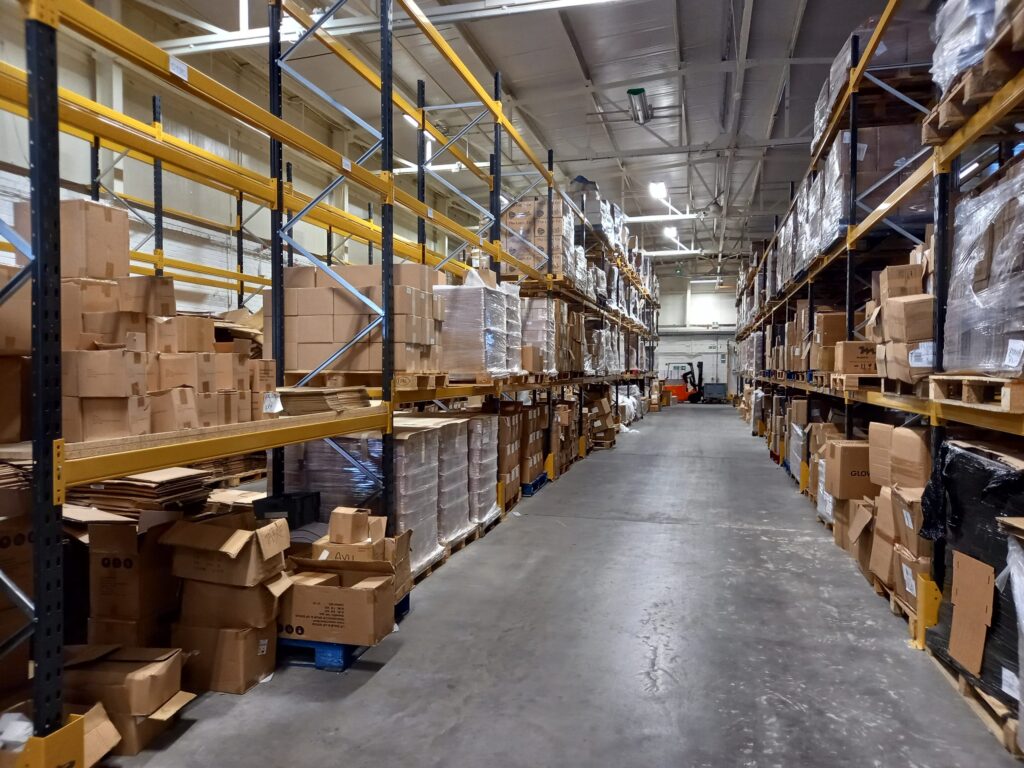
Efficient Storage of Ecommerce Goods for Fulfilment
How do we transform the storage of ecommerce goods for fulfilment into a seamless endeavour, free from inefficiencies?
Visualise a future where advanced storage solutions seamlessly integrate into fulfilment operations, elevating the ecommerce ecosystem. With digital transformations at the helm, the future of efficient fulfilment is undeniably bright.
Optimal Warehouse Layout
Harnessing the power of strategic warehouse layout maximises space, reduces handling time, and enhances overall efficiency in the storage of ecommerce goods for fulfilment.
A meticulously planned layout is central to efficient fulfilment.
Primarily, consider balancing storage area with workspace, ensuring (processing areas and storage zones) are well integrated.
Utilise vertical space to maximise storage capabilities without sacrificing valuable floor space.
Strategically locate frequently accessed items near dispatch areas, enhancing picking speed, reducing labour, and minimising errors in the pick and pack fulfilment process, all while considering the optimal location within the warehouse.
Indeed, the path to success lies in creating space that’s adaptive and resilient. Continuous optimisation ensures you remain at the cutting edge of the ecommerce fulfilment landscape.
Inventory Management Strategies
Effective inventory management and stock control play a pivotal role, ensuring that ecommerce enterprises can fulfil orders swiftly and accurately.
Key strategies to enhance inventory management include a robust tracking system, which keeps stock levels transparent and dynamic. By leveraging advanced software, businesses can synchronise their operations, allowing them to respond rapidly to fluctuations in demand. This proactive stance not only boosts operational efficiency but also bolsters customer satisfaction by meeting delivery expectations consistently.
Consequently, this approach facilitates a seamless connection between consumer demand and product availability. As companies align their inventory with sales forecasts, they can anticipate trends and make informed decisions, effectively managing both overstock and stockouts, which ultimately leads to revenue growth.
Finally, optimising inventory management requires an investment in training and technology. By equipping teams with the skills and tools needed to interpret data and automate routine tasks, businesses can streamline processes and embrace innovation. This adaptability ensures that ecommerce operations are not only ready for today’s challenges but are also prepared to seize the opportunities of tomorrow.
Categorising Ecommerce Goods
Categorising ecommerce goods is a pivotal step in enhancing the operational efficiency of the fulfilment process, and paves the way for innovation.
Clear classification enables more efficient retrieval, reducing delays in order processing.
Categorising can be accomplished through a strategic blend of manual expertise and technology, which aids in creating a seamless flow of information about inventory status, enabling precise forecasting, and prevention of unnecessary stock duplication.
Furthermore, this method empowers businesses to adjust to the peaks and troughs of demand dynamically. By employing categorisation alongside advanced data management systems, companies can enhance their accuracy in tracking products, therefore ensuring that every customer transaction is met with efficiency. Ultimately, categorising ecommerce goods offers the resilience and adaptability necessary to thrive in the rapidly evolving digital marketplace.
Implementing Technology Solutions
Integrating cutting-edge technology solutions, such as IoT and AI-driven algorithms, improves the storage of ecommerce goods for fulfilment. These technologies ensure each product is optimally stored, enabling faster retrieval while maintaining impeccable accuracy, thus enhancing overall operational efficiency.
To maintain the momentum of a swift fulfilment network, consider using a “real-time tracking” system. This can act as a beacon for seamless operations, granting visibility into all logistical aspects. In doing so, the implementation of the right mix of technologies can not only reduce errors but also instil a robust framework for scaling businesses effortlessly.
Automated Storage Systems
In the dynamic world of ecommerce, automated storage systems represent a beacon of revolutionising fulfilment processes. They promise greater efficiency and optimised space, transforming warehouse operations.
By leveraging robotic solutions and AI, businesses can achieve unparalleled precision. This ensures goods are swiftly stored and retrieved with minimal human intervention, bolstering productivity and customer satisfaction.
Automated storage solutions can increase warehouse efficiency by up to 80%, drastically reducing lead times.
Automated storage systems pave the way for the future of ecommerce fulfilment. Integrating these solutions allows for adaptive, scalable environments that respond nimbly to market demands. With their reliability and intelligence, businesses are equipped to meet increasing customer expectations head-on, ensuring long-term growth and success.
Use of RFID and Barcoding
RFID and barcoding have redefined the storage of ecommerce goods for fulfilment, amplifying efficiencies in unprecedented ways.
In 2016, according to a survey conducted by a prominent logistics organisation, businesses reported that integrating RFID technology accelerated their fulfilment processes. They praised its accuracy in tracking and managing inventory, heralding a new era of seamless operations.
Now, it’s no secret that these technologies provide a competitive edge by streamlining the entire supply chain. RFID tags and barcodes offer a straightforward yet profound way to track items effortlessly, from receipt to despatch.
With the adoption of this innovative tech, businesses have seen picking errors drop by up to 30%, enhancing customer experience, and strengthening brand trust. This amalgamation of technology and logistics presents a vibrant blueprint for avant-garde storage management.
Embracing these tools is akin to embracing the future of ecommerce fulfilment.
Staff Training and Efficiency
Effectively harnessing the potential of cutting-edge technologies, such as RFID and barcoding, demands a continued commitment to staff training excellence, ensuring a seamless adoption of these advanced tools.
Regular workshops anchor staff in the latest technological advancements that shape the fulfilment landscape.
Moreover, interactive sessions focus on the practical applications of these technologies (maximising inventory efficiencies and productivity) and encourage innovation.
Trained staff are adept at uncovering inefficiencies in storage management and optimising process flows.
They are also pivotal in troubleshooting issues in real-time, fostering an environment of continuous improvement where operational efficacy grows stronger.
Ultimately, the role of well-trained staff cannot be overstated, making significant, measurable contributions to the overall success of storage operations.
Seasonal Stock Adjustments
Adapting to seasonal fluctuations requires meticulous planning, tailored strategies, and a vigilant approach to the ever-changing demands of ecommerce landscapes. Businesses must foresee shifts in consumer behaviour to maintain optimal stock levels through effective stock control.
Such anticipatory measures are vital for the seamless handling of peak seasonal upturns.
Diligent forecasting ensures that storage facilities can accommodate these changes, utilising dynamic storage solutions to maximise space.
Flexible inventory systems are crucial, allowing businesses to expand and contract storage as needed, averting potential logistical bottlenecks.
These strategic adjustments promote operational resilience, creating an agile response framework capable of efficiently managing the cyclical nature of demand peaks associated with seasonal trends.
Thus, not only does this boost a business’s ability to promptly fulfil orders, but it also optimises resources, reinforcing a robust fulfilment strategy poised for success.
Security Measures for Goods
Integrity in storage is paramount.
Implementing advanced security measures within the storage of ecommerce goods for fulfilment stands as both a deterrent and a vital safeguard against potential threats. The complexity of today’s supply chain requires solutions that are robust yet adaptable, ensuring the safety and reliability of merchandise from warehousing to delivery. Moreover, continuous evaluation is necessary to align these strategies with the evolving landscape of security threats.
Technology plays a crucial role.
Innovations such as AI-powered surveillance systems – which not only proactively monitor but also analyse unusual patterns within warehouse environments – are becoming increasingly essential. These cutting-edge solutions offer real-time alerts, significantly reducing response times to any potential security breach.
Proactive training for staff in security protocols, especially regarding the protection of sensitive location data, is equally important, ensuring they are equipped to handle unforeseen situations. This ongoing education fosters a culture of vigilance and accountability, with staff understanding their vital role in maintaining the security integrity of the storage environment. Ultimately, these measures instil confidence in stakeholders and elevate the overall standards of ecommerce fulfilment.
Cost-Effective Storage Options
In the dynamic realm of ecommerce, cost-effective storage solutions are pivotal in enhancing business profitability without compromising service quality.
Companies striving for economical operations can benefit immensely from a diverse array of flexible storage options tailored to their distinct needs, including warehousing services that adjust seasonally or with demand fluctuations. Consolidation centres have emerged as a valuable asset, allowing enterprises to store goods in shared spaces and enabling cost distribution among multiple users, therefore lowering individual expenses.
Strategically, the use of just-in-time (JIT) storage strategies can also yield significant savings. By systematically managing inventory turnover, businesses not only reduce holding costs but also optimise warehouse space and increase logistical efficiency.
Ultimately, a meticulous exploration of innovative storage partnerships and approaches, including efficient pick and pack operations, empowers ecommerce businesses to achieve optimal inventory management, maximising every pound spent. This strategic advantage strengthens their competitive position, allowing them to focus investment on other pivotal areas, such as enhancing customer experiences and expanding market reach.
Handling Fragile and Perishable Items
Ensuring the safe storage of fragile and perishable goods is a matter of strategic importance, given their unique sensitivities. Appropriate storage solutions for these items, coupled with rigorous quality controls, allow businesses to maintain product integrity and foster customer satisfaction.
The implementation of technologies such as climate control systems, combined with “smart packing” solutions, substantially mitigates the risk of damage. These measures not only extend product longevity but also enhance operational reliability. In doing so, the protection of the brand’s reputation is fortified, and the efficiency of the fulfilment process is enhanced, contributing to a stronger competitive stance.
Specialised Facilities for Perishables
The modern ecommerce landscape demands refined approaches for the storage of ecommerce goods for fulfilment, especially when dealing with perishables.
Since 2016, industries worldwide have recognised the growing importance of specialised facilities for preserving perishable goods. These advanced solutions have become the backbone for sectors ranging from groceries to pharmaceutical supplies.
Today, it’s no longer enough for businesses to rely solely on traditional storage mechanisms. Navigating the complexities of temperature-sensitive goods necessitates advanced alternatives such as cold chain logistics and high-tech refrigeration systems.
To ensure these goods remain in optimal condition, facilities are continuously innovating with real-time monitoring, efficiently balancing cost with efficacy. By doing so, they not only uphold quality standards but also secure customer trust and loyalty.
Investing in these specialised facilities is a crucial step towards meeting the evolving demands of the modern consumer.
Sustainability in Ecommerce Storage
Embracing sustainable practices in the storage of ecommerce goods demonstrates a commitment to future generations, and this notion extends to the very heart of logistics.
Sustainability and green ethics must influence all storage practices.
From the integration of energy-efficient technologies in warehouses to the adoption of a circular economy model, encompassing recycling and upcycling, businesses are crafting innovative, sustainable storage solutions. Integrating solar energy, repurposing materials, and prioritising eco-friendly packaging options remain paramount, ensuring that these practices resonate with environmental consciousness.
These strategies empower businesses to not only reduce the environmental footprint of pick and pack storage operations but also carve a niche as leaders in the conscientious commerce space. By making sustainability a cornerstone, organisations can “walk” their green talk, reinforcing values that resonate with the eco-conscious consumer.
Utilising Vertical Space
Transforming unused vertical dimensions into practical storage opportunities can significantly enhance the storage of ecommerce goods for fulfilment, adding great value to operations.
Vertical racks offer expansive storage space without needing additional ground area.
This strategy of elevating storage allows for maximising existing warehouse heights, which can be a haven of untapped potential. Deploying various shelving units ensures a seamless arrangement, facilitating optimal visibility and accessibility, thereby fostering efficiency and order.
Such strategic vertical storage solutions can lead to the dual benefits of a significant reduction in warehouse costs and the advancement of streamlined fulfilment processes. By investing in robust, scalable storage systems, businesses are empowered to “climb” to new heights of efficacy, mitigating clutter and multiplying their productivity in a sustainable manner.
Monitoring and Analytics
Integrating sophisticated technology is vital, enabling precise stock control and monitoring of ecommerce goods for exceptional fulfilment performance.
Utilising advanced analytics tools in a warehouse setting promotes efficiency, leveraging data to refine storage operations. Such tools offer real-time insights, which enable immediate adjustments to inventory flow. Predictive analytics can forecast trends, ensuring stock levels are optimal, preventing costly overstock or crippling shortages.
Customisable dashboards provide an invaluable overview of a warehouse’s performance at a glance. By tracking key metrics, such as turnover rates and cycle counts, businesses can achieve a data-driven understanding that supports strategic decision-making and operational excellence.
Furthermore, embracing cutting-edge analytics not only anticipates demand fluctuations but also identifies bottlenecks, offering solutions before problems manifest. This proactive approach fosters a robust fulfilment infrastructure, poised to adapt dynamically to market conditions, thus driving enhanced customer satisfaction and sustained business growth.
Outsourcing Storage Solutions
Outsourcing storage solutions offers a promising pathway for businesses seeking to enhance the efficiency of their fulfilment operations.
In 2016, Foresight Logistics, a pioneer in scalable storage solutions outsourcing, exemplified how focusing on core business strengths while aligning with specialised partners amplifies operational capabilities and market agility.
Today, it’s not just about outsourcing logistics—it’s strategically embracing a partnership to maximise the inherent value of external expertise. Companies can rapidly adapt to seasonal demands and tap into resources beyond their in-house capabilities.
When the pressure of rapid growth mounts, businesses that prioritise partnering find it’s not the burden of the 3PL, but the judicious and skilful orchestration, that shapes exceptional outcomes and fosters competitive differentiation.
Outsourcing thus becomes more than a resource allocation strategy—it’s a catalyst for transformative growth.
Risk Management in Storage
Risk management within the storage of ecommerce goods for fulfilment is an overarching pillar of an efficient storage strategy, and can greatly enhance operational and financial security.
Identifying and assessing risks involves understanding potential impacts or threat levels.
Proactive measures such as secure facilities, robust inventory management systems, and rigorous staff training can mitigate a range of common risks, enhancing resilience and optimising productivity within the fulfilment process.
Moreover, employing advanced technologies and data analytics in risk management can foster not only a reduction in vulnerabilities but also a viable pathway to dynamic growth. By designing contingency plans and seeking “just-in-case” inventory buffers, ecommerce operations can transform uncertainties into opportunities for innovation and excellence.
Adapting to Market Changes
Market dynamics demand adaptability and foresight.
In the fast-paced world of ecommerce, flexibility is vital, especially in choosing the right location for storage facilities. The landscape of ecommerce is ever-shifting, driven by factors such as consumer preferences, technological advancements, and global events. Retailers who can swiftly pivot their strategies and processes to embrace these fluctuations can ensure continued growth. Innovators, therefore, lead the way by anticipating the needs and expectations of the market and reimagining how they store and distribute goods.
Timely adaptation to trends safeguards brand relevance.
Staying ahead involves embracing agile methods, recognising that no single approach will define lasting success in the ecommerce sector. By fostering a culture of continuous improvement and responsiveness, businesses can ensure that they not only meet but exceed market demands.
Ultimately, successfully adapting to market changes requires continuous investment in both technology and human capital. Automation, analytics, and skilled workforce integration are keys to navigating the swift tides of commerce. A forward-thinking vision ensures that enterprises can sculpt challenges into pathways, elevating the storage of ecommerce goods for fulfilment to an art form that catapults them into the future.